How to Wire 2 Subs in Separate Boxes for Maximum Bass
Wiring two subwoofers in separate boxes can make your car audio system sound deeper, louder, and more balanced. If you are new to car audio and want to wire your own subs, you might feel confused by the different wiring options, impedance numbers, and safety steps.
But with the right guidance, you can get impressive results without risking damage to your equipment.
This article explains how to wire two subwoofers in separate boxes, step-by-step. You’ll learn about different wiring methods, what tools you need, and the mistakes beginners often make. By the end, you’ll be confident enough to wire your own subs and enjoy powerful bass in your vehicle or home setup.
Understanding Subwoofer Wiring Basics
Before you start, it’s important to know a few key terms:
- Subwoofer box: A container that holds the subwoofer. Each sub will sit in its own box.
- Impedance (ohms): The resistance a subwoofer offers to the amplifier. Common values are 2, 4, or 8 ohms.
- Series wiring: Connecting subs so the power flows through one, then the other.
- Parallel wiring: Connecting both subs directly to the amplifier.
Impedance is important because it affects how much power your amplifier can deliver. If you wire incorrectly, you may overload your amplifier or get weak bass.
Choosing The Right Wiring Method
The way you wire your two subs depends on:
- How many voice coils each sub has (single or dual)
- The impedance of each subwoofer
- The power handling of your amplifier
Let’s look at the most common setups.
Single Voice Coil (svc) Subwoofers
If your subs are SVC (one set of terminals per sub), wiring is straightforward.
Series Wiring Example
Suppose you have two SVC subs, both rated at 4 ohms.
- Connect the positive terminal of the amp to the positive terminal of Sub 1.
- Connect the negative terminal of Sub 1 to the positive terminal of Sub 2.
- Connect the negative terminal of Sub 2 back to the negative terminal on the amp.
This creates a total load of 8 ohms.
Parallel Wiring Example
- Connect both positives from the subs to the positive terminal on the amp.
- Connect both negatives from the subs to the negative terminal on the amp.
This creates a total load of 2 ohms.
Dual Voice Coil (dvc) Subwoofers
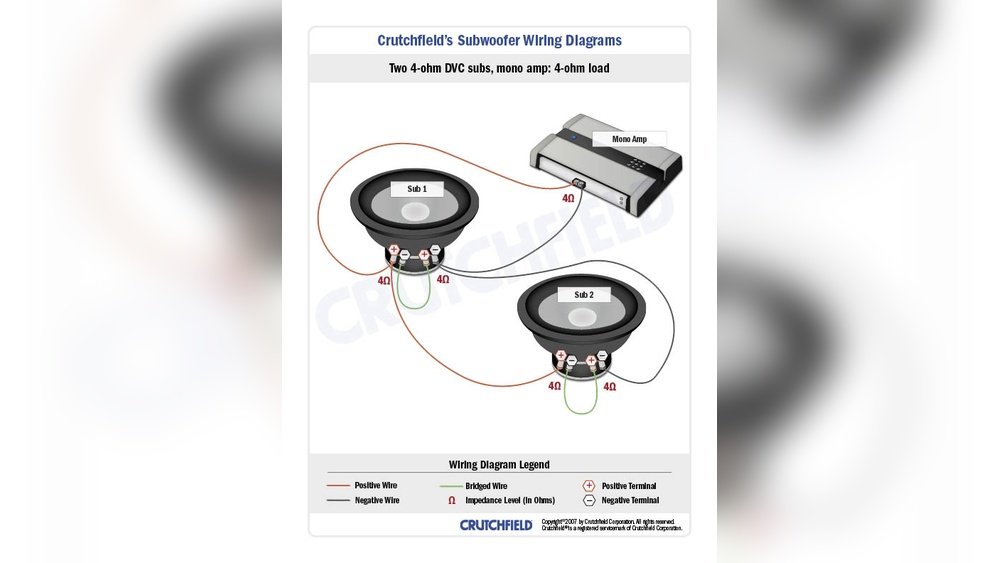
DVC subs (two sets of terminals per sub) offer more wiring choices.
Parallel-series Combination
- Wire the coils of each sub in series, then wire the subs in parallel.
- This is common for two DVC 4-ohm subs to achieve a 4-ohm load.
| Sub Type | Series Wiring Load | Parallel Wiring Load |
|---|---|---|
| 2 x 4Ω SVC | 8Ω | 2Ω |
| 2 x 4Ω DVC | 16Ω | 1Ω |
| 2 x 2Ω SVC | 4Ω | 1Ω |
Tip: Always check your amplifier’s minimum impedance rating. Wiring below this number can damage your amp.
Credit: www.gmfullsize.com
Essential Tools And Materials
To wire your subs safely and neatly, gather these tools:
- Speaker wire: 12 to 16 gauge is common for subs.
- Wire stripper: Removes insulation from wire ends.
- Screwdriver: For connecting wires to terminals.
- Crimp connectors: For strong, secure wire joins.
- Electrical tape: To cover exposed wires.
- Multimeter: To check impedance and wire continuity.
Pro tip: Use oxygen-free copper wire for best signal quality.
Step-by-step Wiring Instructions
Follow these steps to wire two subs in separate boxes. We’ll use the parallel wiring method for example, as it’s popular for high power setups.
1. Plan Your Wiring Route
- Decide where you’ll place each sub box.
- Measure the distance from the amp to each box.
- Cut enough wire for each run, leaving a little extra for mistakes.
2. Prepare The Wires
- Strip about 1/2 inch from each end of the speaker wire.
- If using crimp connectors, attach them to the wire ends.
3. Connect Subwoofers To Amplifier
- Run wire from the amp’s positive terminal to the positive terminal on Sub 1.
- Run another wire from the same amp terminal to the positive on Sub 2.
- Repeat for the negative terminal.
Now, both subs are connected directly to the amp, sharing the same signal.
4. Secure The Connections
- Tighten all terminal screws so wires don’t wiggle.
- Use electrical tape to cover any exposed metal.
5. Test The Setup
- Use a multimeter to check that the total impedance matches your plan.
- If you wired two 4-ohm subs in parallel, your reading should be close to 2 ohms.
| Sub Configuration | Expected Impedance | Test Value (Multimeter) |
|---|---|---|
| 2 x 4Ω SVC (Parallel) | 2Ω | 1.8–2.2Ω |
| 2 x 2Ω SVC (Parallel) | 1Ω | 0.9–1.1Ω |
| 2 x 4Ω SVC (Series) | 8Ω | 7.8–8.2Ω |
6. Power Up And Listen
- Turn your amp on with the volume low.
- Play bass-heavy music to test sound quality.
- Check for distortion or uneven bass. If you hear problems, turn off the amp and check your connections again.
Credit: www.diymobileaudio.com
Common Mistakes To Avoid
Many beginners make errors that can lead to poor sound or equipment damage.
- Ignoring amp ratings: Wiring subs to a lower impedance than the amp allows can cause overheating or failure.
- Loose connections: Wires that aren’t tight may cause buzzing or weak bass.
- Wrong wire gauge: Thin wire can limit power and reduce sound quality.
- Unmatched subs: Using subs with different impedances or power ratings can lead to uneven performance.
- Skipping the multimeter test: Always check your impedance before turning on the amp.
Non-obvious insight: If you wire two subs in parallel but your amp is not stable at the resulting impedance, you risk permanent damage. Always double-check both sub and amp specs.
Practical Example: Wiring Two 4-ohm Svc Subs
Let’s say you have:
- Two 4-ohm SVC subs in separate boxes
- A mono amplifier rated for 2 ohms minimum
You want loud, deep bass, so you wire both subs in parallel.
Steps:
- Run a wire from the amp’s positive terminal to the positive terminal on Sub 1.
- Run another wire from the amp’s positive terminal to Sub 2’s positive.
- Repeat for the negative terminals.
- Secure all wires and test with a multimeter (should read about 2 ohms).
- Power on and enjoy full bass.
Data point: This setup lets your amp deliver maximum power. If your amp is rated for 500W RMS at 2 ohms, each sub will get about 250W.
Series Vs. Parallel: Which Is Best?
Choosing between series and parallel wiring depends on your goals:
- Series wiring: Higher impedance, less power from the amp. Safer for amps with high minimum impedance.
- Parallel wiring: Lower impedance, more power. Good for amps that can handle low loads.
| Wiring Type | Impedance | Power Output | Safety |
|---|---|---|---|
| Series | Higher | Lower | Safer |
| Parallel | Lower | Higher | Riskier |
Expert tip: If you’re unsure, use series wiring for safety. You can always upgrade your amp later.
How Sub Placement Affects Sound
Where you place your sub boxes matters.
- Closer to corners: Boosts bass but can cause boomy sound.
- Facing rear of car: Often gives deeper bass in vehicles.
- Spaced apart: Reduces vibrations and helps balance.
Non-obvious insight: Placing subs in separate boxes lets you experiment with location and get a more even bass response. Try different spots and angles for best results.

Credit: www.stevemeadedesigns.com
Advanced Tips For Beginners
If you want even better sound:
- Use a sound deadener (like Dynamat) to reduce vibrations in your vehicle.
- Seal all box gaps for tight bass.
- Consider adding a bass remote for easy adjustment.
- Upgrade to thicker wire if you plan to increase power later.
Pro tip: Don’t mix different sub brands or models in the same setup. Matched subs work together better.
Safety Precautions
Always follow these safety steps:
- Disconnect your car battery before wiring.
- Don’t let wires touch metal surfaces.
- Double-check all connections before powering up.
- Never exceed your amplifier’s rated output.
Troubleshooting Guide
If your bass sounds weak or distorted:
- Check all wire connections for looseness.
- Verify impedance with a multimeter.
- Make sure your amp settings match the sub specs.
- Look for damaged wires or connectors.
- Try moving the sub boxes to new locations.
Frequently Asked Questions
What Is The Best Wire Gauge For Subwoofers?
Most setups use 12-gauge wire for runs up to 20 feet. For longer distances or higher power, use 10-gauge wire.
Can I Wire Different Impedance Subs Together?
It’s not recommended. Mixing subs with different impedance can cause uneven power and poor sound. Use matched subs for best results.
How Do I Check If My Wiring Is Correct?
Use a multimeter to measure the resistance at the amp terminals. Compare your reading to the planned impedance.
Does Wiring Method Affect Sound Quality?
Yes. Parallel wiring gives more power and louder bass, but only if your amp can handle it. Series wiring is safer but usually quieter.
Where Can I Find More Detailed Wiring Diagrams?
You can find detailed diagrams and guides at Crutchfield, which is a trusted source for car audio information.
Wiring two subwoofers in separate boxes is not hard with the right steps. Take your time, double-check your connections, and always test before turning up the volume. With careful planning, you’ll get bass that sounds great and lasts for years.