
Choosing the Right Fuse for Power Wire to Amp: Expert Guide
Choosing The Right Fuse For Power Wire To Amp
When you install an amplifier in your car, choosing the right fuse for the power wire is not just a technical detail—it’s essential for safety and performance. Many beginners miss this step or use the wrong fuse, risking damage to their amp, wiring, or even their vehicle.
Picking the correct fuse is a simple process if you know what to look for. This guide will help you understand why a fuse is important, how to select the best one, and what mistakes to avoid. Every section is packed with practical advice, easy-to-follow steps, and clear examples, so you can make a confident choice.
Why Fuses Matter For Power Wire To Amp
A fuse is a small device that protects your car’s electrical system. It sits in the power wire and stops too much current from reaching the amp. If something goes wrong—like a short circuit or a power surge—the fuse “blows” (breaks) and cuts off electricity.
This prevents overheating, fire, or expensive damage.
Key reasons to use a fuse:
- Safety: Avoids electrical fires and protects people.
- Protects equipment: Stops damage to the amp and wiring.
- Easy troubleshooting: If your amp stops working, checking the fuse is a quick way to find the problem.
Many beginners think the fuse is just an extra step. In reality, it’s your first line of defense. Without a proper fuse, you risk losing your amp or causing bigger issues.
Understanding Fuse Types And Ratings
Fuses come in different shapes and sizes, but the most important thing is the ampere rating (how much current it lets through before blowing). There are three main types used for car amps:
- AGU fuses: Glass tube, easy to find, good for lower power.
- ANL fuses: Large, metal strip, used for high-power systems.
- Mini-ANL fuses: Smaller version, fits tight spaces.
Each fuse type suits a different setup. The rating (like 40A or 80A) tells you how much current it can handle.
Non-obvious insight: The fuse rating should not match your amp’s maximum power. Instead, it should match the wire’s capacity, because the wire is what needs protection. If your wire can handle 60A but your amp only needs 40A, use a 60A fuse.
Fuse Ratings Explained
You’ll see fuse ratings in amps (A). For example:
- 40A fuse: Blows if current goes over 40 amps.
- 80A fuse: Blows if current goes over 80 amps.
Tip: Never use a fuse rated higher than your wire can handle.
Credit: www.crutchfield.com
How To Calculate The Correct Fuse Size
Choosing the right fuse starts with knowing two things:
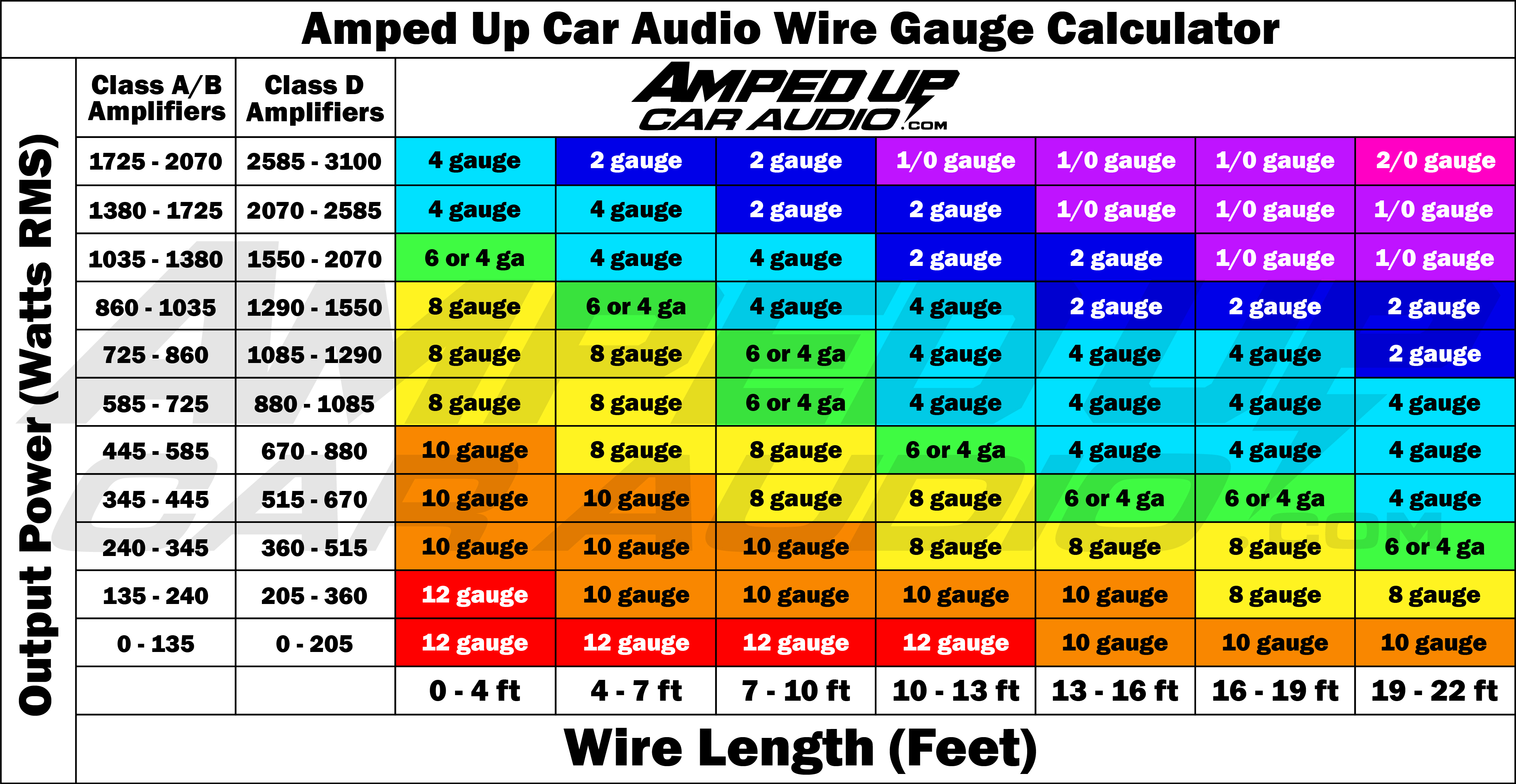
- The size of your power wire
- The length of the wire
Wire size is measured in AWG (American Wire Gauge). Bigger wires (like 4 AWG or 0 AWG) can handle more current.
Step-by-step process:
- Find the AWG of your wire.
- Look up its amp capacity (see table below).
- Pick a fuse equal to or just below that capacity.
Here’s a helpful reference:
| Wire Gauge (AWG) | Max Current (Amps) | Common Fuse Size (Amps) |
|---|---|---|
| 8 AWG | 40A | 40A |
| 4 AWG | 60A | 60A |
| 2 AWG | 100A | 100A |
| 0 AWG | 150A | 150A |
Example: If your amp uses a 4 AWG wire, use a 60A fuse.
Data point: Most car amp installations use 8 AWG or 4 AWG wire. Always check your amp’s manual for recommended wire size.
Matching Fuse To Your Amp And System
Some beginners focus only on the amp’s power. You must also look at your wiring and the total system. Here’s how:
- Calculate the amp’s maximum current draw. Find this in the manual or use this formula:
Watts / Voltage = Amps
- Example: A 600-watt amp at 12 volts draws 50A.
- Check if your wire is rated for that current (see previous table).
- Choose a fuse that matches the wire’s max current, not just the amp’s draw.
Insight: If you have multiple amps, add their currents together. Use the total to pick your wire and fuse.
Comparison Example
Let’s compare two setups:
| Setup | Wire Gauge | Amps Drawn | Fuse Size |
|---|---|---|---|
| Small amp | 8 AWG | 30A | 40A |
| Large amp | 4 AWG | 70A | 60A |
Notice the large amp draws 70A but uses a 60A fuse. Why? The wire is rated for 60A. If you need more power, upgrade the wire and fuse.
Where To Place The Fuse
The fuse should be placed as close as possible to the battery. This protects the wire if something goes wrong anywhere along its length.
Key placement tips:
- Keep the fuse within 18 inches (45 cm) of the battery.
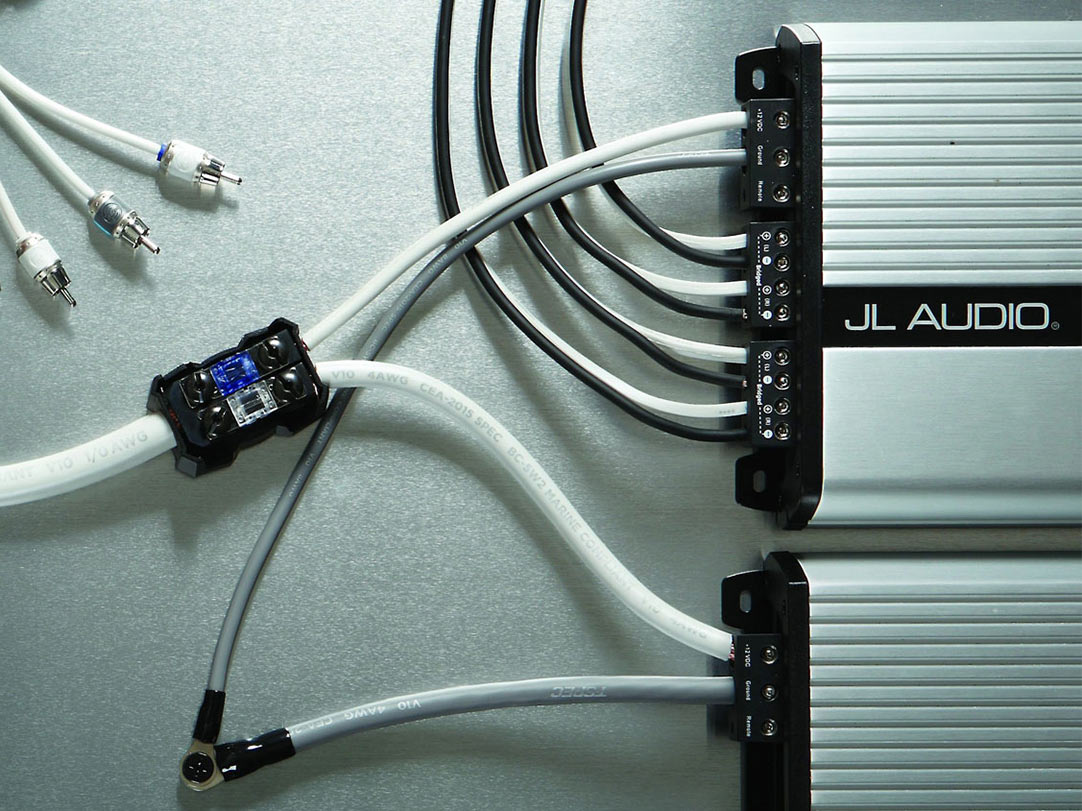
- If the power wire splits to multiple amps, use a main fuse near the battery and smaller fuses near each amp.
Example: For a single amp, one fuse near the battery is enough. For two amps, use a fused distribution block.
Choosing Fuse Holders And Accessories
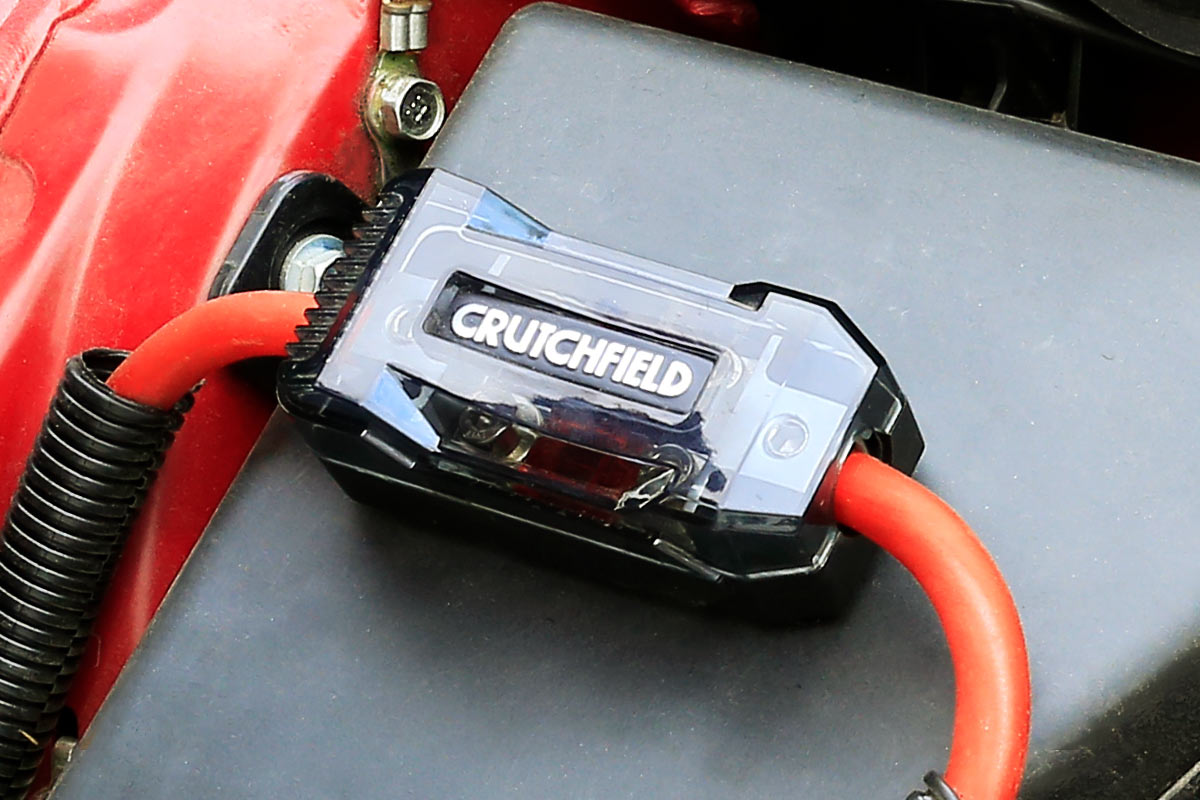
A fuse holder keeps the fuse safe and makes it easy to change. Choose a holder that matches your fuse type and wire size.
Look for:
- Waterproof holders for under-hood placement.
- Solid contact points for reliable connection.
- Easy-to-access design.
Tip: Cheap holders can cause poor contact and overheating. Investing in a good holder is as important as picking the right fuse.
Common Mistakes Beginners Make
Many beginners make errors when choosing fuses. Here’s what to avoid:
- Using a fuse that’s too big: This won’t protect the wire and can cause fire.
- Placing the fuse too far from the battery: Leaves the wire unprotected.
- Ignoring wire size: The fuse must match the wire, not just the amp.
- Skipping fuse altogether: Dangerous and can void warranties.
Non-obvious insight: Some people use the fuse that came with their amp kit, not realizing it’s the wrong size for their wire or system. Always double-check.
Practical Example: Installing The Right Fuse
Let’s walk through a real-world scenario:
- You install a 1000-watt amp in your car.
- The manual says to use 4 AWG wire.
- 1000 watts / 12 volts = 83A.
- 4 AWG wire is rated for 60A (see table).
- You should use a 60A fuse and possibly upgrade to 2 AWG wire if you want full power.
Action steps:
- Pick a fuse holder that fits 4 AWG wire.
- Install the fuse holder within 18 inches of the battery.
- Insert a 60A fuse.
- Check connections for tightness and safety.
Fuse Quality And Brand Choices
Not all fuses are equal. High-quality fuses last longer and protect better.
What to look for:
- Solid metal contacts
- Clear labeling of amp rating
- Trusted brands (like Littelfuse, Bussmann)
- Certification (UL listed)
Cheap fuses can fail to blow when needed or melt instead of breaking cleanly. This is dangerous and can damage your system.
Upgrading Your System: What Changes?
If you add more amps or increase power, you need to:
- Upgrade your power wire to a larger AWG
- Use a bigger fuse (matching the new wire size)
- Update fuse holders as needed
Example: Adding a second amp means checking the total current draw. Add both amps’ currents and choose wire and fuse for that total.
How Fuse Protects Your Car
A fuse protects not just the amp, but your whole car. If the power wire shorts, the fuse blows before heat builds up. This stops fires, keeps people safe, and saves money.
Data point: Electrical fires cause thousands of car accidents each year, many due to missing or wrong fuses.
Quick Reference Guide
For fast answers, use this checklist:
- Check wire size (AWG)
- Find wire’s amp rating
- Place fuse near battery
- Match fuse to wire, not amp
- Use quality fuse and holder
If you’re unsure, always go for safety. It’s better to use a fuse that’s slightly under your wire’s rating than one that’s too high.
Credit: ampedupcaraudio.com
Real-world Data: Fuse Failure Rates
Studies show that most fuse failures happen because of:
- Incorrect sizing (over 60%)
- Poor installation (25%)
- Low-quality products (15%)
Choosing the right fuse and installing it correctly gives you the best protection.
Helpful External Resource
For more detailed fuse sizing charts and safety tips, you can visit Crutchfield’s car audio installation guide.
Credit: www.crutchfield.com
Frequently Asked Questions
What Happens If I Use The Wrong Fuse Size?
If the fuse is too big, your wire could overheat and cause fire. If it’s too small, it might blow often and stop your amp from working. Always match the fuse to the wire’s capacity.
Can I Use Multiple Fuses For One Amp?
Yes, if your system uses split power wires, each should have its own fuse matching its wire size. However, most setups need only one main fuse near the battery.
How Do I Know My Wire Gauge?
Check the wire’s label, packaging, or measure its diameter. Most amp kits include the wire gauge in the manual or product specs.
Should I Use A Fuse Block For Multiple Amps?
If you have more than one amp, a fuse block makes installation cleaner and safer. It lets you use individual fuses for each wire, matching their sizes.
How Often Should I Check Or Replace My Fuse?
Check your fuse during routine maintenance (every 6–12 months). Replace it if you see corrosion, melting, or if it blows. Always keep a spare fuse in your car.
Choosing the right fuse for your power wire to amp is simple, but vital. It protects your equipment, your car, and your safety. Spend a few minutes planning, use the right data, and you’ll have a reliable, safe audio system for years to come.