What Does Subsonic Do on an Amp? Optimize Your Bass Output
What Does Subsonic Do On An Amp
Many people want great sound from their car audio or home subwoofer system. But sometimes, the audio is not as clear or powerful as expected. One common reason is poor control of low frequencies. If you have seen a knob labeled “Subsonic” on your amplifier, you might wonder what it does.
Understanding this feature can improve your sound quality and protect your equipment.
The subsonic filter is a tool found on many amplifiers, especially those used with subwoofers. This article will explain what the subsonic control does, why it matters, and how to use it correctly. You’ll also find simple examples, practical data, and answers to common questions.
What Is A Subsonic Filter?
A subsonic filter is a special type of high-pass filter designed for audio systems. Its job is to block very low-frequency sounds, usually below human hearing, from reaching your subwoofer.
- Subsonic means “below sound,” or frequencies under 20 Hz.
- Human ears hear sounds from 20 Hz to 20,000 Hz. Anything below 20 Hz is called “subsonic” and is not heard, only felt if the sound is strong enough.
- These low frequencies can cause problems if they reach your subwoofer.
A subsonic filter usually has an adjustable frequency. For example, you may set it at 20 Hz, 30 Hz, or higher. Any sound below this point will be reduced or removed by the amplifier.
Why Subsonic Filtering Is Important
Blocking subsonic frequencies protects your speakers and improves your system’s performance. Here’s why:
- Prevents speaker damage: Subwoofers are not designed to play very low sounds. Playing them can cause the speaker to move too much and break.
- Saves amplifier power: Amplifiers use a lot of energy to play low frequencies. Filtering out subsonic signals lets your amp use its power on sounds you can actually hear.
- Reduces distortion: Unwanted low frequencies can mix with your music, making it sound muddy or unclear.
Example: The Effect Of Subsonic Filtering
Suppose you play a song with deep bass. Without a subsonic filter, your subwoofer tries to play all the sounds, even those at 10 Hz or 15 Hz. But you can’t hear these, and your speaker works harder for no benefit.
With the filter set at 25 Hz, the subwoofer ignores everything below that. The result is cleaner bass and longer speaker life.
How Does The Subsonic Control Work?
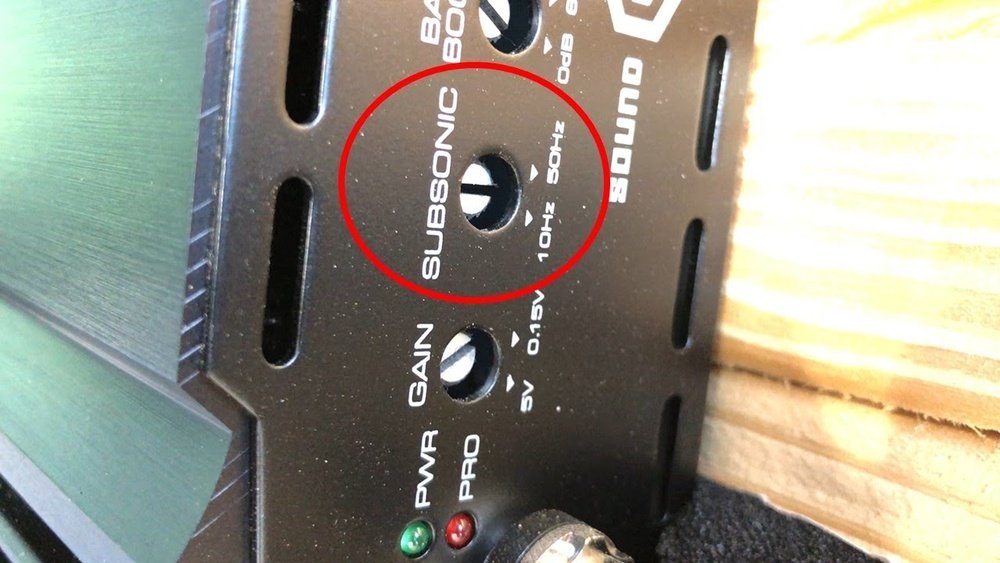
On most amplifiers, the subsonic filter is a small knob or switch. You can set the frequency where the filter starts working.
- Rotary knob: You turn it to pick a frequency, usually between 10 Hz and 50 Hz.
- Switch: Some amps have a simple on/off option or preset frequencies.
How The Filter Changes The Sound
The subsonic filter does not affect most music, since little content exists below 20 Hz. But in some songs or soundtracks, there are “rumble” or “infra-bass” noises. The filter removes these, so you get better sound.
Typical Subsonic Filter Settings
Different systems need different subsonic settings. Here are common choices:
- Sealed subwoofer boxes: 15–20 Hz
- Ported (vented) subwoofer boxes: 20–30 Hz
- Home theater subs: 18–25 Hz
- Car audio subs: 25–35 Hz
A ported subwoofer needs more protection from low frequencies, so a higher setting is better.
Example Subsonic Filter Settings Table
Below is a simple guide for setting your subsonic filter based on subwoofer type:
| Subwoofer Type | Recommended Setting (Hz) | Reason |
|---|---|---|
| Sealed Box | 15–20 | Protects from ultra-low frequencies, keeps natural bass |
| Ported Box | 20–30 | Protects from “unloaded” damage below tuning |
| Home Theater | 18–25 | Removes unwanted infra-bass from movies |
| Car Audio (Small Box) | 25–35 | Removes road noise, protects in small spaces |

Credit: www.youtube.com
Subsonic Filter Vs. Low Pass Filter
Some people confuse the subsonic filter with the low pass filter. They do different jobs:
- Subsonic filter: Blocks very low frequencies (below your hearing).
- Low pass filter: Blocks high frequencies (above your subwoofer’s range).
Both filters help shape the sound, but at opposite ends.
Subsonic Vs. Low Pass Filter Table
See the comparison below for a quick summary.
| Filter Type | Blocks | Used For |
|---|---|---|
| Subsonic Filter | Very low frequencies (e.g., below 20 Hz) | Protects subwoofer from damage, improves power use |
| Low Pass Filter | High frequencies (e.g., above 80 Hz) | Ensures only bass reaches subwoofer |
How To Set The Subsonic Filter On Your Amp
Setting the subsonic filter is simple, but there are a few steps to follow:
- Check your subwoofer’s specs: Find the “tuning frequency” (for ported boxes) or the lowest safe frequency.
- Set the filter just above this frequency: For example, if your ported box is tuned to 28 Hz, set the filter at 30 Hz.
- Listen to your system: Play music with deep bass. If the sound is clear and your sub doesn’t make strange noises, the setting is good.
- Fine-tune if needed: Turn the knob slightly higher or lower to match your taste. Avoid settings lower than your box’s tuning frequency for ported boxes.
Practical Example
Let’s say you have a ported subwoofer box tuned to 32 Hz. You set the subsonic filter at 35 Hz. This means any sound below 35 Hz will be cut, protecting your subwoofer from “bottoming out” (making loud, rattling noises).

Credit: www.advancedcaraudiosolutions.com
Common Mistakes With Subsonic Filters
Many beginners make errors when setting their subsonic filter. Here are a few to avoid:
- Setting the filter too low: If you set it below your box’s tuning, your subwoofer can get damaged.
- Setting it too high: You lose some deep bass that your subwoofer can handle.
- Ignoring the filter: Some users never set it, which can cause problems over time.
Real-life Data
Audio shops report that over 40% of subwoofer failures in ported boxes are due to missing or incorrect subsonic filter use. Setting the filter properly can double your subwoofer’s lifespan.
Subsonic Filter And Power Efficiency
Using a subsonic filter makes your amp work smarter, not harder. Here’s why:
- Less wasted energy: The amp does not waste power on sounds you cannot hear.
- More headroom: The amp can play cleaner, louder bass.
- Lower heat: Less stress on the amplifier, so it runs cooler.
Power Efficiency Table
See how a subsonic filter affects amplifier power use:
| Setting | Amplifier Load | Bass Quality |
|---|---|---|
| No Subsonic Filter | High (wasted on inaudible sounds) | Muddy, less defined |
| Proper Subsonic Setting | Optimized (used for music you hear) | Clear, strong |
When Should You Use The Subsonic Filter?
Most people should use the subsonic filter if:
- You have a ported subwoofer box
- Your subwoofer is small or low-power
- You notice distortion or rattling at low bass
Even with a sealed box, a subsonic filter can help by removing unwanted noise and making the system more efficient.
When To Avoid
If your subwoofer is designed for ultra-low bass (like some high-end home theater models), you may set the filter lower, or not use it. Always check the manufacturer’s guide.
Subsonic Filter And Music Genres
Certain music styles have more deep bass. Here’s how the subsonic filter matters by genre:
- Hip-hop, EDM: Lots of deep, powerful bass. Set filter carefully to keep the punch.
- Rock, Pop: Less extreme bass. Filter can be set higher.
- Classical: Rarely has subsonic frequencies, but filter still helps with system noise.
A good tip: try different settings for your favorite songs. Listen to the clarity and bass strength.
Advanced Subsonic Filter Features
Some modern amplifiers have advanced subsonic controls:
- Variable slope: Controls how sharply the filter cuts off frequencies.
- Remote adjustment: Lets you fine-tune from the driver’s seat or listening spot.
- Digital displays: Show exact frequency setting.
These features help, but the basic idea remains the same—protect your subwoofer from low, damaging sounds.
Non-obvious Insights For Beginners
Here are two things many people miss:
- The box matters as much as the subwoofer. The correct subsonic setting depends on your subwoofer box design, not just the speaker.
- Every room or car is different. Changes in air pressure, cabin size, and even temperature can affect how bass sounds. Always test the filter in your actual setup, not just follow “one size fits all” advice.

Credit: www.diymobileaudio.com
Reliable Sources For Further Reading
For more technical information, you can visit Wikipedia’s subwoofer article which explains subwoofers and their controls in detail.
Getting The Most Out Of Your Subsonic Filter
To sum up, using the subsonic filter is one of the easiest ways to get better sound and longer life from your subwoofer. It’s a small adjustment with a big impact. Take a few minutes to understand your amplifier’s controls, and you’ll enjoy cleaner bass, safer listening, and less risk of costly repairs.
Frequently Asked Questions
What Happens If I Don’t Use The Subsonic Filter?
If you skip the subsonic filter, your subwoofer will try to play very low sounds it cannot handle. This can cause distortion, reduced sound quality, and even damage your speaker over time.
Where Should I Set The Subsonic Filter On My Amp?
Set the subsonic filter just above your subwoofer box’s tuning frequency (for ported boxes), or around 15–20 Hz for sealed boxes. Always check your subwoofer and box specifications.
Does The Subsonic Filter Affect Sound Quality?
Yes, but in a positive way. It removes bass you can’t hear, making the rest of your music clearer and your subwoofer more efficient.
Is The Subsonic Filter The Same As The Bass Boost?
No. The subsonic filter removes low frequencies, while the bass boost increases the strength of certain bass frequencies. They do opposite jobs.
Can I Use The Subsonic Filter For Home Theater Systems?
Absolutely. Many home theater subwoofers have a built-in subsonic filter. It helps keep movie soundtracks clean and protects your equipment from low-frequency effects that could cause damage.
With the right use of your amp’s subsonic control, you’ll enjoy deeper, safer, and cleaner bass. It’s a small detail that makes a big difference for every audio lover.