
Thinking of Adding a Subwoofer to a Factory Stereo? Expert Tips
Thinking Of Adding A Subwoofer To A Factory Stereo
Many car owners love music, but factory stereos often lack the deep, powerful bass that makes songs come alive. If you want your favorite tracks to sound richer and fuller, you might think about adding a subwoofer to your factory stereo system. The good news: you don’t need to replace your entire car audio setup to get better bass. You can simply add a subwoofer and enjoy a big improvement.
But before you buy anything, it’s smart to understand what’s involved. This guide will walk you through everything—what a subwoofer does, how it fits with your factory stereo, what you’ll need, and what to expect during installation. Let’s get started on making your car sound system truly impressive.
Why Add A Subwoofer To Your Factory Stereo?
Factory car stereos are designed for average listeners, not audio lovers. Most factory systems use small speakers that can’t produce deep bass. This is why your music may sound flat or thin, especially with hip-hop, EDM, or rock.
Adding a subwoofer brings benefits like:
- Fuller sound: Low frequencies add warmth and excitement.
- Less distortion: A subwoofer handles bass, letting your main speakers play clearer mids and highs.
- Custom volume: Most subwoofers have their own volume control, so you can adjust the bass to your taste.
- Better music experience: You’ll feel the music, not just hear it.
If you listen to music often, the upgrade is noticeable—even with a stock stereo.
How A Subwoofer Works In A Factory Stereo
A subwoofer is a speaker made just for bass. It plays frequencies below 100 Hz, which most car speakers cannot handle well. But factory stereos usually don’t have a special output for subwoofers.
So, How Does A Subwoofer Fit In?
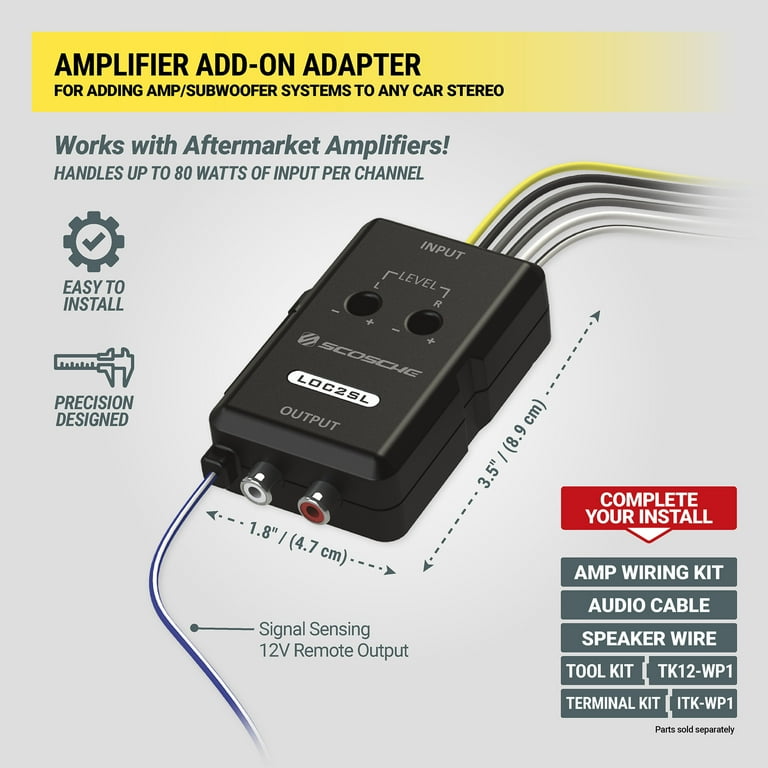
- Line Output Converter (LOC): This device connects to your factory speaker wires and creates a signal for the subwoofer amplifier.
- Powered Subwoofers: Some subwoofers have a built-in amp and can connect directly to speaker wires.
- Add-On Amplifiers: You’ll need a separate amp if your subwoofer isn’t powered.
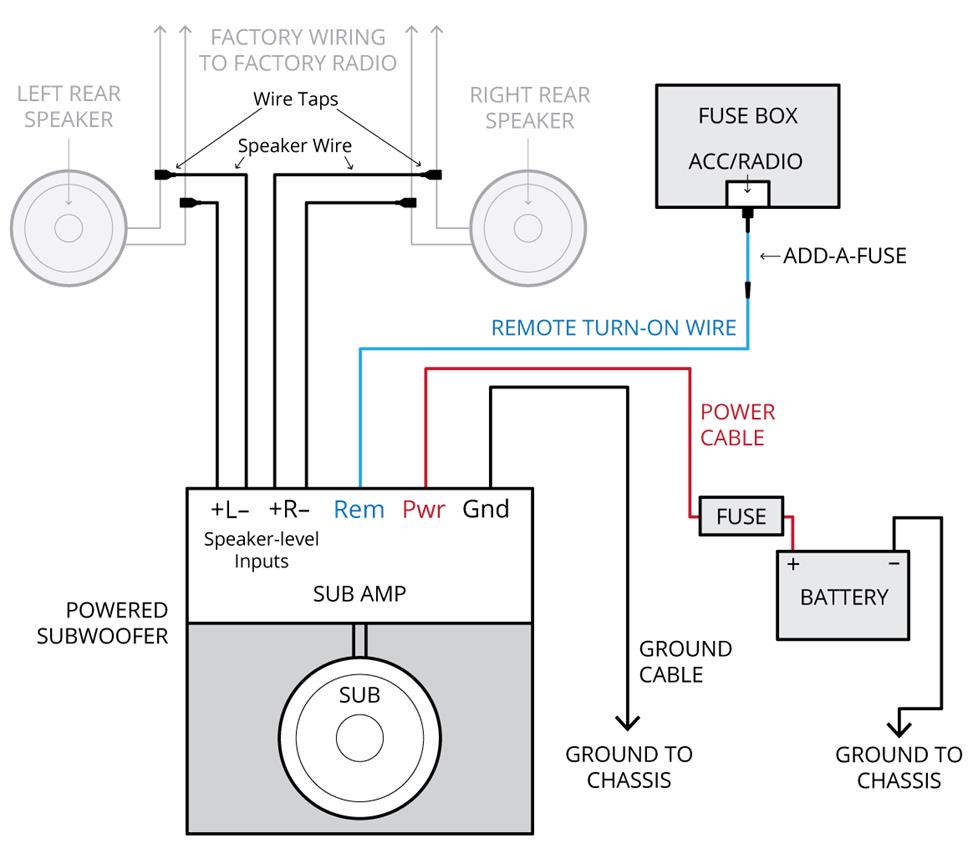
Here’s a simple overview of how the system connects:
| Component | Role | Connection |
|---|---|---|
| Factory Stereo | Plays music | Speaker wires out |
| Line Output Converter (LOC) | Converts speaker signal | Factory speaker wires to RCA output |
| Amplifier | Powers the subwoofer | RCA from LOC, power from battery |
| Subwoofer | Creates bass | Wired to amplifier |
Many beginners don’t realize that you can add a subwoofer without changing your factory radio. All you need is the right adapters and wiring.
Credit: www.walmart.com
What You Need To Add A Subwoofer
You don’t have to be a car audio expert to upgrade your system. But you do need a few specific parts:
- Subwoofer: Choose a powered subwoofer (with built-in amp) for easier installation, or a passive one if you want more flexibility.
- Amplifier: If your subwoofer isn’t powered, you’ll need an amp that matches the sub’s power rating (measured in watts RMS).
- Line Output Converter (LOC): Converts your speaker-level signal to RCA output for the amp.
- Wiring Kit: Includes power cables, ground wire, RCA cables, and fuse.
- Speaker Wire Taps or Adapters: Connect to your factory speaker wires without cutting.
Example: If you buy a 300-watt RMS subwoofer, your amp should provide about 300 watts RMS at the correct impedance (ohms).
Here’s a quick comparison of powered vs. passive subwoofers:
| Feature | Powered Subwoofer | Passive Subwoofer |
|---|---|---|
| Built-in Amp | Yes | No |
| Ease of Install | Simple | More complex |
| Sound Power | Moderate | High (if paired with strong amp) |
| Best For | Beginners, small cars | Advanced users, large cars |
Step-by-step Guide To Adding A Subwoofer
Adding a subwoofer can be a DIY project if you’re handy with tools and wiring. Here’s how most people do it:
- Plan Location: Decide where to place the subwoofer. Common spots are the trunk or under a seat.
- Disconnect Battery: Always disconnect your car’s battery before working with wires.
- Install Line Output Converter:
- Find your rear speaker wires.
- Tap into these wires using the LOC.
- Connect the LOC’s RCA outputs to your amplifier or powered subwoofer.
- Run Power Cable:
- Use the wiring kit to run a thick power cable from the battery to the amp/sub.
- Secure the fuse close to the battery.
- Ground the System:
- Find a bare metal spot near the subwoofer location.
- Attach the ground wire tightly.
- Connect Remote Turn-On Lead:
- This wire tells the amp to turn on when the radio is on.
- Most people tap this from the fuse box or radio wiring.
- Connect Subwoofer:
- Wire the amp to the subwoofer (if using passive setup).
- For powered subs, just connect the speaker signal and power.
- Test the System:
- Reconnect the battery.
- Play music at low volume and check for sound.
- Adjust settings as needed.
Tip: Take your time hiding wires under trim or carpet for a clean, professional look.

Credit: volunteeraudio.com
Common Mistakes To Avoid
Many beginners make errors that cause poor sound or even damage. Here’s what to watch out for:
- Using the wrong amp: Too little power can make the subwoofer sound weak. Too much power can burn it out.
- Bad ground connection: A loose or dirty ground wire creates buzzing or no sound.
- Poor wire routing: Running power cables near signal cables can cause humming or interference.
- Skipping fuse protection: Never connect directly to the battery without a fuse—it’s a fire risk.
- Incorrect phase: If the bass sounds weak, try switching the subwoofer’s + and – wires.
Choosing The Right Subwoofer For Your Needs
Picking the best subwoofer depends on your goals, car size, and budget. Consider these factors:
- Size matters: Common sizes are 8”, 10”, and 12”. Bigger subwoofers give deeper bass, but need more space.
- Power ratings: Look for RMS power, not just “peak” power. Match the amp’s RMS output to the sub’s RMS rating.
- Impedance (ohms): Most car subs are 2 or 4 ohms. Make sure your amp matches the subwoofer’s impedance.
- Enclosure type:
- Sealed boxes give tight, punchy bass.
- Ported boxes are louder but less precise.
- Space available: Measure your trunk or under-seat area before buying.
Here’s a quick data table for example subwoofer setups:
| Car Type | Subwoofer Size | Enclosure | Power Needed (RMS) |
|---|---|---|---|
| Compact car | 8” | Sealed | 150-200W |
| Sedan | 10” | Sealed/ported | 200-400W |
| SUV/Truck | 12” | Ported | 300-600W |
Beginner insight: Don’t chase the biggest subwoofer possible. Even a small, well-installed sub can transform your music.
What To Expect After Installation
The first thing you’ll notice is the difference. Songs feel deeper and more exciting. Your friends may be surprised at how much better your car’s music sounds—even with the same factory stereo.
- Better sound quality: The low end is fuller, and vocals sound clearer.
- More volume control: You can adjust the bass to fit your taste or the song.
- No need to crank the volume: Bass is strong even at lower volumes.
- Increased enjoyment: Road trips and daily drives become more fun.
One thing many beginners miss: You may need to adjust your stereo’s bass and treble settings after adding a subwoofer. Too much bass can overpower everything, so fine-tune for balance.
Cost Breakdown: How Much Will It Cost?
The price depends on your choices and whether you install it yourself or pay a pro.
- Subwoofer: $60–$300 (powered subs can be pricier)
- Amplifier: $50–$200 (not needed for powered subs)
- Line Output Converter: $15–$50
- Wiring Kit: $20–$60
- Professional Installation: $100–$300
Total DIY cost ranges from $150 to $600. Professional installation usually adds another $100–$300. If you’re on a budget, a powered subwoofer and wiring kit is the simplest, most affordable path.
Diy Vs Professional Installation
Installing a subwoofer is possible for beginners with patience and basic tools. But if you’re not comfortable with wiring, it’s smart to pay a pro.
DIY Pros:
- Save money
- Learn about your car’s audio system
- Customizable to your needs
DIY Cons:
- Takes time (2–4 hours for most beginners)
- Risk of mistakes or damage
Professional Pros:
- Fast (usually 1–2 hours)
- Guaranteed results
- Less stress
Professional Cons:
- Higher cost
If you want a challenge and to save money, DIY is rewarding. But if you want peace of mind, a professional install is worth it.
Tuning And Getting The Best Sound
Once your subwoofer is installed, the next step is tuning. This means adjusting the settings for the best bass without distortion.
- Set the gain: Start low, then raise until the bass is strong but not distorted.
- Adjust crossover: The crossover decides which frequencies go to the sub. 80Hz is a good starting point.
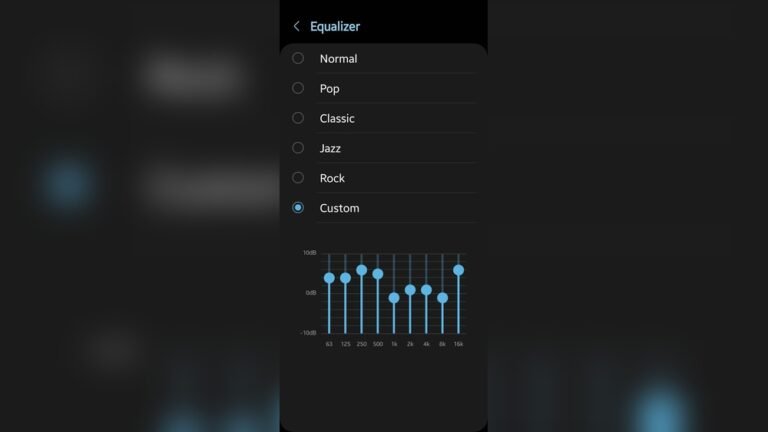
- Balance the bass: Adjust your stereo’s EQ so the sub blends with your other speakers.
Tip: Listen to several types of music while tuning. What sounds good for hip-hop might be too much for jazz or pop.
Many beginners forget to tune their system after installation. Proper tuning makes a big difference in sound quality.
Security And Power Draw
Adding a subwoofer means more power use. Most factory electrical systems handle this, but if your headlights dim or your car struggles to start, you may need a stronger battery.
- Fuse protection: Always use the fuse in your wiring kit.
- Hide your subwoofer: Don’t leave it in plain sight if theft is a concern.
- Disconnect when not in use: Some powered subs have a switch—turn off if you won’t use the car for a long time.
Real-life Example
Let’s say you own a Honda Civic with a basic stereo. You add an 8” powered subwoofer under the seat. The total cost is about $200 with DIY install. The difference: your music now has punchy, deep bass, and you didn’t have to change your factory radio or speakers.
This upgrade is common and works for almost any car with a factory stereo.
For more technical details about subwoofers, you can visit the Wikipedia subwoofer page.
Credit: www.crutchfield.com
Frequently Asked Questions
What Size Subwoofer Is Best For My Car?
For small cars, an 8” or 10” subwoofer works well and fits easily. Sedans can use 10” or 12” subs. Larger cars and SUVs benefit from 12” or even dual subwoofers. Always measure your space before buying.
Can I Add A Subwoofer Without Changing My Factory Stereo?
Yes, you can. Use a Line Output Converter (LOC) to connect the subwoofer amp to your factory stereo’s speaker wires. Many modern powered subwoofers support direct connections.
Will Adding A Subwoofer Drain My Car Battery?
A single subwoofer with a proper wiring kit usually doesn’t drain a healthy battery. If your car struggles to start, check your battery’s health, and make sure your subwoofer turns off with the ignition.
How Long Does Installation Take?
DIY installation takes 2–4 hours for most beginners. A professional shop can often finish in 1–2 hours, depending on the car and setup.
Do I Need To Upgrade My Car’s Alternator?
For most single subwoofer setups, the factory alternator is enough. If you plan to run multiple high-power subwoofers (over 1000 watts), consider upgrading your alternator or battery.
Adding a subwoofer to your factory stereo is one of the easiest, most effective ways to improve your car’s sound. With the right parts and a little planning, you can enjoy deep, powerful bass and a richer music experience—no new head unit required.