How to Calculate Subwoofer Displacement: A Step-by-Step Guide
Calculating the subwoofer displacement is a critical step when building or upgrading a speaker box. If you skip this step, your enclosure volume may be too small, causing poor bass response or even damaging your subwoofer. For beginners, the process may sound technical, but with simple math and the right steps, anyone can do it accurately.
Why Subwoofer Displacement Matters
Every subwoofer takes up space inside your speaker box. This space is called displacement. If you don’t subtract this volume from the total box size, your subwoofer won’t sound as good as it should. Manufacturers often give a recommended box volume. That number is the *net* volume, meaning it does not include the space your subwoofer uses.
- Incorrect displacement can cause weak or boomy bass.
- Too small a box can hurt your subwoofer’s performance.
- Proper calculation gives you clean, strong bass.
Many beginners overlook displacement, thinking it’s a small detail. In reality, even a small subwoofer can take up 0. 05 to 0. 15 cubic feet, which is enough to change the sound.
The Basic Formula For Subwoofer Displacement
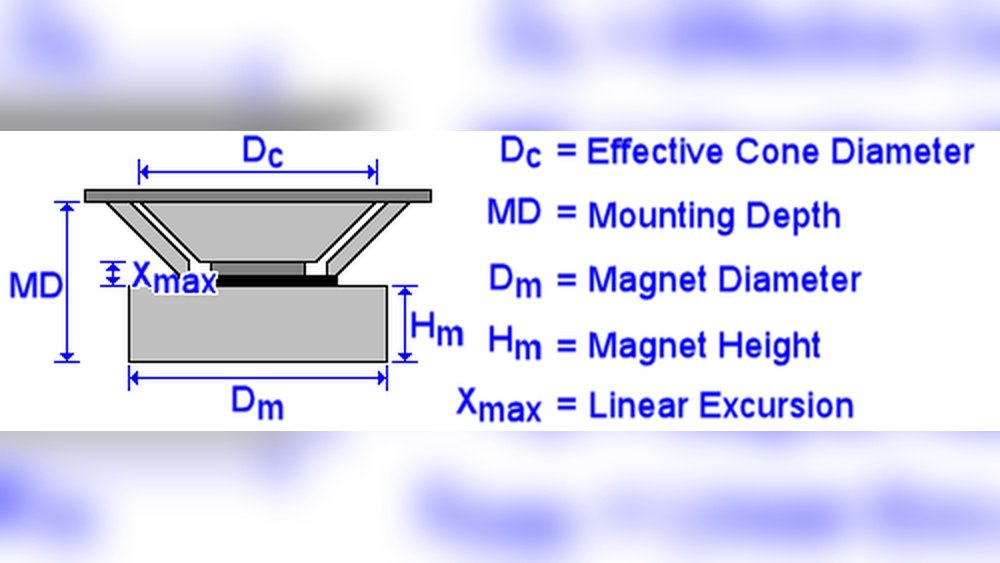
To find how much space your subwoofer uses, you need to know its external dimensions. Most subwoofers are shaped like a short cylinder. The formula for the volume of a cylinder is:
Volume = π × radius² × height
In subwoofer terms:
- Radius: Half of the mounting diameter
- Height: Mounting depth (how deep the sub sits in the box)
Manufacturers may list displacement directly in the manual or specs. If not, use the formula above.
Here’s a quick step-by-step:
- Measure the mounting diameter and mounting depth in inches.
- Convert diameter to radius (divide by 2).
- Use the formula to find volume in cubic inches.
- Divide cubic inches by 1,728 to get cubic feet.
Example Calculation
Let’s say your subwoofer has:
- Mounting diameter: 12 inches
- Mounting depth: 6 inches
Steps:
- Radius = 12 / 2 = 6 inches
- Volume = 3.14 × 6² × 6 = 3.14 × 36 × 6 = 678.24 cubic inches
- Volume in cubic feet = 678.24 / 1,728 ≈ 0.39 cubic feet
Tip: Most real subwoofers are not solid cylinders, but this gives a close estimate. Always check the manufacturer’s numbers if available.
Credit: proline-x.com
Subwoofer Displacement Vs. Box Volume
Understanding the difference between gross and net box volume is essential. Gross is the total internal space. Net is the volume left after subtracting the subwoofer displacement and any other items inside, like bracing or ports.
Here’s a quick comparison:
| Box Volume Term | Definition | What It Includes |
|---|---|---|
| Gross Volume | Total internal space | All air inside box |
| Net Volume | Usable air space for sound | Gross minus subwoofer, bracing, ports |
Always design your box using net volume. If the manufacturer recommends 1 cubic foot, your box’s gross volume must be 1 cubic foot plus the subwoofer’s displacement.
Using Manufacturer Specifications
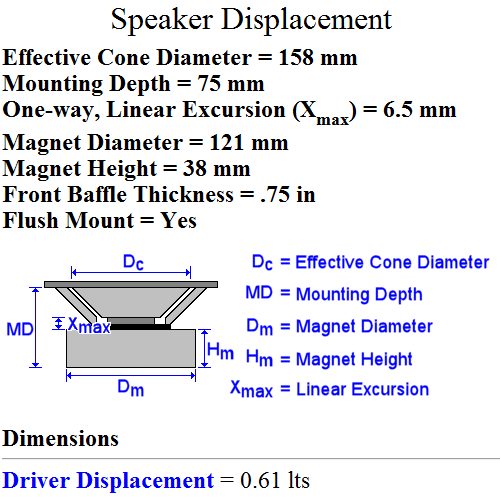
Most subwoofers come with a spec sheet. Look for these terms:
- Displacement (sometimes called “Vd” or “sub displacement”)
- Mounting depth
- Cutout diameter
If you find the displacement, use that number instead of your estimate. It’s more accurate since it measures the real shape of the sub.
Here’s a data example from a popular 12-inch subwoofer:
| Subwoofer Model | Displacement (cu ft) | Mounting Depth (inches) |
|---|---|---|
| JL Audio 12W0v3 | 0.052 | 5.4 |
| Rockford Fosgate P3D4-12 | 0.114 | 6.66 |
Notice how displacement can vary a lot. Using the wrong number can throw off your calculations.

Credit: www.youtube.com
Factoring In Bracing And Ports
If your box uses internal bracing (wood pieces to make it stronger) or a port (tube or slot for airflow), you must subtract their volume too. This is often missed by beginners.
- Measure the size (length × width × height) of each piece inside the box.
- Calculate the total volume in cubic inches.
- Convert to cubic feet and subtract from gross volume.
Even a few wooden braces can take up 0. 05 cubic feet, which adds up.
Common Mistakes And How To Avoid Them
- Ignoring the subwoofer displacement: Always subtract it from your box volume.
- Forgetting bracing and ports: Every object inside the box uses space.
- Rounding numbers too much: Small errors can change sound quality.
- Not checking manufacturer specs: Always use their numbers if possible.
- Assuming all subs are the same: Displacement varies with brand, size, and design.
Credit: www.diyaudioandvideo.com
Practical Tips For Beginners
- Always measure twice before cutting wood.
- If you’re unsure, build the box a bit bigger and add filler blocks later.
- Keep a calculator handy or use online tools.
- Save manufacturer spec sheets for all your speakers.
If you want a handy online calculator, check out this resource: Crutchfield Subwoofer Box Calculator.
Frequently Asked Questions
How Do I Find My Subwoofer’s Displacement If The Manual Doesn’t List It?
Use the cylinder formula: π × radius² × height. Measure the mounting diameter and depth, calculate the volume, and convert to cubic feet.
Is Subwoofer Displacement Really That Important?
Yes. Subwoofer displacement affects sound quality. If you ignore it, your box may be too small, making the bass weak or distorted.
Does A Larger Subwoofer Always Have More Displacement?
Usually, but not always. Shape, magnet size, and basket design can change the volume, so always check the specs.
How Do I Include The Port And Bracing Volume?
Measure each piece inside your box. Multiply length × width × height to get cubic inches, then divide by 1,728 to convert to cubic feet. Subtract this from your gross volume.
Can I Use The Same Displacement For All 12-inch Subwoofers?
No. Different models have different designs. Always use the displacement value for your specific subwoofer.
Getting your subwoofer displacement right is key to enjoying clear, deep bass. Take your time with measurements, use the right formula, and always check your work. This small step can make a big difference in your sound system’s performance.