Difference Between Subwoofers And Speakers: Key Features Explained
When setting up a sound system, many people come across two common terms: subwoofers and speakers. While both are essential for listening to music, watching movies, or enjoying games, they serve different purposes. Knowing the difference helps you create a better audio experience at home, in your car, or at an event. This article explains the main differences between subwoofers and speakers in simple words. It also covers practical examples, data, and tips for beginners.
What Is A Speaker?
A speaker is a device that converts electrical signals into sound. You find speakers everywhere—inside TVs, smartphones, computers, cars, and home theaters. Speakers come in many shapes and sizes, but they all work on the same basic principle.
- Main job: Reproduce the full range of sounds you hear.
- Sounds covered: High, mid, and low frequencies (bass, midrange, and treble).
- Common types: Bookshelf speakers, floor-standing speakers, car speakers, and portable Bluetooth speakers.
Speakers usually have one or more drivers:
- Tweeter: Handles high-pitched sounds (like cymbals or birds).
- Midrange driver: Focuses on voices and instruments.
- Woofer: Reproduces deeper, bass sounds.
Some speakers combine all three drivers in one box. Others separate them for better sound quality.
What Is A Subwoofer?
A subwoofer is a special type of speaker designed to play only the lowest sounds—the deep bass you feel more than hear. Subwoofers are not meant for voices or high-pitched sounds. Instead, they focus on the rumbling effects in movies, the thump in music, or the low growl in games.
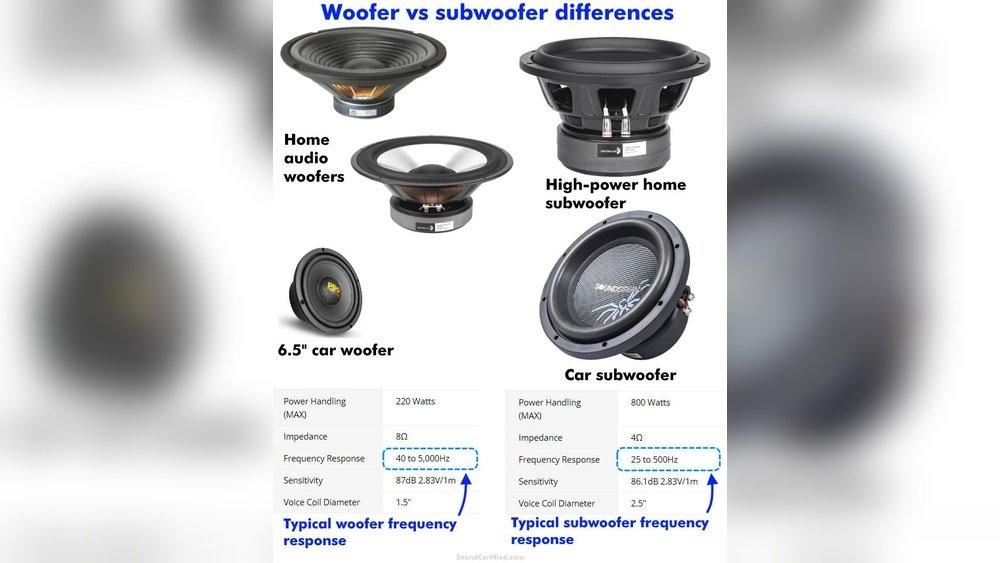
- Main job: Reproduce low frequencies (usually 20–200 Hz).
- Sounds covered: Deep bass, explosions, drum beats, and low notes from instruments.
- Common types: Powered (with built-in amplifier) and passive (needs an external amplifier).
Subwoofers are larger than regular speakers because deep sounds need more air movement to be heard and felt.
Key Differences: Subwoofers Vs. Speakers
Understanding the differences between subwoofers and speakers helps you pick the right setup. Here’s a simple comparison:
| Feature | Subwoofer | Speaker |
|---|---|---|
| Main Frequency Range | 20–200 Hz | 60 Hz–20 kHz |
| Sound Type | Deep bass | Full range (bass, mid, treble) |
| Size | Usually large | Various (small to large) |
| Purpose | Adds impact and depth | Main sound reproduction |
| Placement | Flexible (often on floor) | Positioned for balance |
Practical Example
Imagine watching a movie. The dialogue (people talking) comes from the speakers. The explosion that shakes the room comes from the subwoofer. Both work together for a complete sound experience.
How Speakers Work
Speakers use magnets and coils to move a cone back and forth. This movement creates sound waves. The frequency (how fast the cone moves) decides the pitch of the sound:
- High frequencies: Fast movement (tweeters)
- Mid frequencies: Medium movement (midrange drivers)
- Low frequencies: Slow, big movement (woofers)
Most home speakers try to cover a wide range, but small drivers cannot produce deep bass well. That’s why many setups add a subwoofer.

Credit: www.youtube.com
How Subwoofers Work
Subwoofers are designed for low-frequency sounds. They usually have:
- Large cone (8–15 inches): Moves lots of air for deep bass.
- Strong magnets and heavy build: Needed for powerful movement.
- Enclosure (box): Sealed or ported to control airflow and sound quality.
Subwoofers often require more power than regular speakers. Powered subwoofers include their own amplifier, making setup easier for beginners.
Why Deep Bass Needs A Subwoofer
Regular speakers struggle with deep bass for two reasons:
- Small size: Small drivers can’t move enough air for low sounds.
- Power limits: Producing bass requires a lot of energy.
A subwoofer is built to handle these challenges. In music, you feel the “kick” from a drum because the subwoofer can move enough air quickly.
Interesting Insight: Human ears are less sensitive to low frequencies. That’s why bass needs to be powerful to be noticed, especially in larger rooms.
Different Uses: Home, Car, And Events
Home Theater
- Subwoofers: Make movies exciting by adding the rumble of action scenes.
- Speakers: Handle dialogue, music, and background sounds.
A typical setup uses small speakers for clear voices and a subwoofer for impact.
Music Listening
- Subwoofers: Add depth to pop, rock, EDM, and hip-hop.
- Speakers: Deliver vocals and instruments.
Some music styles sound flat without a subwoofer, especially if you love bass-heavy music.
Car Audio
- Subwoofers: Installed in the trunk or under seats for booming bass.
- Speakers: Placed in doors or dashboard for full sound.
Subwoofers are popular in cars where road noise can hide low frequencies.
Events And Parties
- Subwoofers: Essential for large spaces. They help the audience feel the music.
- Speakers: Spread sound evenly so everyone hears clearly.
Professional DJs and event organizers always include subwoofers for crowd impact.
How To Choose: Subwoofer Or Speaker?
If you are new to audio, it’s easy to be confused. Here’s what matters:
- Room size: Large rooms need a subwoofer for full sound.
- Music taste: Bass-heavy music sounds better with a subwoofer.
- Movie fans: Action and special effects need deep bass.
- Space and budget: Subwoofers are bigger and cost extra.
If you only listen to podcasts or watch news, speakers alone may be enough. But for music, movies, or gaming, adding a subwoofer changes everything.
Common Mistakes Beginners Make
- Buying only a subwoofer: A subwoofer alone cannot produce clear voices or instruments. Always pair it with speakers.
- Ignoring crossover settings: The crossover decides which sounds go to the subwoofer. Wrong settings cause muddy or weak sound.
- Placing subwoofer badly: Corners can make bass too loud or uneven. Try different spots for best result.
- Too much bass: More bass isn’t always better. Balance is key for natural sound.
- Using tiny speakers with a big subwoofer: This creates a gap in sound. Match the size and quality for smooth audio.
Data: Frequency Range Comparison
Here’s a look at frequency ranges covered by each device:
| Device | Frequency Range (Hz) | Typical Sounds |
|---|---|---|
| Subwoofer | 20–200 | Thunder, explosions, bass guitar |
| Bookshelf Speaker | 60–20,000 | Speech, music, effects |
| Full-range Tower Speaker | 40–20,000 | All sounds, fuller bass |
Practical tip: Human hearing usually ranges from 20 Hz to 20,000 Hz. Subwoofers fill the lowest part, where most speakers are weak.
How Subwoofers And Speakers Work Together
A great audio system uses both subwoofers and speakers. Here’s how they divide the work:
- Speakers play everything except the deepest bass.
- Subwoofers handle only deep bass, taking stress off main speakers.
This teamwork creates clean, powerful, and balanced sound.
Example: Home Theater Setup
- Front speakers: Handle voices and main music.
- Surround speakers: Add effects (like footsteps or rain).
- Subwoofer: Adds deep rumble and impact.
With this combination, you hear every detail and feel every explosion.
Technology Trends And Data
Audio technology has improved a lot. Today’s subwoofers and speakers are more efficient and affordable.
- According to the Consumer Technology Association, over 70% of home theater systems sold in the US now include a dedicated subwoofer.
- Wireless subwoofers are becoming popular, making setup easier for beginners.
- Compact subwoofers fit under sofas or small spaces, perfect for apartments.
Non-obvious tip: Some soundbars now include built-in or separate subwoofers for better TV sound without a full speaker system.

Credit: www.youtube.com
When You Might Not Need A Subwoofer
Not everyone needs a subwoofer. Here are some cases:
- Small rooms: Speakers alone may provide enough bass.
- Voice-heavy content: Podcasts, news, and talk shows don’t use much bass.
- Budget systems: It’s better to get good quality speakers before adding a subwoofer.
But if you want more excitement from music and movies, a subwoofer is a smart upgrade.
Subwoofer And Speaker Placement Tips
- Subwoofer: Try different places in your room. Corners boost bass but can make it too strong. The middle of a wall often sounds more balanced.
- Speakers: Place at ear height, aiming toward your listening spot. Distance from walls affects clarity and bass.
- Crossover setting: Set between 80–120 Hz for a smooth blend in most systems.
Expert insight: Some subwoofers include an auto-calibration feature. This uses a microphone to adjust settings for your room—very helpful for beginners.
Cost Differences
Subwoofers and speakers come in different price ranges. Here’s a simple breakdown:
| Type | Entry-Level Price (USD) | High-End Price (USD) |
|---|---|---|
| Subwoofer | $80–$150 | $800–$3000 |
| Bookshelf Speaker | $60–$200/pair | $1000–$5000/pair |
| Floor-standing Speaker | $200–$500/each | $2000–$10000/each |
Always match your subwoofer and speakers in quality for the best experience.
Final Thoughts
Choosing between a subwoofer and a speaker is not about which is better—they do different jobs. Speakers give you clear voices, music, and effects. Subwoofers add the deep bass that makes sound exciting and powerful. For the best audio, use both together. Beginners often miss how much impact a subwoofer adds, especially in movies and music.
Remember, proper setup and placement matter as much as the equipment you buy. Start with good speakers, then add a subwoofer when you want more bass. With these basics, you’ll make smarter choices and enjoy a richer sound, whether you’re upgrading your home, car, or event audio.
If you want to learn more about the science behind sound frequencies and speakers, check out the Wikipedia page on speaker drivers.
Credit: soundcertified.com
Frequently Asked Questions
What Is The Main Difference Between A Subwoofer And A Speaker?
A subwoofer plays only deep bass sounds (20–200 Hz), adding impact and rumble. A speaker covers a wider range (60 Hz–20,000 Hz), handling voices, instruments, and effects.
Can I Use A Subwoofer Without Speakers?
No, a subwoofer alone cannot play clear voices or music. It only adds deep bass. You always need regular speakers for a complete sound.
Where Should I Place My Subwoofer?
Place your subwoofer near your main listening area. Corners boost bass but can make it too strong. Try different spots for the best balance.
Do All Music Styles Need A Subwoofer?
Not all. Bass-heavy music (like hip-hop, EDM) benefits most. Classical, jazz, or podcasts may sound good with speakers alone, but a subwoofer still adds fullness.
How Many Subwoofers Do I Need?
One subwoofer is enough for most rooms. Large rooms or home theaters may use two for smoother bass. Always match them with your speakers for best results.