How are Car Speakers Measured: A Complete Guide for Buyers
How Are Car Speakers Measured
If you want to upgrade your car audio, understanding how car speakers are measured is essential. Many people feel confused when they see numbers like “6.5-inch speakers” or “2-way speakers.” These measurements are not just about size—they affect the sound quality, fitting, and overall listening experience. In this guide, you’ll learn how car speakers are measured, what each number means, and how to use this information to choose the right speakers for your car. By the end, you’ll feel confident to make better audio decisions.
Why Car Speaker Measurements Matter
Car speaker measurements are important for several reasons:
- Fit: The wrong size will not fit your car, making installation difficult.
- Sound Quality: Different measurements affect bass, clarity, and loudness.
- Compatibility: Knowing the measurements helps match speakers with your car and other audio parts.
- Buying Decisions: Understanding measurements prevents buying mistakes.
Many beginners only look at the size, but other measurements are just as important. For example, two speakers with the same diameter might sound very different because of their depth or power ratings.
Types Of Car Speaker Measurements
Car speakers are measured in several ways. Each measurement tells you something important about the speaker’s performance and fit.
1. Diameter (size)
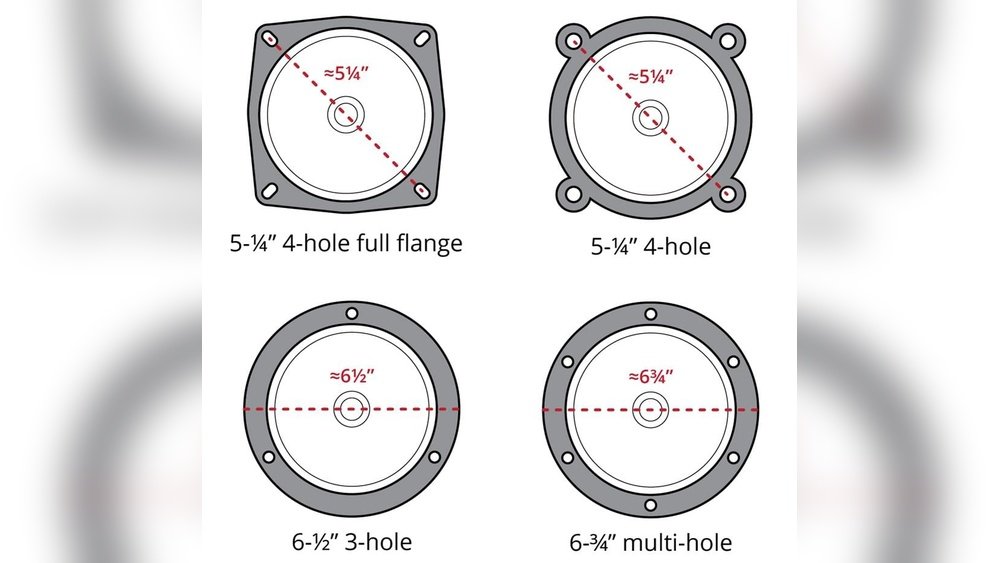
The most common measurement is the diameter. This is the distance across the speaker cone, usually measured in inches.
- Common sizes: 3.5-inch, 4-inch, 5.25-inch, 6.5-inch, 6×9-inch
- Measured from one edge of the mounting frame to the opposite edge
For example, a 6.5-inch speaker means the speaker cone is about 6.5 inches across.
Why it matters:
- Larger diameters usually produce better bass.
- Smaller diameters fit in tight spaces and are used for higher frequencies.
2. Mounting Depth
Mounting depth is the distance from the front of the speaker to the back. This measurement shows how much space the speaker needs behind the mounting surface.
- Shallow-mount speakers are good for cars with limited space.
- Deep speakers might not fit in all doors or panels.
Example: If your car door has only 2 inches of space, a speaker with 2.5-inch mounting depth won’t fit.
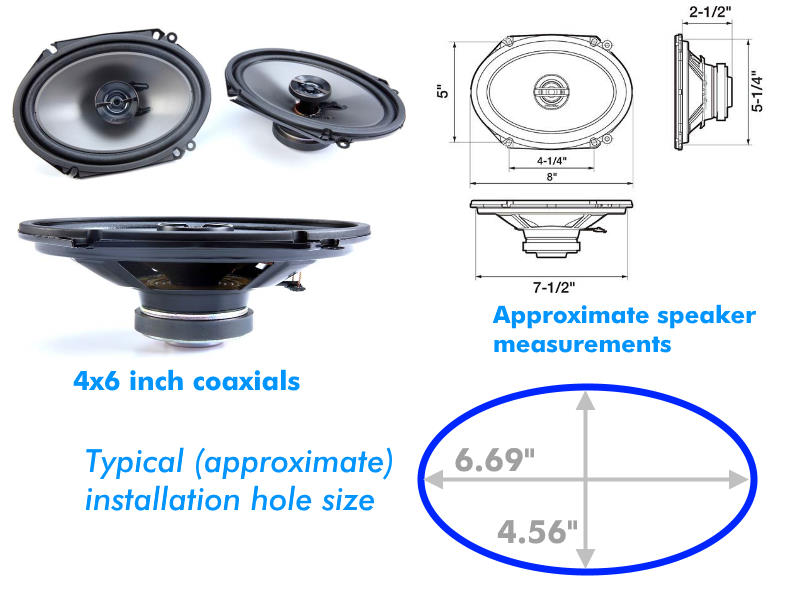
3. Cutout Diameter
This is the size of the hole needed to fit the speaker. It is usually smaller than the overall diameter.
- Helps make sure the speaker fits tightly
- Important for DIY installations
4. Height (protrusion)
Height is the distance the speaker sticks out from the mounting surface.
- High protrusion can block windows or panels.
- Low profile speakers are safer for tight spaces.
5. Power Handling (wattage)
Speakers have two wattage ratings:
- RMS (Root Mean Square): The amount of power the speaker can handle continuously.
- Peak: The maximum power the speaker can take for short bursts.
RMS is the more important number for daily use. For example, a speaker rated at 50W RMS and 150W Peak means it can play safely at 50 watts most of the time, but can handle up to 150 watts briefly.
6. Sensitivity (db)
Sensitivity measures how loud the speaker is for a given power input. It’s measured in decibels (dB).
- Higher dB = louder sound with less power
- Typical range: 80–92 dB
If two speakers have the same power, the one with higher sensitivity will sound louder.
7. Impedance (ohms)
Impedance is measured in ohms (Ω). It shows how much electrical resistance the speaker has.
- Common values: 4 ohms, 2 ohms, 8 ohms
- Must match your car’s amplifier or head unit
A mismatch can cause poor sound or even damage equipment.

Credit: www.reddit.com
Measurement Examples With Data
Let’s look at real-world examples. This helps you see how measurements affect speaker choice and installation.
| Size (inches) | Mounting Depth (inches) | Cutout Diameter (inches) | Typical RMS (watts) | Sensitivity (dB) | Impedance (ohms) |
|---|---|---|---|---|---|
| 6.5 | 2.1 | 5.6 | 40 | 88 | 4 |
| 5.25 | 1.8 | 4.7 | 30 | 86 | 4 |
| 6×9 | 3.2 | 8.7 x 5.7 | 60 | 90 | 4 |
From the table, you see:
- 6.5-inch speakers are popular for balance between bass and fit.
- 6×9-inch speakers are larger and give more bass, but need more mounting depth.
Speaker Types And Measurement Differences
Not all car speakers are the same. Measurements can differ based on type.
Coaxial Speakers
- Combine woofer and tweeter in one unit
- Usually labeled by diameter (e.g. 6.5-inch coaxial)
- Simple to install
Component Speakers
- Separate woofer, tweeter, and sometimes a midrange
- Each part has its own measurements (diameter and depth)
- More precise sound but harder to fit
Subwoofers
- Measured mainly by diameter (8-inch, 10-inch, 12-inch)
- Require deep mounting space
Tweeters
- Small diameter (1-inch, 2-inch)
- Shallow mounting depth
How To Measure Your Existing Car Speakers
If you want to replace your car speakers, you should measure the old ones first. Here’s how:
- Remove the speaker from the mount.
- Measure the diameter across the cone (not the frame).
- Check the mounting depth from the front to the back of the speaker.
- Measure the cutout diameter of the hole in the car panel.
- Note the height or protrusion if the speaker sticks out.
Tips:
- Use a ruler or tape measure for accuracy.
- Always check your car manual for factory measurements.
- If unsure, take photos and compare with product specs online.
Common Measurement Mistakes Beginners Make
Many people make mistakes when measuring car speakers. Here are some to avoid:
- Measuring the frame instead of the cone
- Always measure the cone for diameter, unless the frame is the only part visible.
- Ignoring mounting depth
- Speakers that are too deep won’t fit, even if the diameter is correct.
- Not matching impedance
- Using a 2-ohm speaker with a 4-ohm system can cause damage.
- Forgetting power ratings
- Connecting a speaker to a powerful amplifier without matching RMS can break the speaker.
- Mixing up cutout and overall diameter
- The cutout is usually smaller; check both before buying.
Credit: soundcertified.com
Comparing Speaker Measurements
Car speakers can be compared across several key measurements. Here’s a sample comparison:
| Speaker Model | Size | Mounting Depth | RMS Power | Sensitivity |
|---|---|---|---|---|
| JBL Club 6520 | 6.5-inch | 1.8-inch | 50W | 92 dB |
| Pioneer TS-A1670F | 6.5-inch | 2.0-inch | 70W | 87 dB |
| Rockford Fosgate R169X3 | 6×9-inch | 3.1-inch | 65W | 90 dB |
Notice:
- JBL Club 6520 is louder (higher sensitivity) but lower RMS power.
- Pioneer TS-A1670F handles more power but is less sensitive.
How Measurements Affect Sound Quality
Speaker measurements can change the listening experience:
- Large speakers: Better bass, fuller sound.
- Small speakers: Clearer high notes, easier to fit.
- High sensitivity: Louder with less power.
- Low sensitivity: Need more power for same volume.
For example, a 6×9-inch speaker with 90 dB sensitivity will sound deeper and louder than a 5. 25-inch speaker with 86 dB, even if both use the same power.

Credit: www.wikihow.com
Practical Tips For Choosing Car Speakers
When picking new car speakers, keep these points in mind:
- Check your car’s manual for size and depth.
- Measure the old speakers before buying replacements.
- Match the impedance with your car’s audio system.
- Choose RMS power close to your amplifier’s output.
- Consider sensitivity if you want louder sound without upgrading the amplifier.
- Buy from trusted brands for quality and support.
- Read reviews for real-world performance.
Non-obvious Insights Most Beginners Miss
- Speaker shape matters: Oval speakers (like 6×9-inch) can produce more bass in a smaller space compared to round speakers.
- Material affects sound: The cone material (paper, polypropylene, metal) changes tone and durability. Polypropylene is common for balance and water resistance.
- Grilles and covers add height: Sometimes, the speaker grille increases protrusion. Always measure with the cover if you plan to use it.
- Factory vs aftermarket sizes: Factory speakers may have non-standard sizes. Aftermarket speakers usually follow standard measurements.
- Sensitivity and RMS work together: High sensitivity is good, but if RMS is too low, sound can distort at high volumes.
External Resource For Deeper Learning
For more technical details and speaker design theory, visit Wikipedia’s Loudspeaker Article.
Frequently Asked Questions
What Does “6.5-inch” Mean For Car Speakers?
The 6.5-inch measurement means the speaker cone is 6.5 inches across. It does not include the frame or mounting holes. This size is common for door speakers and offers a good balance of bass and clarity.
How Do I Know If A Speaker Will Fit My Car?
Check your car’s manual or measure the existing speaker’s diameter, mounting depth, and cutout size. Compare these numbers with the new speaker’s specifications. Most websites list all the details for each speaker.
Why Is Rms More Important Than Peak Power?
RMS power shows how much power the speaker can handle safely for long periods. Peak power is only for short bursts. Choosing speakers based on RMS prevents damage and gives better sound quality.
Can I Use A 2-ohm Speaker With A 4-ohm System?
No, mixing impedance can cause problems. Using a lower impedance speaker with a higher impedance system can overload your amplifier and may damage both the speaker and amp. Always match impedance.
What Is Speaker Sensitivity And Why Does It Matter?
Sensitivity is measured in decibels (dB) and tells you how loud the speaker is with a given power. Higher sensitivity means louder sound with less power. It’s important if you don’t plan to upgrade your car’s amplifier.
Upgrading your car speakers starts with understanding measurements. With this knowledge, you can make smart choices that improve your sound without expensive mistakes. Always measure carefully and match the right specifications for your car and audio system. Now, you’re ready to enjoy better music every drive!