How to Fix Loose Speaker Wire in Car: Easy DIY Steps
Getting into your car, you turn on your music, but the sound crackles or cuts out. Sometimes, there’s only sound on one side, or maybe it disappears completely when you drive over a bump. These are classic signs of a loose speaker wire in your car. Many drivers ignore this problem, thinking it’s too technical or expensive to fix. The truth is, fixing a loose speaker wire is possible with simple tools and a bit of patience—even if you’re not an experienced car audio enthusiast.
In this guide, you’ll learn exactly how to find, fix, and prevent loose speaker wire problems in your car. You’ll discover why this issue happens, how to check for it, and what steps to follow to solve it permanently. Along the way, you’ll get practical tips and real-world examples, so you’ll feel confident handling your car’s audio connections.
Let’s get your sound system back to its best.
Why Loose Speaker Wire Happens In Cars
Many people think speaker wires only come loose if someone tampers with them, but that’s not always true. Car vibrations are one of the main reasons wires loosen over time. Every time you drive, your car shakes—sometimes a little, sometimes a lot. Over months or years, these vibrations slowly move the wires, especially where they connect to the speakers or the stereo head unit.
Another common cause is poor installation. If the wires weren’t connected tightly in the first place, or if the wrong connectors were used, they can wiggle free much faster. Sometimes, repairs or upgrades to other car systems may accidentally disturb speaker wiring too.
Finally, wear and tear matters. Wires get old. The plastic insulation can crack, metal connectors can corrode, and repeated unplugging/plugging can weaken the connection.
Real-world Example
A 2017 survey of car audio issues found that over 40% of sound problems were due to loose or corroded speaker connections, not faulty speakers or head units. This means checking your wires is the smartest first step before spending money on new parts.
Signs You Have A Loose Speaker Wire
Not sure if your problem is really a loose wire? Here are the most common symptoms:
- Sound cuts in and out when you hit a bump or move a door
- Crackling or static from one or more speakers
- One side has no sound
- Volume drops on certain songs or randomly
- Speakers work only when you press or move the panel
If you notice these, there’s a good chance the speaker wire is loose.
Credit: soundcertified.com
Tools And Materials You’ll Need
Before you start, gather the right tools. You don’t need many, and most are easy to find at hardware or auto stores.
- Screwdrivers (Phillips and flathead)
- Panel removal tool (plastic trim tool to avoid scratches)
- Wire stripper/cutter
- Needle-nose pliers
- Electrical tape
- Multimeter (for testing continuity)
- Replacement connectors (butt connectors, spade connectors, or solder if desired)
- Soldering iron (optional, for a permanent fix)
- Zip ties
Having these ready saves time and avoids frustration. If you’re not sure how to use a multimeter, don’t worry—this guide will explain.
Safety First: Preparing To Work On Car Audio
Before you touch any wires, disconnect the car battery. This stops any electrical current and protects you from shocks or accidental short circuits. Use a wrench to loosen the negative battery terminal, then set it aside. Wait at least 5-10 minutes before starting work. This step is critical, even if you’re just checking connections.
Locating The Problem Wire
Finding the loose speaker wire can be tricky, especially if you have several speakers. Here’s how to narrow it down:
Step 1: Test Each Speaker
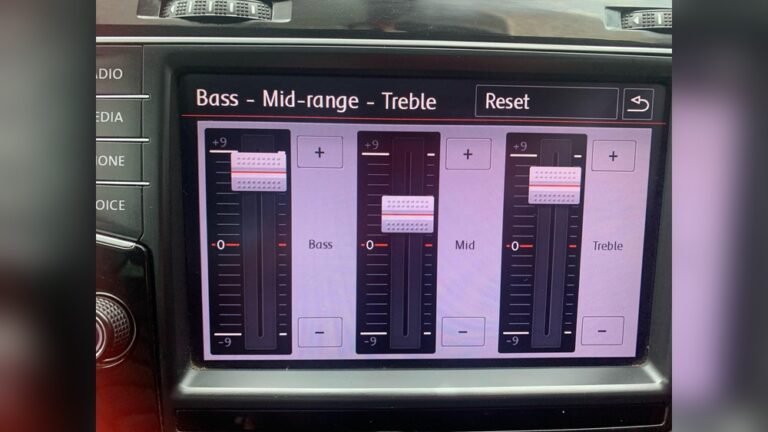
Turn on your car’s radio (before disconnecting the battery) and listen to each speaker. Adjust the balance (left/right) and fader (front/back) settings to isolate sound to one speaker at a time. Make a note of which speakers have problems.
Step 2: Check Common Trouble Spots
Loose wires often occur at these points:
- Behind the head unit (car stereo)
- Inside the door panels (where wires enter for door speakers)
- At the speaker terminals (back of each speaker)
- Under seats (for cars with under-seat subs or amplifiers)
Step 3: Wiggle Test
With the car audio on, gently press or wiggle the panel near each speaker. If the sound cuts in/out as you do this, you’ve likely found the area with the loose wire.
Step 4: Visual Inspection
Remove the panel or cover to look at the wires. Look for these signs:
- Loose or disconnected wires
- Corroded connectors (green, white, or rusty color)
- Frayed or broken insulation
- Wires dangling or moving freely
Pro Tip: Take photos of the wire connections before you start, so you can easily reassemble them.
How To Remove Door Panels And Trim Safely
Gaining access to your car’s speaker wires usually means removing panels. Every car is different, but these steps work for most models:
- Use a plastic trim tool to gently pry the edge of the panel. Don’t use metal tools—they can scratch or break the plastic.
- Remove all screws. These are often hidden behind small plastic covers or inside handles.
- Once all screws are out, slide the panel up and away. Don’t pull hard—check for any missed screws or clips.
- Keep all screws and clips in a small container so you don’t lose them.
- If the panel is stuck, double-check for hidden screws before using more force.
Example Table: Common Hidden Screw Locations
| Panel Type | Typical Hidden Screw Location |
|---|---|
| Front Door Panel | Behind window/lock switch, under armrest, inside handle recess |
| Rear Door Panel | Bottom edge, behind speaker grill |
| Dash Panel | Behind climate control knobs, near vents |
Fixing The Loose Speaker Wire: Step-by-step
Once you’ve found the loose or damaged wire, here’s how to fix it. Follow each step carefully for the best results.
Step 1: Clean The Connection
If you see corrosion (green/white powder, rust), use a small wire brush or sandpaper to clean the metal connector. Corrosion blocks the flow of electricity, even if the wire looks connected.
Step 2: Reconnect Or Tighten The Wire
If the wire has slipped out of its connector:
- Use needle-nose pliers to gently squeeze the connector and make it tighter.
- Insert the wire fully and check that it does not pull out with gentle pressure.
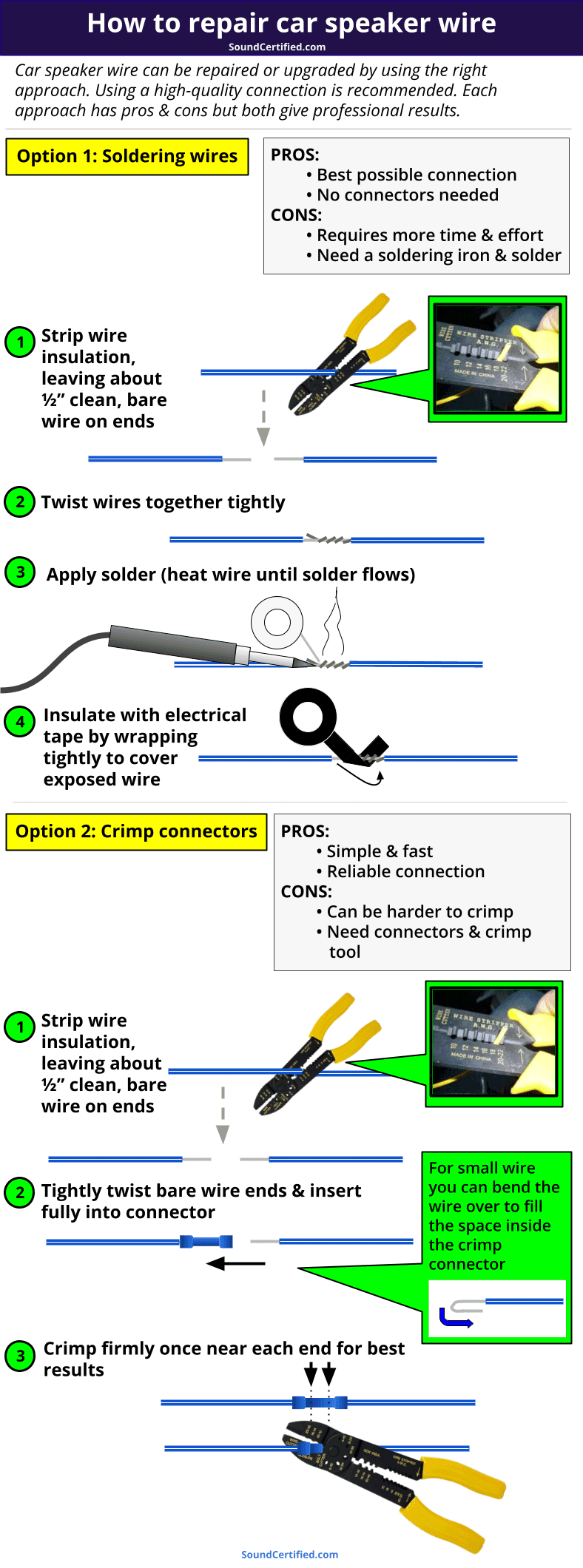
If the connector is broken, cut off the old one and strip about 1/4 inch of insulation from the wire. Attach a new connector (crimp, spade, or butt connector).
Step 3: Solder The Connection (for Permanent Fix)
For the best, most reliable connection, consider soldering:
- Twist the wire strands together.
- Heat the wire and apply solder until it melts and flows into the strands.
- Let it cool, then wrap with electrical tape for insulation.
Step 4: Test The Connection
Before putting everything back, test the speaker. Reconnect the car battery, turn on the stereo, and listen for clear sound. Wiggle the wire gently—if the sound stays solid, the fix worked.
Step 5: Secure The Wire
Loose wires can move and loosen again. Use zip ties to secure them to a nearby support so they don’t dangle or vibrate.
Step 6: Reassemble The Panel
Carefully reverse the removal steps. Make sure all clips and screws are back in place. Double-check that no wires are pinched or exposed.
Special Cases: Different Speaker Types
Not all speakers are in the same place. Here’s how to handle some common variations.
Door Speakers
Usually, these are the most common to have loose wires because of window movement and door closing. Always check the wiring harness where it passes from the car body to the door. This area bends often and wires may break inside the rubber boot.
Dash Speakers
These can be tricky to reach. Sometimes you need to remove the top dash panel. Be gentle—dash plastic can crack easily, especially in older cars.
Rear Deck Speakers
Sedans often have speakers mounted on the rear deck. You may need to access these through the trunk or by folding down the rear seats.
Amplifier Or Subwoofer Connections
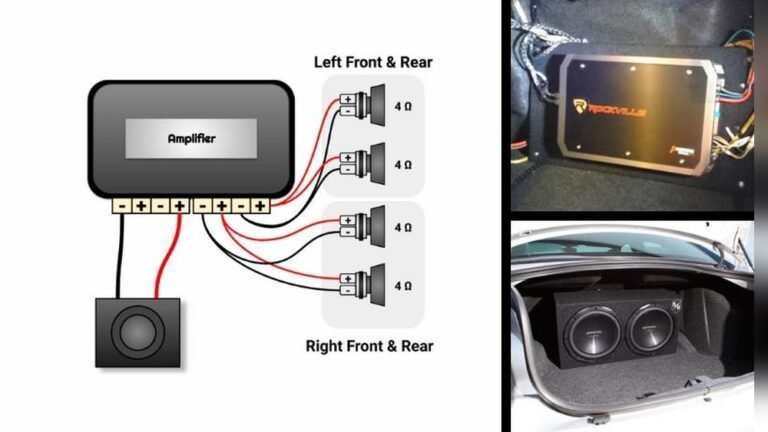
If you have an aftermarket amp or subwoofer, loose wires at the amp terminals are common. Always disconnect power before touching these wires.
Using A Multimeter To Test Speaker Wires
A multimeter is a handy tool for checking if a wire is truly connected. Here’s how to use it:
- Set the multimeter to continuity mode (or lowest resistance/ohms).
- Touch one probe to the end of the wire at the stereo, and the other to the wire at the speaker.
- If you hear a beep (or see a low resistance reading), the wire is good. If not, there’s a break or bad connection.
This method helps you find hidden wire breaks that aren’t visible.
When To Replace Speaker Wire
Sometimes, fixing isn’t enough. Replace the wire if you notice:
- Broken or bare copper strands
- Cracked or melted insulation
- Heavy corrosion
- Wire feels stiff or brittle
Use speaker wire of the same gauge (thickness) as the original, or one size thicker for better durability. Most car speakers use 16-gauge or 18-gauge wire.
Wire Gauge Table For Car Speakers
| Speaker Power (Watts) | Recommended Wire Gauge | Maximum Length (Feet) |
|---|---|---|
| Under 50 Watts | 18 Gauge | 20 ft |
| 50-100 Watts | 16 Gauge | 30 ft |
| Over 100 Watts | 14 Gauge | 40 ft |
Common Mistakes To Avoid
Many beginners accidentally make things worse. Watch out for these pitfalls:
- Not disconnecting the battery. This can cause electrical shorts or damage.
- Using the wrong wire gauge. Too thin wires can overheat and fail.
- Leaving bare wires exposed. This risks short circuits and speaker damage.
- Not securing wires. Loose wires will come undone again.
- Over-tightening connectors. This can break the wire or connector.
A careful, patient approach avoids these mistakes and leads to a lasting repair.
Preventing Loose Speaker Wires In The Future
Prevention saves time and money. Here’s how to keep your speaker wires secure for years:
- Use zip ties or wire loom to bundle and protect wires.
- Avoid running wires where they can get pinched or crushed.
- Check connections every year, especially after off-road driving or hard impacts.
- If you add new speakers or amps, use quality connectors and good wire.
Non-obvious insight: Many car owners forget to check the rubber boots between the door and car body. This is a weak spot where wires often break—especially in cars that are 10+ years old.
Another tip: When you buy used cars, always inspect speaker wires early. Previous owners may have done poor repairs that can fail.
Cost Of Professional Repair Vs. Diy
You might wonder if it’s worth fixing yourself. Here’s a quick comparison.
| Repair Option | Average Cost (USD) | Turnaround Time | Pros | Cons |
|---|---|---|---|---|
| DIY Repair | $0-$30 (tools/materials) | 1-2 hours | Cheap, learn new skills, immediate fix | Time/effort, risk of mistakes |
| Professional Shop | $50-$150 | Same day or next day | No effort, warranty on work | Costly, wait for appointment |
For a simple loose wire, most people can fix it themselves. If you find broken wires inside the door boot or behind the dash, or if you’re not comfortable working with car electronics, a professional may be safer.
Upgrading Your Speaker Wires
If your car has aftermarket speakers or you want better sound, upgrading the speaker wire is smart. Thicker, higher-quality wire can reduce resistance and improve audio clarity. Look for oxygen-free copper (OFC) wire for the best signal transfer.
- For basic factory systems, 18-gauge wire is enough.
- For high-power setups, use 16-gauge or 14-gauge wire.
Upgrading wires also means you’ll be starting with fresh, solid connections—no more worries about old, brittle factory wiring.

Credit: www.reddit.com
Troubleshooting Other Audio Problems
Not all sound issues are caused by loose wires. If you’ve checked and fixed your wires and still have problems, consider these possibilities:
- Blown speaker: Speaker makes no sound or sounds distorted even when wires are solid.
- Bad head unit: If none of the speakers work, the stereo itself may be the issue.
- Amplifier problems: If only amplified speakers have issues, check amp connections and fuses.
- Grounding issues: Poor ground connections can cause buzzing or hum.
If you’re not sure, try swapping the left and right speaker wires at the head unit. If the problem moves, it’s a wiring issue. If it stays, it’s likely the speaker or head unit.
The Value Of Proper Speaker Wire Maintenance
While fixing a loose speaker wire might seem minor, it’s a key part of car audio care. Good connections mean better sound quality, less chance of electrical shorts, and longer life for your speakers and stereo. Regular checks—especially after car repairs or upgrades—keep your system reliable.
For more technical details on car audio systems, you can visit Wikipedia’s Car Audio page.
Credit: www.reddit.com
Frequently Asked Questions
How Do I Know If My Car Speaker Wire Is Loose?
Typical signs include sound cutting in and out, crackling noises, or a speaker that works only when you press on the panel or wiggle the door. Testing each speaker and gently moving the wires while playing music can help identify the problem area.
Can I Fix A Loose Speaker Wire Without Special Tools?
You can often fix a simple loose wire with just a screwdriver and electrical tape. However, tools like wire strippers, a multimeter, and pliers make the job easier and help ensure a reliable repair.
Is It Dangerous To Drive With A Loose Speaker Wire?
A loose speaker wire usually isn’t dangerous, but it can cause short circuits if the bare wire touches metal. This might blow a fuse or damage the stereo. It’s best to fix it as soon as possible to avoid further issues.
Should I Use Solder Or Crimp Connectors?
Both methods can work well. Soldering gives the most secure connection and is best for permanent fixes. Crimp connectors are faster and easier for beginners. Just be sure to insulate the connection with tape or heat-shrink tubing.
How Often Should I Check My Car’s Speaker Wires?
Check your wires at least once a year, or anytime you notice sound issues. If you drive on rough roads or make changes to your car’s audio system, inspect the wires more often to catch problems early.
Getting clear, powerful sound from your car speakers isn’t just about good equipment—it’s about secure, solid wiring. With these steps, you can fix a loose speaker wire yourself and enjoy your favorite music without interruptions.