How Can You Tell If a Speaker is Blown: Key Warning Signs
If you enjoy music or movies, you want your speakers to sound clear and strong. But sometimes, speakers stop working well. The sound might get bad, or even disappear. This often means the speaker is “blown. ” But how can you really tell if a speaker is blown?
Many people, especially beginners, don’t know the signs or what to check. This guide will help you spot the main symptoms, test your speakers, and understand what causes these problems. You’ll learn simple ways to check your speakers, and how to avoid common mistakes.
By the end, you’ll know exactly what to look for and how to decide if you need a repair or replacement.
What Does “blown Speaker” Mean?
When people say a speaker is “blown,” they usually mean it’s damaged inside. The damage can be:
- The cone is torn or broken.
- The voice coil is burnt or disconnected.
- The suspension is loose or broken.
- The wiring is damaged.
A blown speaker can still make sound, but it won’t sound right. Sometimes, it won’t play any sound at all.
Common Signs Of A Blown Speaker
You don’t need special tools to notice a blown speaker. Here are the most common signs:
- Distorted Sound
- The speaker sounds fuzzy, crackly, or unclear.
- Music loses quality, especially at high volume.
- Buzzing or Rattling
- You hear buzzing, rattling, or scraping noises.
- These sounds often get worse with bass-heavy music.
- No Sound
- The speaker is silent, even when the system is on.
- Other speakers in the system may still work.
- Partial Output
- The speaker only plays certain frequencies (like only high or low notes).
- Some parts of the music are missing.
- Physical Damage
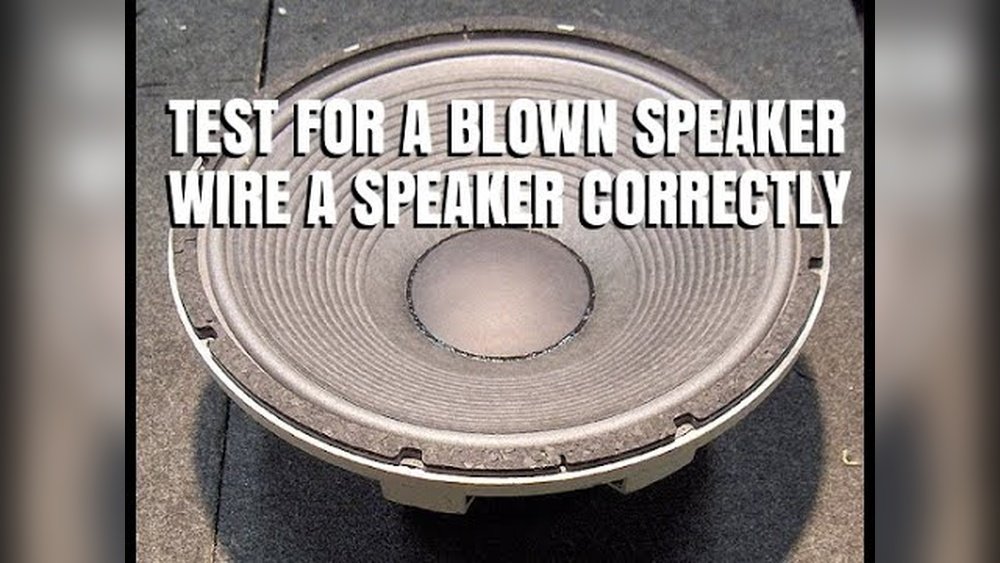
- You see tears or holes in the speaker cone.
- The cone looks pushed in, loose, or uneven.

Credit: cinemaximiliaan.org
Quick Visual Check
You can often spot problems by looking closely at the speaker. Here’s how:
- Remove the speaker grill if possible.
- Check for tears, holes, or warped cones.
- Look for burnt spots or melted glue.
- See if the cone moves freely when pressed gently.
If you see obvious damage, the speaker is probably blown.
Testing A Speaker: Simple Methods
Beginners can test speakers at home with no special tools. Try these methods:
Swap Test
- Switch the suspect speaker with a known good one in your system.
- If the problem follows the speaker, it’s blown.
- If the problem stays with the channel, the issue may be wiring or the amplifier.
Use A Multimeter
A multimeter can measure speaker resistance (called impedance).
- Set the multimeter to “ohms.”
- Touch the probes to the speaker terminals.
- A normal speaker shows 4–8 ohms.
- If you see 0 ohms (short circuit) or infinite ohms (open circuit), the speaker is blown.
Play Test
- Use simple sounds, like a pure tone or a voice recording.
- Increase volume slowly.
- Listen for distortion, rattling, or missing frequencies.
Example
Let’s say you play a song with strong bass. If the speaker vibrates, but the bass sounds weak and distorted, it’s likely blown. Or, if you play spoken words and hear crackling, that’s another sign.
Comparing Blown Vs. Working Speakers
It helps to know what a healthy speaker sounds like compared to a blown one. Here’s a quick comparison:
| Feature | Working Speaker | Blown Speaker |
|---|---|---|
| Sound Quality | Clear, full | Distorted, fuzzy |
| Bass Response | Strong, tight | Weak, rattling |
| Physical Condition | Intact cone | Torn, warped cone |
| Noise | Silent when idle | Buzzing, crackling |
| Impedance | 4–8 ohms | 0 or infinite ohms |
What Causes A Speaker To Blow?
Understanding the causes helps you avoid future problems. Common reasons include:
- Too much power: Playing music too loud can burn the voice coil.
- Clipping: Distortion from an overloaded amplifier damages the speaker.
- Physical impact: Dropping or hitting the speaker can tear the cone.
- Age: Old speakers wear out, especially if used often.
- Moisture: Water or humidity can ruin the cone and electronics.
Example: Power Overload
If a speaker is rated for 50 watts but you send 100 watts from your amplifier, it can burn out quickly. Beginners often make this mistake because they don’t check compatibility.

Credit: plattar.com
Detailed Symptoms: What Beginners Miss
Some signs are less obvious but still important:
- Volume changes: The speaker gets quieter over time.
- Static: You hear static even with no music playing.
- One-sided sound: Stereo music sounds flat because one speaker is weak.
- Cone movement: The cone doesn’t move smoothly when pressed. It may feel stiff or loose.
Practical Tip
Always listen to both speakers at the same volume and test with different types of music. Some problems only show up with bass-heavy or high-frequency sounds.
How To Avoid Mistaking Other Problems For A Blown Speaker
Not all sound issues mean the speaker is blown. Sometimes, the problem is:
- Loose wires
- Bad connectors
- Faulty amplifier
- Audio source issues
To avoid mistakes:
- Test the speaker with another amplifier.
- Try another audio source (like phone vs. radio).
- Make sure all wires are connected tightly.
- Clean connectors if dusty or corroded.
Step-by-step Guide To Confirm If A Speaker Is Blown
Follow these steps to check your speaker:
- Check connections: Make sure wires and plugs are tight.
- Visual inspection: Look for damage to the cone, coil, or case.
- Swap test: Change speakers between channels.
- Play test: Listen for distortion at low and high volumes.
- Multimeter test: Measure resistance.
- Try different sources: Use another music player or radio.
If your speaker fails one or more of these tests, it’s likely blown.
Real-life Example: Car Speaker Test
Imagine your car speaker starts buzzing when you play music. You:
- Remove the grill and see the cone is torn.
- Swap the speaker with another and the buzzing follows the damaged one.
- Use a multimeter and get infinite ohms.
All signs point to a blown speaker. You now know it needs repair or replacement.
Repair Or Replace: What Should You Do?
Not all blown speakers can be fixed. Here’s how to decide:
| Damage Type | Repair Possible? | Action |
|---|---|---|
| Small cone tear | Yes | Patch or glue |
| Burnt voice coil | No | Replace speaker |
| Loose wires | Yes | Reconnect |
| Severe cone damage | No | Replace speaker |
| Minor suspension issue | Maybe | Professional repair |
Most beginners try to fix everything themselves. But if the voice coil is burnt, it’s usually best to buy a new speaker.
Common Mistakes Beginners Make
Many people misjudge their speakers. Avoid these mistakes:
- Thinking crackling always means a blown speaker. Sometimes, it’s just dirty connectors.
- Ignoring small tears. They get worse over time.
- Overlooking matching amplifier power to speaker rating.
- Not checking all speakers. If one is bad, others might be too.

Credit: www.wikihow.com
Extra Insights: What Many Beginners Don’t Know
- Speakers can be “partially blown.” They play, but sound is poor. Don’t wait until they’re silent to check.
- Even cheap speakers can be fixed if the damage is minor. Patch small cone tears with speaker repair kits.
- Some problems come from settings. If your equalizer is set too high for bass or treble, it can cause distortion.
Data: How Often Do Speakers Blow?
According to audio industry surveys, about 15% of home speakers fail due to overdriving (too loud) every 5–7 years. Car speakers blow faster, especially in hot climates, with up to 20% failing within 3–5 years.
Prevention Tips
Keep your speakers safe by:
- Never playing music above the maximum volume.
- Checking amplifier and speaker power ratings.
- Keeping speakers dry and dust-free.
- Using speaker grills to protect the cones.
- Avoiding sudden loud sounds (like plugging in a cable when music is playing).
Frequently Asked Questions
How Do I Know If My Speaker Is Blown Without Tools?
Listen for distortion, buzzing, or silence. Check for physical damage like tears or warping. Swap the speaker with another to see if the problem follows.
Can I Fix A Blown Speaker Myself?
Small cone tears can be patched. Loose wires can be fixed. But burnt voice coils or severe damage usually need replacement.
What Is The Difference Between A Blown And A Bad Connection?
A blown speaker often has distorted sound or no sound even when wires are good. A bad connection causes intermittent sound or changes when you move the cable.
Is It Safe To Keep Using A Blown Speaker?
No. Playing a blown speaker can damage your amplifier or other speakers. Stop using it and fix or replace as soon as possible.
What Causes Speakers To Blow The Most?
Playing too loud, mismatched amplifier power, and physical damage are the main causes. Age and moisture also play a role.
Spotting a blown speaker is easy with these tips. If you notice distortion, buzzing, or silence, act quickly. Check for physical damage and use simple tests to confirm. Avoid common mistakes, and know when to repair or replace. Protect your speakers with safe volume levels and regular checks. For more details on speaker care and repair, check trusted sources like Crutchfield. With these steps, you’ll keep your sound system running smoothly and avoid costly surprises.