How to
If you want deeper bass in your car or home audio system, installing a subwoofer with a built-in amplifier is a smart choice. This setup is simple for beginners because it combines two devices into one. You don’t need extra wiring or complicated connections. But to get the best sound, you must follow the right steps. This guide gives you everything you need to know—clear instructions, practical examples, useful data, and answers to common questions.
Understanding Subs With Built-in Amps
A powered subwoofer (sub with built-in amp) is a speaker that plays low frequencies and has its own amplifier inside the box. This means you don’t need a separate amp to drive the sub. Most models are plug-and-play, making installation much easier for beginners.
Advantages
- Fewer cables: Less wiring means fewer mistakes.
- Easy installation: Usually requires only a power cable and signal wire.
- Compact design: Takes up less space.
- Better sound control: Built-in controls for bass level.
Popular Use Cases
- Car audio: Many people add a powered sub to their car for deep bass.
- Home theater: Powered subs are standard in many home systems.
Example Models
- Rockford Fosgate P300-12: Known for punchy bass and simple wiring.
- JBL BassPro SL: Slim design fits under seats, ideal for cars.
- Polk Audio PSW10: Easy setup for home theaters.
Planning Your Installation
Before you start, you need to plan where to place your subwoofer and how to connect it. This step is often skipped by beginners, but it saves time and avoids problems.
What You Need
- Powered subwoofer
- Wiring kit (usually includes power cable, ground cable, RCA cables)
- Fuse holder
- Wire stripper and crimper
- Screwdriver
- Electrical tape
Choosing The Location
- In a car, the trunk is common, but under-seat subs work well for smaller cars.
- In a home, place the sub near your main speakers or TV. Avoid corners, as they can make bass sound “boomy.”
Measuring Power Needs
Check your sub’s manual for power rating (watts RMS). Typical powered subs use 150–300 watts. Make sure your car battery or home outlet can handle this.
Example: Car Powered Sub
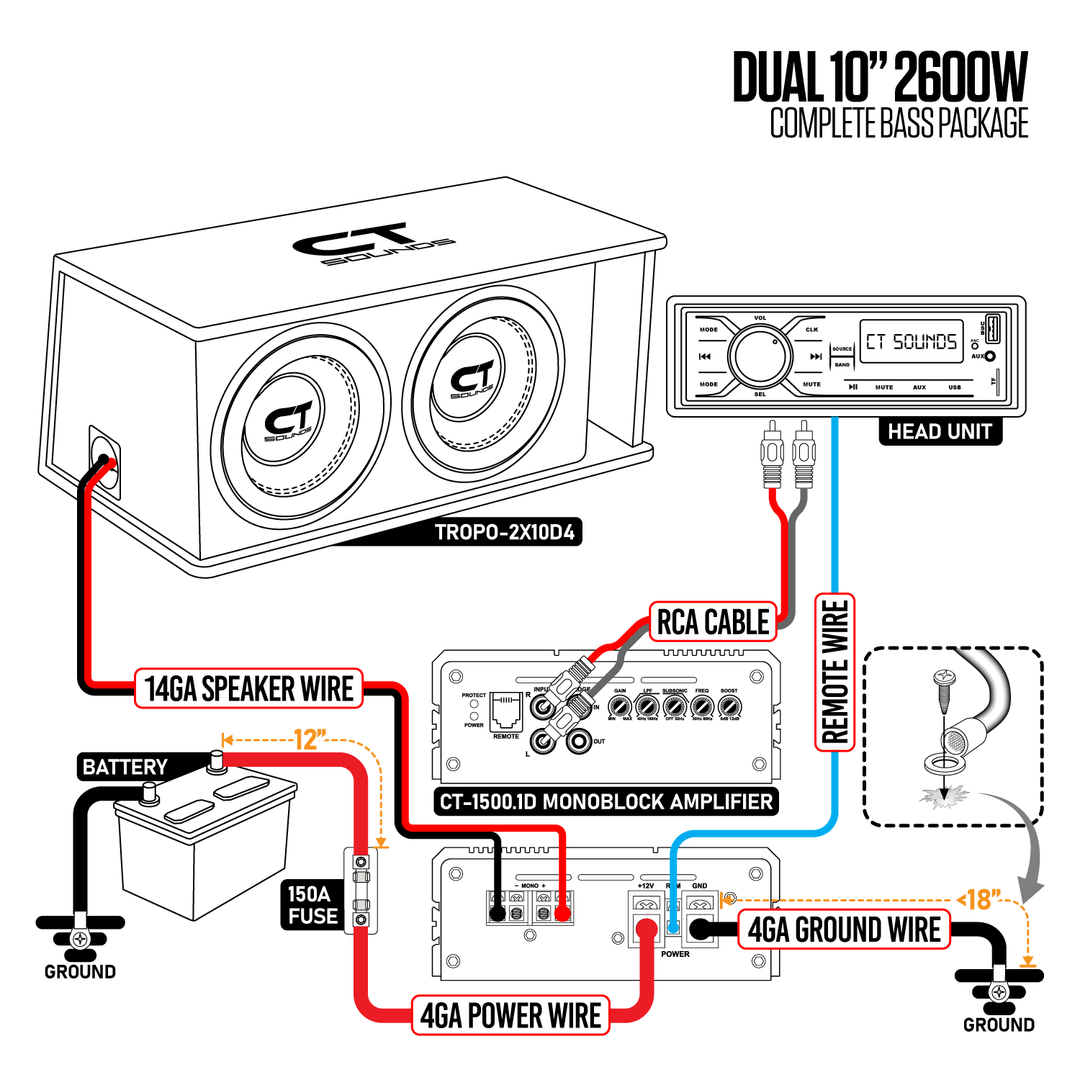
Suppose you pick the Rockford Fosgate P300-12. It uses about 300 watts. You’ll need:
- 8-gauge power cable
- 20-amp fuse
- RCA cables for signal
Credit: www.plattar.com
Step-by-step Installation Guide
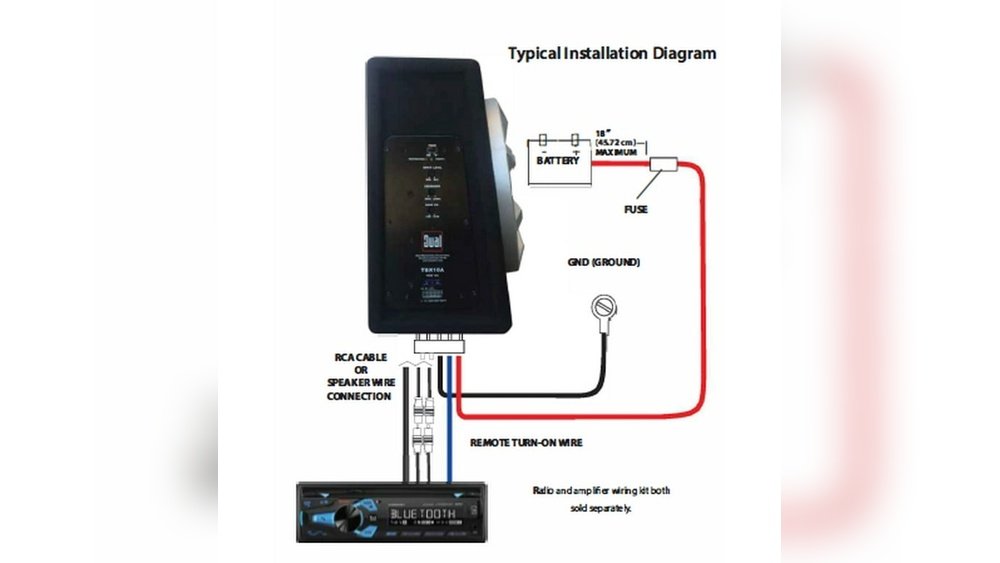
Here’s a simple walkthrough to install your powered sub in a car. The process for a home system is similar, but you use a wall outlet instead of car battery.
Step 1: Disconnect The Battery
Always disconnect your car battery before starting. This prevents short circuits and protects you.
Step 2: Run The Power Cable
- Start from the battery. Attach the power cable to the positive terminal.
- Run the cable through the car’s firewall into the cabin.
- Hide the cable under trim panels.
Step 3: Install The Fuse
- Place a fuse holder within 18 inches of the battery.
- Use the correct fuse size (see your sub’s manual).
Step 4: Ground The Subwoofer
- Find a metal spot close to the sub.
- Scrape off paint so it’s bare metal.
- Attach the ground cable securely.
Step 5: Connect The Signal Cable
- Use RCA cables if your head unit has sub outputs.
- If not, use a line output converter to turn speaker wire into RCA.
Step 6: Plug In The Remote Wire
- The remote wire turns the amp on and off.
- Connect it to the head unit’s remote output or accessory wire.
Step 7: Mount The Subwoofer
- Secure the sub in the trunk or under the seat.
- Make sure it doesn’t move while driving.
Step 8: Double-check Connections
- Check all cables for tightness and correct placement.
- Use electrical tape if needed.
Step 9: Reconnect The Battery And Test
- Reconnect the battery.
- Turn on your stereo and play some music.
- Adjust bass settings using the sub’s controls.
Practical Example: Home Powered Sub
- Plug subwoofer power cord into wall outlet.
- Connect RCA or speaker wire to receiver’s sub out.
- Place sub near main speakers.
- Set volume and crossover controls.
Comparison: Powered Vs Passive Subwoofer
Many people confuse powered subs with passive subs. Here’s a quick comparison to help you decide.
| Feature | Powered Sub | Passive Sub |
|---|---|---|
| Built-in Amplifier | Yes | No |
| Installation Difficulty | Easy | Hard |
| Space Needed | Less | More |
| Price (Typical) | $100–$350 | $80–$250 (plus external amp) |
| Best For | Beginners | Experienced users |
Tuning Your Subwoofer
Getting the wiring right is important, but tuning makes your bass sound perfect. Many beginners skip this step and get poor results.
Key Settings
- Gain: Controls volume. Start low, increase until bass matches your music.
- Crossover: Sets the highest frequency the sub plays. Typical setting is 80–120 Hz.
- Phase: Helps match timing with main speakers. Try both settings (0 and 180) to see which sounds better.
Example: Tuning Tips
- Play a song with deep bass.
- Adjust gain until you hear clean, strong bass without distortion.
- If bass sounds muddy, lower the crossover.
Common Mistakes Beginners Make
Avoid these mistakes for a better installation:
- Wrong wire gauge: Using too-thin wire can cause power loss. Always match cable to sub power.
- Bad ground connection: Weak ground makes sub hum or cut out.
- Skipping fuse: No fuse means risk of fire.
- Poor tuning: Setting gain too high distorts sound.
Data: Wire Gauge Vs Power
| Wire Gauge | Max Power (watts) | Recommended Use |
|---|---|---|
| 8-gauge | 300 | Powered subs up to 300W |
| 4-gauge | 600 | Large powered subs |
| 12-gauge | 100 | Small home subs |
Practical Tips For Better Results
- Read the manual: Every sub is different. Manuals give key info on wiring and settings.
- Use quality cables: Cheap cables can cause noise.
- Secure wiring: Loose cables can break or cause shorts.
- Test before final mounting: Play music to check bass before screwing down the box.
Example: 10-minute Car Powered Sub Install Checklist
- Disconnect battery
- Run power cable and install fuse
- Ground sub near installation spot
- Connect RCA cables or line converter
- Plug in remote wire
- Mount sub securely
- Double-check connections
- Reconnect battery and test
Troubleshooting: What If It Doesn’t Work?
Sometimes, the subwoofer doesn’t power up or sound is weak. Here’s what to check:
- No power? Check fuse, ground, and battery connection.
- No sound? Check RCA cables and remote wire.
- Distorted bass? Lower gain or check for loose wires.
Example Troubleshooting Scenario
Suppose your sub powers on, but no sound comes out. Check if your head unit has sub output turned on (many have a menu setting). Inspect RCA cable for damage.
Data: Powered Sub Brands Reliability
Not all brands are equal. Here’s a quick look at reliability ratings from user reviews.
| Brand | Average User Rating | Warranty (years) |
|---|---|---|
| Rockford Fosgate | 4.8/5 | 1 |
| JBL | 4.6/5 | 1 |
| Polk Audio | 4.5/5 | 2 |
Credit: www.9thgencivic.com
Safety And Maintenance
- Always install a fuse: Protects against shorts and fire.
- Check cables regularly: Look for wear, damage, or loose connections.
- Clean subwoofer grill: Dust can affect sound quality.
- Don’t overload: Keep gain and bass boost moderate to avoid damaging the speaker.
Where To Find Reliable Installation Help
If you need extra help, visit trusted sources like Crutchfield. They offer guides, videos, and user forums for beginners.

Credit: www.amazon.com
Frequently Asked Questions
How Do I Know If My Car Can Handle A Powered Subwoofer?
Most cars can handle a powered subwoofer if you use the correct wiring and fuse. Check your car’s battery and alternator specs. Powered subs up to 300 watts are safe for most vehicles.
Can I Install A Powered Subwoofer Without Rca Cables?
Yes, many powered subs accept high-level (speaker) inputs. If your head unit doesn’t have RCA outputs, use a line output converter or connect directly to speaker wires.
How Do I Stop My Subwoofer From Rattling?
Secure the sub box tightly using brackets or straps. Place foam padding underneath if needed. Rattling often comes from loose mounting or panels.
What’s The Best Wire Gauge For My Powered Sub?
Check your sub’s manual for power rating. For subs up to 300 watts, use 8-gauge wire. For higher power, use 4-gauge. Thinner wire can cause loss and overheating.
Can I Use A Home Powered Sub In My Car?
No. Home powered subs use AC (wall outlet) power and are not designed for 12V car systems. Always use a car-specific powered subwoofer.
Installing a subwoofer with a built-in amp is one of the easiest upgrades for deep bass. Follow the steps above, use quality materials, and double-check your connections. Avoid common mistakes, and enjoy powerful sound in your car or home. With the right setup, even beginners can get professional results.