How Do You Hook Up a Dual Voice Coil Subwoofer: Expert Guide
Hooking up a dual voice coil subwoofer can feel confusing, especially if you’re new to car audio or home theater setups. But understanding how to wire your subwoofer properly can make a huge difference in sound quality and amplifier performance. This guide will break everything down into simple steps, explain common wiring options, and help you avoid mistakes that beginners often make.
What Is A Dual Voice Coil Subwoofer?
A dual voice coil (DVC) subwoofer has two separate coils and two sets of terminals. This is different from a single voice coil (SVC) subwoofer which has only one. Each voice coil can be wired in different ways to change the electrical load (ohms) sent to the amplifier.
- DVC subwoofers give you more wiring options.
- You can match your subwoofer to different amplifiers.
- You can optimize for more power, better sound, or safer operation.
Example: If you have a DVC subwoofer rated at 4 ohms per coil, you can wire it for 2 ohms (parallel) or 8 ohms (series).
Why Wiring Matters
The way you wire your subwoofer affects:
- Total impedance (measured in ohms)
- Power delivery from your amplifier
- Sound quality and loudness
- Safety (avoiding damage to equipment)
If you wire things incorrectly, you risk blowing your amplifier, overheating your subwoofer, or getting weak bass.
Tools And Materials Needed
Before you start, gather these items:
- Dual voice coil subwoofer
- Amplifier (check its RMS power and impedance ratings)
- Speaker wire (usually 12-16 gauge for subwoofers)
- Wire strippers and cutters
- Screwdriver
- Electrical tape or wire connectors
- Owner’s manuals for both subwoofer and amplifier
Understanding Impedance And Wiring Options
Impedance tells you how much resistance the subwoofer gives to the amplifier’s power. Lower impedance lets more power flow but can stress your amp if not matched correctly. Higher impedance is safer but less powerful.
Common Configurations
There are two main ways to wire a DVC subwoofer:
- Series Wiring (adds the impedance of both coils)
- Parallel Wiring (halves the impedance)
Here’s a quick comparison:
| Wiring Type | Resulting Impedance (for 4Ω DVC) | Power Output |
|---|---|---|
| Series | 8Ω | Lower |
| Parallel | 2Ω | Higher |
Tip: Always check what impedance your amplifier supports. Most car amplifiers work best at 2 ohms or 4 ohms.
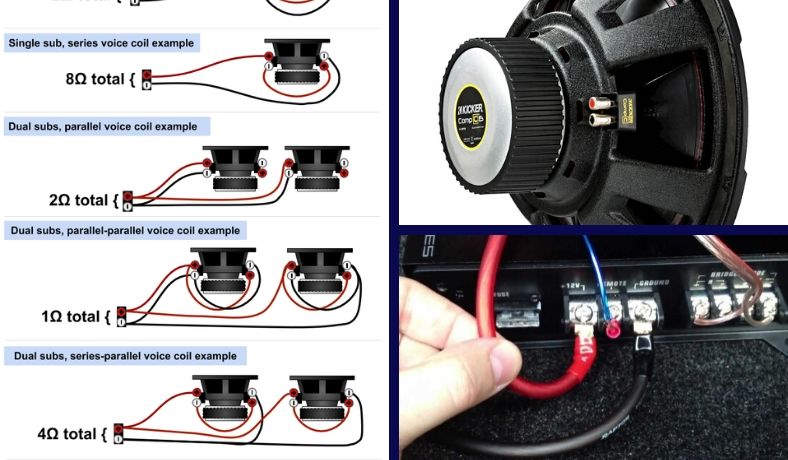
Credit: soundcertified.com
Step-by-step Wiring Instructions
1. Identify The Terminals
A DVC subwoofer has four terminals: two positive (+) and two negative (–). Sometimes they’re labeled as “Voice Coil 1” and “Voice Coil 2.” Read your subwoofer’s manual if you’re unsure.
2. Decide On Series Or Parallel Wiring
- Series wiring is safer for most beginner setups.
- Parallel wiring gives more power but requires an amp that can handle low impedance.
3. Series Wiring (for Higher Impedance)
- Connect a short wire from the first coil’s positive (+) terminal to the second coil’s negative (–) terminal.
- Connect the amp’s positive wire to the first coil’s negative (–) terminal.
- Connect the amp’s negative wire to the second coil’s positive (+) terminal.
This gives you a single 8-ohm load if each coil is 4 ohms.
Wiring Diagram:
- Amp (+) → Sub (–) [Coil 1]
- Sub (+) [Coil 1] → Sub (–) [Coil 2]
- Sub (+) [Coil 2] → Amp (–)
4. Parallel Wiring (for Lower Impedance)
- Connect both positive terminals together with a short wire.
- Connect both negative terminals together with a short wire.
- Connect the amp’s positive wire to the joined positive terminals.
- Connect the amp’s negative wire to the joined negative terminals.
This produces a 2-ohm load if each coil is 4 ohms.
Wiring Diagram:
- Amp (+) → Both Sub (+)
- Amp (–) → Both Sub (–)
5. Double-check Your Connections
- Make sure all wires are tight and secure.
- Avoid loose strands that can cause short circuits.
- Use electrical tape or wire connectors for safety.
6. Test Your Setup
- Play music at low volume first.
- Listen for clear bass—no distortion or rattling.
- If the amp goes into protection mode or the sound is weak, recheck your wiring.
Example: Wiring A 4 Ohm Dvc Subwoofer
Let’s say you bought a 4 ohm DVC subwoofer and a mono car amplifier rated for 2 ohms:
- For max power, wire the sub in parallel (2 ohms).
- If your amp only supports 4 ohms, wire in series.
Parallel wiring will give you more volume, but only if your amp can handle the lower load.
Here’s a simple table showing possible combinations:
| Subwoofer | Wiring | Resulting Ohms | Amplifier Needed |
|---|---|---|---|
| 4Ω DVC | Series | 8Ω | Stable at 8Ω |
| 4Ω DVC | Parallel | 2Ω | Stable at 2Ω |
Multiple Subwoofers: What Changes?
If you want to use more than one DVC subwoofer, the wiring gets more complex. The goal is still to match the final impedance to your amplifier’s safe range.
Example: Two 4-ohm DVC subs can be wired for 1 ohm, 4 ohms, or 8 ohms depending on how you connect them.
Common mistake: Many beginners wire two subs in parallel and accidentally drop the load below 2 ohms. This can damage most car amplifiers.
Practical Tips For Best Results
- Use thick speaker wire (12-14 gauge) for less resistance.
- Keep wires short and avoid tangles.
- Label wires if you’re new to avoid confusion.
- Read your amplifier’s manual for its minimum impedance rating.
- If you’re unsure, ask a professional installer.

Credit: soundcertified.com
Common Mistakes To Avoid
- Not checking amplifier compatibility: Some amps can’t handle loads below 4 ohms.
- Mixing up series and parallel: Mixing the two can create unpredictable results.
- Ignoring polarity: Always match positive to positive, negative to negative unless the wiring diagram says otherwise.
- Loose connections: Even a small loose strand can cause big problems.
- Not testing before closing everything up: Always test before you finalize your install.
Real-world Example
Suppose your amp delivers 500W RMS at 2 ohms. You buy a 4-ohm DVC sub rated for 500W RMS:
- Wire the coils in parallel: The sub will present a 2-ohm load.
- The amp will send its full power, and the subwoofer will play loud and clean.
- If you wired in series (8 ohms), the amp would only put out about 150W, and the sub would sound much quieter.
Insight: Always match your wiring to get the most power from your amp—without going below its safe limit.
Comparing Dvc Vs. Svc Subwoofers
Some people ask if they should choose DVC or SVC. Here’s a quick comparison:
| Feature | DVC | SVC |
|---|---|---|
| Wiring Flexibility | High | Low |
| Impedance Options | Multiple | Single |
| Price | Slightly higher | Lower |
| Complexity | More complex | Simpler |
Non-obvious tip: DVC subs are not “twice as powerful” as SVC. They just offer more wiring options.
Safety And Troubleshooting
If your amp shuts off or your subwoofer doesn’t play:
- Check all wiring for tight, correct connections.
- Make sure the amp isn’t overloaded (too low impedance).
- Listen for any rattling or burning smells—shut down and recheck if you notice these.
Never run your amp below its rated impedance. This is a common beginner mistake and can lead to permanent damage.

Credit: soundcertified.com
When To Use Series Vs. Parallel
- Use series wiring if your amp is only stable at higher ohms, or if you want to protect your subwoofer by sending less power.
- Use parallel wiring if you want the most power and your amp is rated for the lower impedance.
Example: Many mono car amps are stable at 2 ohms, but not at 1 ohm. Always check the specs.
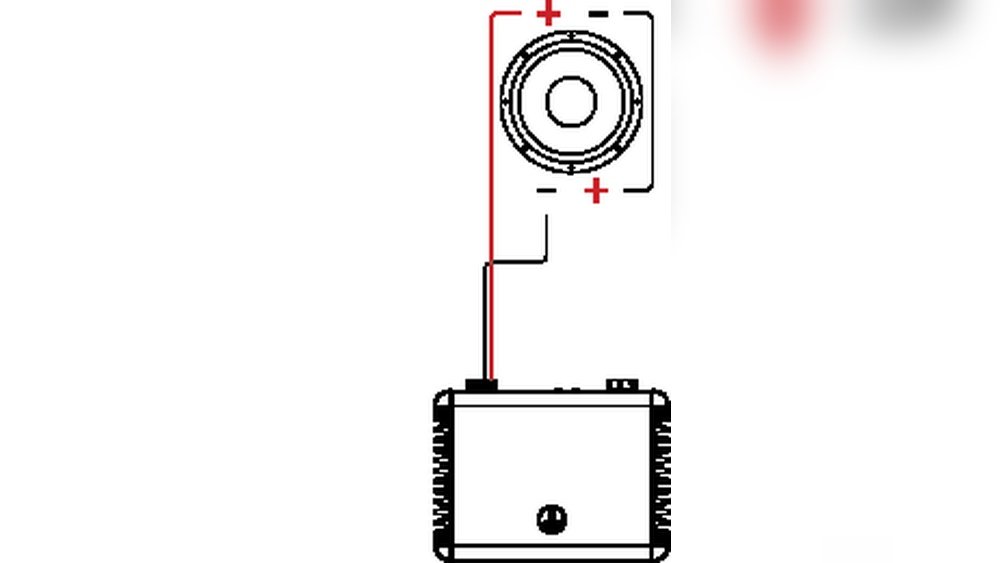
How To Read Wiring Diagrams
Wiring diagrams use lines to show where wires go. DVC subwoofers are often shown as two coils (loops) with terminal markings.
- Solid lines mean a physical wire connection.
- Dotted lines may show optional wiring paths.
- Positive (+) and negative (–) are usually marked clearly.
If you’re unsure, many manufacturers offer diagrams on their websites or in manuals. For helpful diagrams and further reading, see the Crutchfield Subwoofer Wiring Guide.
Final Checks Before Powering Up
- Confirm all connections with a multimeter if possible.
- Double-check that the amp’s settings match the subwoofer’s wiring.
- Start at low volume and listen for clean bass.
- Gradually increase the volume and test for any problems.
Frequently Asked Questions
What Is The Benefit Of A Dual Voice Coil Subwoofer?
A dual voice coil subwoofer gives you flexible wiring options. You can match it to many different amplifiers and change the final impedance for more power or safer operation.
Can I Wire A Dvc Subwoofer To Just One Coil?
It’s not recommended. Using only one coil can reduce performance and damage the subwoofer over time. Always use both coils as intended.
How Do I Know If My Amplifier Is Compatible?
Check your amp’s manual or look for the minimum impedance rating. Match your wiring configuration so the final load matches what your amp supports (like 2 ohms or 4 ohms).
What Gauge Wire Should I Use?
For most subwoofers, 12 gauge wire works well. If your run is very long or your sub is very powerful, use thicker wire (like 10 gauge) to avoid power loss.
Is It Safe To Wire For The Lowest Impedance Possible?
Only if your amplifier is designed for it. Wiring below your amp’s rating can cause overheating or permanent damage. Always check first.
Properly hooking up a dual voice coil subwoofer isn’t just about connecting wires—it’s about understanding your system and making choices that get the best sound and longest life from your gear. With the right setup, you’ll enjoy deeper, clearer bass and avoid the frustrations of weak sound or blown equipment.
Take your time, double-check everything, and enjoy the powerful bass your system can deliver.