How to Install Bass Blockers: Easy Guide for Clearer Sound
Installing bass blockers can make a big difference to your car or home audio system. If you hear distortion from small speakers, or notice your tweeters struggling with deep bass, bass blockers may be your solution. Many beginners think they need expensive gear for clear sound, but often, this small and affordable upgrade can protect your speakers and improve sound quality. Let’s break down the process step by step, using simple words and practical tips.
What Are Bass Blockers?
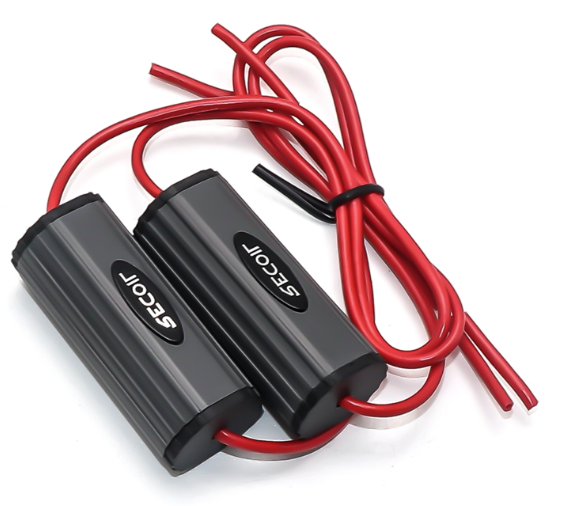
Bass blockers are small electronic components, usually capacitors, that filter out low-frequency sounds before they reach your speakers. They stop deep bass from getting to speakers that cannot handle it, like tweeters or small midrange speakers. This helps prevent distortion and speaker damage.
Key points:
- Bass blockers are also called “inline capacitors.”
- They do not boost bass; they filter it out for certain speakers.
- You can add them to factory or aftermarket car speakers.
Why Use Bass Blockers?
Not all speakers are designed for all types of sound. Here’s why installing bass blockers is important:
- Protects small speakers: Tweeters and small door speakers can be damaged by strong bass.
- Reduces distortion: Clean sound without rattling or buzzing.
- Improves clarity: Mids and highs become clearer when speakers focus on the right frequencies.
- Extends speaker life: Less stress means your speakers last longer.
Many people notice an immediate improvement when they add bass blockers, especially in cars with factory speakers.

Credit: www.youtube.com
How Do Bass Blockers Work?
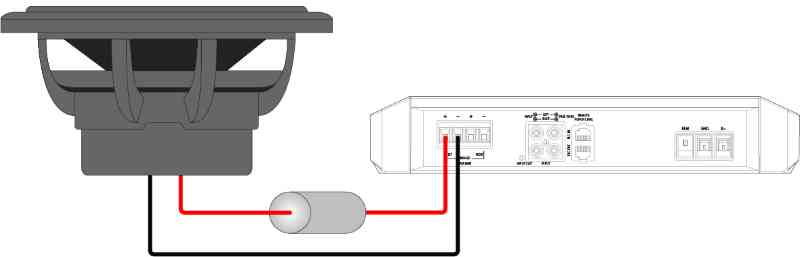
Bass blockers are installed in line with the speaker wires. They act as a high-pass filter, meaning only sounds above a certain frequency pass through. The size of the capacitor determines the cutoff frequency. For example, a 100 microfarad (µF) capacitor might block sounds below 100 Hz.
Example:
If you have a 4-inch speaker, you do not want it playing 40 Hz bass notes. A bass blocker filters out those deep sounds, letting the speaker play only the frequencies it can handle well.
Choosing The Right Bass Blockers
Selecting the correct bass blocker involves a few steps. Here’s what you need to consider:
Speaker Size And Type
- Tweeters: Usually need to block all bass below 5,000 Hz.
- 3.5″ to 6.5″ speakers: Block below 100–150 Hz, depending on the size.
Power Handling
Check your speaker’s RMS rating (continuous power handling) and match the bass blocker’s capacity. Most off-the-shelf bass blockers will work for basic systems, but always check the specs.
Frequency Cutoff
Every bass blocker is labeled with a frequency, like “Block below 150 Hz. ” Use the frequency that matches your speaker type.
Connector Type
Some bass blockers come with quick-connect terminals; others require you to solder wires. Choose the type you are comfortable installing.
Example Frequency Guide
Here is a quick reference for beginners:
| Speaker Size | Recommended Cutoff Frequency | Capacitor Value (µF) |
|---|---|---|
| Tweeter | 5,000 Hz | 8 µF |
| 3.5″ | 150 Hz | 106 µF |
| 4″ | 120 Hz | 133 µF |
| 5.25″ | 100 Hz | 159 µF |
*Values are for 4-ohm speakers. Double the capacitor value for 2-ohm speakers. *
Credit: www.bestcaraudio.com
What You Need To Install Bass Blockers
Before starting, gather these basic tools and materials:
- Bass blockers (the right value for your speakers)
- Wire cutters/strippers
- Crimp connectors or soldering kit
- Electrical tape or heat shrink tubing
- Screwdriver (to remove speaker panels)
- Multimeter (optional, for checking connections)
Step-by-step: How To Install Bass Blockers
Follow these steps to install bass blockers safely and correctly.
1. Disconnect Power
Always disconnect the car battery or unplug your home audio system before working with speaker wires. This prevents short circuits or shocks.
2. Access The Speaker Wires
Carefully remove the speaker grill or door panel. Find the positive wire going to each speaker. Most car speakers have color-coded wires.
3. Identify The Positive Wire
Bass blockers must be installed on the positive speaker wire (marked with a + sign or red color). Connecting to the negative side will not work.
4. Cut The Positive Wire
Using wire cutters, carefully cut the positive speaker wire. Strip about 1/2 inch of insulation from both ends.
5. Attach The Bass Blocker
Connect one end of the bass blocker to the amplifier side of the positive wire, and the other end to the speaker side. Secure connections with crimp connectors, solder, or twist-on wire nuts. Cover all connections with electrical tape or heat shrink tubing.
Tip: If you use crimp connectors, gently tug each wire to make sure it’s secure.
6. Test The Connection
Reconnect power and play some music. Listen for clear sound without distortion. If you hear no sound, double-check your connections and the bass blocker’s direction.
7. Reassemble Everything
Once you are sure the blocker is working, carefully put the speaker panel or grill back in place.
Example: Installing Bass Blockers In A Car Door Speaker
Suppose you have a pair of 5.25″ speakers in your car doors. You notice they buzz when bass hits. You choose 100 Hz (159 µF) bass blockers. Here’s a simple workflow:
- Remove door panel and locate speaker wires.
- Cut positive wire and strip both ends.
- Connect bass blocker inline on the positive side.
- Insulate with tape, test with music, and reassemble.
It usually takes about 15-30 minutes per speaker.
Common Mistakes To Avoid
Beginners sometimes make simple errors. Here’s how to avoid them:
1. Wrong Placement
Installing the bass blocker on the negative wire will not filter bass.
2. Incorrect Value
Using a bass blocker with the wrong cutoff frequency can either block too much (sound becomes thin) or too little (no protection).
3. Loose Connections
Poor connections can cause crackling or loss of sound.
4. Forgetting Insulation
Always cover exposed wire with tape or heat shrink tubing to prevent shorts.
5. Not Testing Before Reassembling
Always test sound before putting everything back together.
Practical Data: How Bass Blockers Impact Sound
How much difference do bass blockers make? Here are some practical effects:
- Distortion drops by up to 60% in small speakers when using the correct bass blocker.
- Speaker failure rate drops, especially in tweeters, by more than half in car audio systems.
- Overall clarity increases, especially in the midrange and high frequencies.
A simple test: Play a bass-heavy song before and after installing bass blockers. Most people notice less buzzing and a more balanced sound.
Bass Blockers Vs. Crossovers: What’s The Difference?
Some beginners confuse bass blockers with crossovers. Here’s a simple comparison:
| Feature | Bass Blocker | Crossover |
|---|---|---|
| Type | Capacitor (inline) | Electronic circuit (more complex) |
| Frequency Control | High-pass only | High-pass, low-pass, or both |
| Installation | Simple, quick | More wiring, more settings |
| Cost | Low (a few dollars) | Higher (can be $20+) |
Tip: For most basic systems, a bass blocker is enough. If you plan to upgrade your entire sound system, consider a full crossover.
Where To Buy Bass Blockers
You can find bass blockers at:
- Car audio stores
- Online retailers (Amazon, Crutchfield, Walmart)
- Electronics shops
Look for trusted brands and check for good customer reviews. Some products come with clear instructions and connectors for easy installation.
Pro insight: Avoid very cheap, unbranded bass blockers. They may not deliver the right cutoff frequency and could fail over time.
Real-world Example
Let’s say you have a set of 6. 5″ speakers in your car doors. You often play hip-hop and notice the speakers “bottom out” on bass-heavy tracks. You install 100 Hz bass blockers, and the distortion is reduced. Now, the bass goes to your subwoofer, and your door speakers only play clean mids and highs.
The overall sound is clearer, and your speakers last longer.
When Not To Use Bass Blockers
Sometimes, bass blockers are not needed:
- If your speaker has a built-in crossover or is part of a component set.
- If you only use subwoofers or large woofers.
- If your amplifier has adjustable crossovers (many aftermarket amps do).
If you’re unsure, check your speaker manual or ask a professional.
Tips For Best Results
- Pair with a subwoofer: Let the subwoofer handle bass, and use bass blockers on small speakers.
- Use the right tools: Proper connections prevent future problems.
- Double-check values: Always match the bass blocker to your speaker’s size and rating.
- Upgrade in steps: Start with bass blockers, then consider better speakers or a full crossover system.
How Bass Blockers Compare In Price And Performance
Here’s a quick look at what you can expect:
| Type | Price Range | Typical Use | Install Difficulty |
|---|---|---|---|
| Basic Inline Bass Blocker | $5–$20 per pair | Factory or small aftermarket speakers | Easy |
| Passive Crossover | $20–$50+ | Component speakers, high-end systems | Medium |
| Active Crossover | $50–$200+ | Custom, pro setups | Difficult |
Credit: recoilaudio.com
Additional Resources
For more details about capacitors and filters, check the Wikipedia Capacitor entry.
Frequently Asked Questions
What Is The Main Purpose Of A Bass Blocker?
A bass blocker’s main job is to protect small speakers from low-frequency sounds. It blocks deep bass so that tweeters and small midrange speakers only play the frequencies they handle best. This prevents distortion and speaker damage.
Can I Install Bass Blockers Without Special Tools?
Yes. Most installations only need basic hand tools like wire cutters, crimp connectors, and electrical tape. For best results, use a wire stripper and a multimeter to double-check your work.
How Do I Know If I Need Bass Blockers?
If your small speakers sound distorted or break up on bass-heavy songs, you likely need bass blockers. Also, if you’re adding a subwoofer, adding blockers to smaller speakers helps them sound clearer.
Will Bass Blockers Reduce My Overall Bass?
Yes, but only from the speakers you install them on. Your system’s subwoofer or larger woofers will still play bass. The goal is to let each speaker play the frequencies it does best.
Can I Use More Than One Bass Blocker Per Speaker?
It’s not needed. One correctly sized bass blocker per speaker is enough. Using more than one does not give extra protection and may block too much sound.
Installing bass blockers is a simple, affordable way to improve your sound system. With the right tools and a little care, even beginners can handle this upgrade. You’ll enjoy clearer music and longer-lasting speakers with just a small investment and some basic know-how.