Where to Place Subwoofer: Boost Bass and Audio Performance
Placing your subwoofer in the right spot can make a huge difference in how your music or movies sound. Many people spend a lot on speakers, but forget that subwoofer placement matters just as much. The subwoofer is the heart of your sound system’s bass, and putting it in the wrong place can make your room shake for the wrong reasons—or even lose all that powerful low-end sound.
Getting the best bass is not just about buying a good subwoofer. It’s about understanding your room, your furniture, and even where you sit. This guide explains, in simple terms, how to find the best spot for your subwoofer. Whether you are setting up a home theater or just want better music, you will find practical advice you can use right away.
Why Subwoofer Placement Matters
A subwoofer creates deep sounds you often feel more than hear. These low frequencies bounce around the room, interact with walls, and sometimes cancel each other out. This means placing your subwoofer in the wrong spot can make the bass sound weak, boomy, or uneven.
Key reasons why placement is critical:
- Room acoustics: The shape and size of your room change how bass behaves.
- Furniture: Large items can block or reflect sound waves.
- Listening position: Where you sit affects what you hear most.
A poorly placed subwoofer can cause:
- Weak or “thin” bass
- Overpowering, muddy bass
- “Dead spots” with little or no bass
Basic Principles Of Subwoofer Placement
Most beginners think the subwoofer can go anywhere. In reality, some spots are much better than others. Here are the basic rules:
- Bass is non-directional: You can’t easily “point” bass at your ears, but you still need the right spot.
- Walls and corners boost bass: Close to a wall, bass gets stronger. In a corner, it gets even louder—but sometimes too much.
- Room size matters: Bigger rooms need more careful placement.
Common Mistake: Hiding The Subwoofer
Many people hide their subwoofer behind a sofa or inside a cabinet. This can make the bass weak and muddy. It’s best to keep your subwoofer out in the open for clear sound.
Best Locations To Try First
There is no one-size-fits-all answer, but these places are a smart starting point:
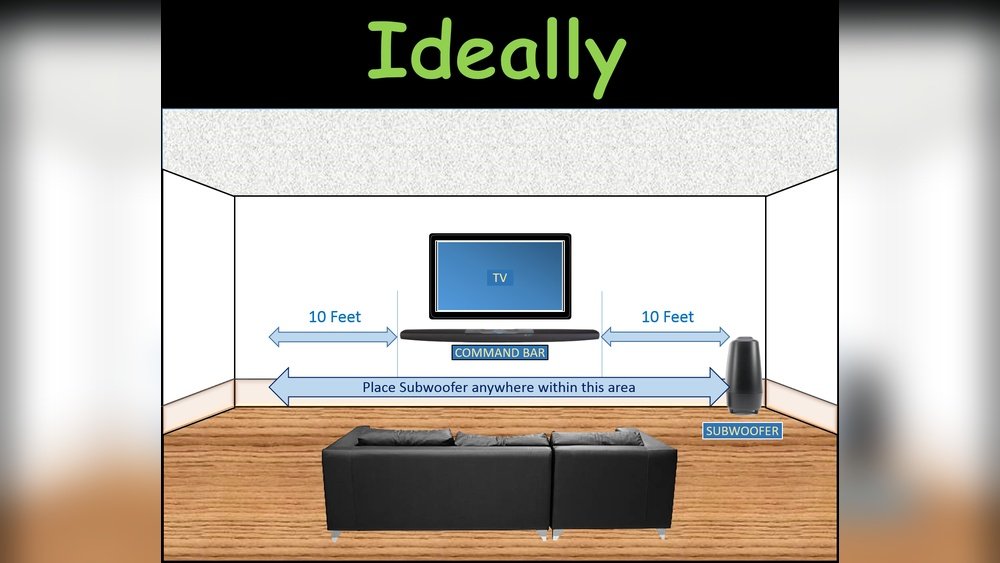
- Front of the room: Near your main speakers, but a few feet from the wall.
- Corner: Place the subwoofer in a corner to increase bass, but be careful of “boomy” sound.
- Side wall: Try the middle of the side wall if your front wall does not work.
- Behind the sofa: Sometimes works if you can keep the subwoofer open and not blocked.
Practical Example
In a 12×16 ft living room, try these steps:
- Place the subwoofer 2 feet from the front wall.
- Sit in your main listening spot and listen to music with deep bass.
- Move the subwoofer to a corner, then to the side wall, and compare the sound.
The Subwoofer Crawl Method
One of the most reliable ways to find the best spot is the subwoofer crawl. Here’s how it works:
- Put your subwoofer in your main listening position (e.g., your sofa).
- Play a bass-heavy song or test tone.
- Walk around the room, especially along the walls.
- Find the spot where the bass sounds best—smooth, strong, not boomy or weak.
- Place your subwoofer in that spot.
Why This Works
Your ears are the best judge. The spot where bass sounds best during your crawl is usually the best place for your subwoofer.
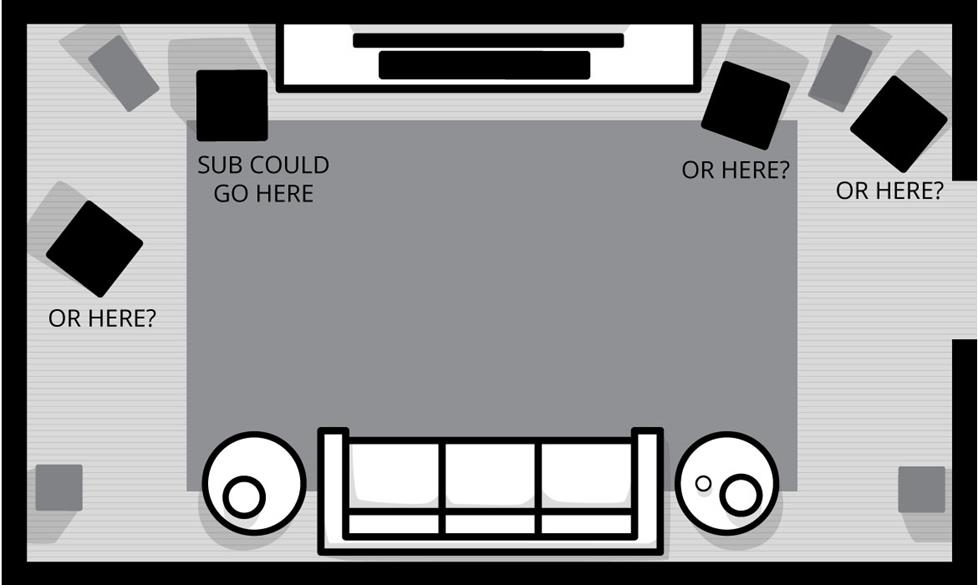
Credit: www.crutchfield.com
How Room Shape Affects Placement
Every room is different. The shape, size, and even materials affect sound. Here’s a quick guide:
| Room Shape | Recommended Placement | Challenges |
|---|---|---|
| Square | Try off-center, avoid exact middle | Bass can get “boomy” in the middle |
| Rectangular | Front wall or corner | Possible dead spots along long walls |
| L-shaped | Closer to main area | Uneven bass between sections |
Non-obvious insight: Odd-shaped rooms may need more than one subwoofer for even bass.
Single Vs Multiple Subwoofers
Some rooms have “dead spots” where bass disappears. This is called bass cancellation. Adding a second subwoofer can help:
- One subwoofer: Good for small rooms, easy setup.
- Two subwoofers: More even bass, fewer dead spots, but needs more space and budget.
Example Comparison
| Number of Subwoofers | Bass Quality | Best For |
|---|---|---|
| 1 | Good, but may have weak spots | Small rooms, tight budgets |
| 2 | Very even, strong everywhere | Medium/large rooms, home theaters |
Tip: If your budget allows, two smaller subwoofers often sound better than one big one.
Placement For Home Theater Vs Music
Your goal changes where you put your subwoofer.
- Home theater: Deep, rumbling bass is important. Place the subwoofer near the front for best effect.
- Music: More balanced bass is needed. Try the subwoofer along the side wall or away from corners.
Real-world Example
If you mostly watch action movies, placing the subwoofer near the front or corner makes explosions feel bigger. For jazz or classical music, a spot away from the corner usually sounds cleaner.
Common Placement Locations Compared
Let’s look at the most popular spots and their pros/cons:
| Location | Pros | Cons |
|---|---|---|
| Front wall | Natural blend with main speakers, easy wiring | May need to move furniture |
| Corner | Boosts bass, saves space | Risk of “boomy” bass |
| Side wall | Can smooth out bass | May be harder to hide cables |
| Behind sofa | Good for small rooms | Bass can sound muffled |
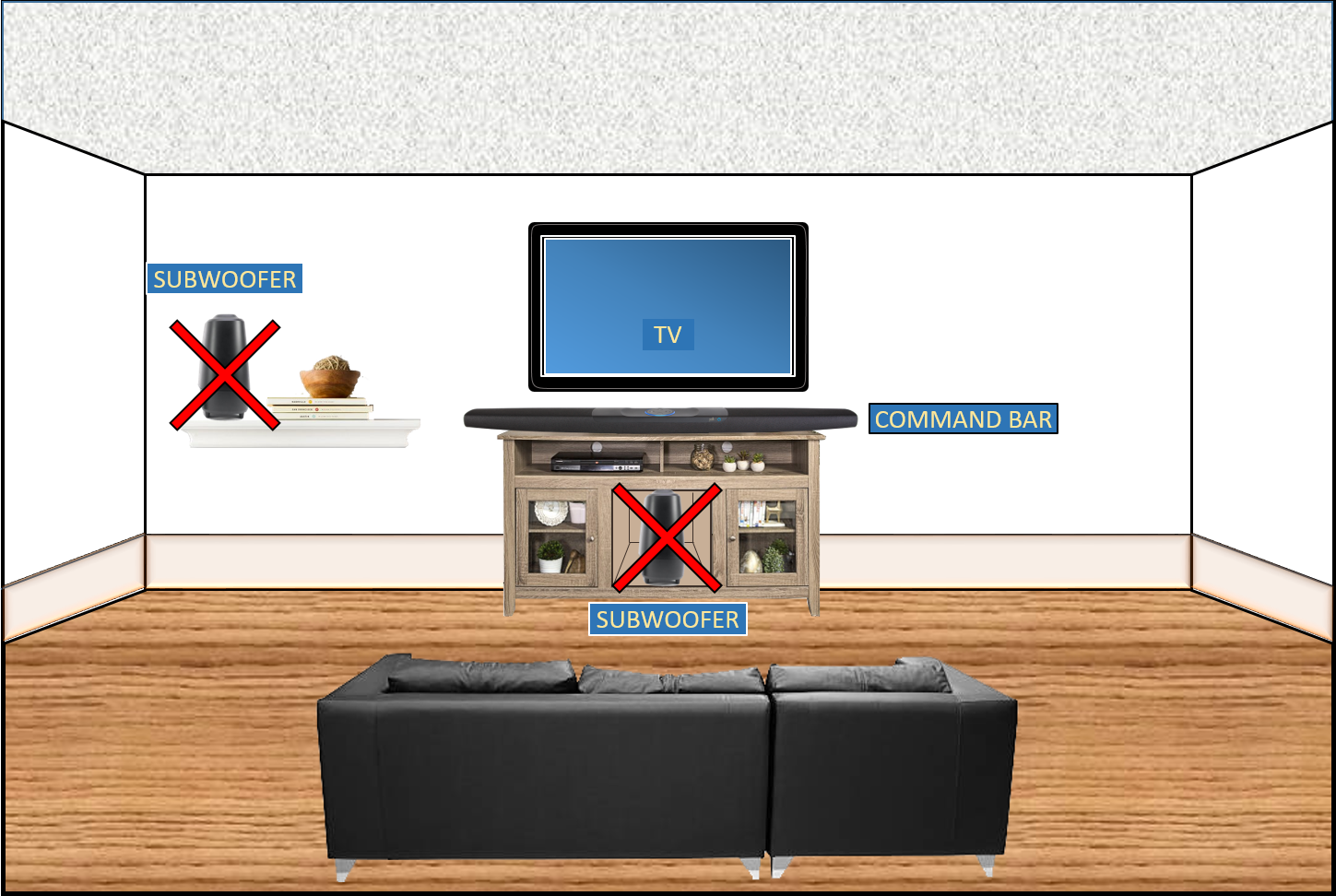
Credit: support.polkaudio.com
Dealing With Room Obstacles
Sometimes, furniture or room design makes subwoofer placement harder. Here’s how to solve common issues:
- Large furniture: Don’t block the subwoofer with couches or cabinets.
- Open floor plans: May need two subwoofers or creative placement.
- Thick carpets: Can absorb bass. Try raising the subwoofer a few inches.
Non-obvious insight: Placing the subwoofer near a bookshelf (but not inside) can sometimes help spread bass more evenly.
Tuning Your Subwoofer After Placement
Finding the right spot is only part of the job. You also need to “tune” your subwoofer:
- Set the crossover: Match the subwoofer’s crossover frequency to your main speakers (usually 80 Hz).
- Adjust the volume: Start low, then increase until bass blends naturally.
- Phase control: If your subwoofer has this, try 0 and 180 degrees to see which sounds better.
Practical Tuning Example
If your main speakers play down to 60 Hz, set your subwoofer’s crossover at 70–80 Hz. Play music and adjust until you don’t notice where the bass is coming from—it should feel “all around” you.
Mistakes To Avoid
Many beginners make the same mistakes when placing a subwoofer. Avoid these for the best results:
- Placing inside a cabinet: Blocks bass, makes it muddy.
- Pushing against the wall: Can make bass too strong and unclear.
- Ignoring room shape: Leads to weak or uneven bass.
- Not tuning after placement: Even the best spot needs fine-tuning.
Using Room Correction Technology
Modern AV receivers often include room correction systems like Audyssey or Dirac. These systems can help fix some placement problems by measuring your room and adjusting the sound automatically.
- Run auto-calibration: Follow your receiver’s setup guide.
- Measure from your main seat: Place the microphone where you sit most.
Tip: Even with room correction, good placement still matters.
If you want to learn more about room acoustics and placement, check out this Audioholics bass setup guide.
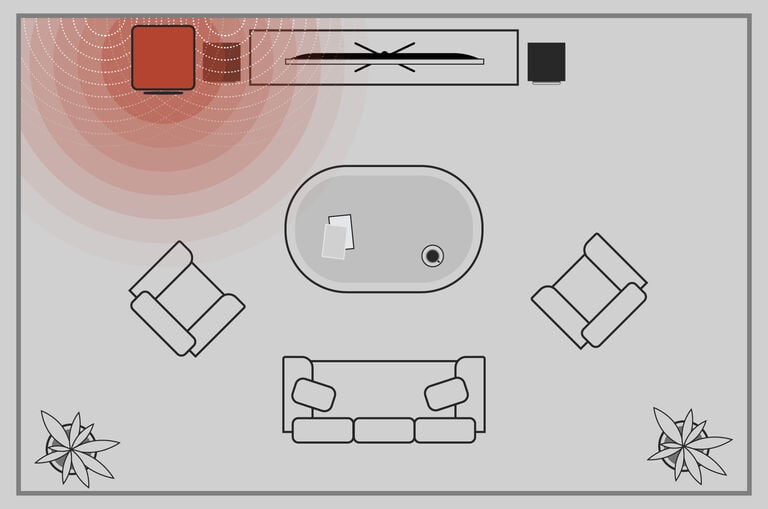
Credit: www.polkaudio.com
Frequently Asked Questions
Where Should I Put My Subwoofer For Best Bass?
Try starting near the front wall or a corner, but avoid blocking it with furniture. Use the “subwoofer crawl” method to find the spot with the smoothest, strongest bass.
Can I Hide My Subwoofer Behind Furniture?
It’s not recommended. Hiding the subwoofer behind a couch or inside a cabinet can block bass waves, making the sound muddy and weak.
Do I Need More Than One Subwoofer?
One subwoofer works in small rooms. For bigger rooms or if you have bass “dead spots,” two subwoofers give more even sound.
How Far From The Wall Should My Subwoofer Be?
Keep it at least a few inches from the wall to avoid muffled bass. About 6–12 inches is a good starting point, but test and adjust.
Does The Subwoofer Need To Be In The Front Of The Room?
Not always. Many people place it near the front for simple wiring, but side walls or even behind the seating can work if the sound is better there.
Getting the best sound from your subwoofer is not magic—it’s about trying different spots, listening carefully, and making small adjustments. A few hours of effort can turn weak, uneven bass into the powerful, clear foundation your movies and music deserve.
With these practical tips, you’ll enjoy your audio system much more, and maybe even impress your friends with your new, deep bass.