What Amplifier Do I Need for My Subwoofer in Car Stereo: Expert Guide
Choosing the right amplifier for your car subwoofer can feel confusing, especially if you’re new to car audio. You might wonder: Will my bass be loud enough? Will my amp damage my subwoofer? Is bigger always better? These are common concerns. The truth is, the best amplifier for your subwoofer depends on a few key factors—like power, compatibility, and your personal goals for sound. This guide will help you understand what matters, avoid mistakes, and choose confidently, even if you’re just starting with car audio.
How Car Subwoofers And Amplifiers Work Together
A subwoofer is designed to handle low-frequency sounds—the deep bass you feel in music. An amplifier boosts the tiny audio signal coming from your car stereo so it’s strong enough for the subwoofer to play loud and clear.
If your amp is too weak, the bass will be quiet and may sound distorted. If it’s too strong, you can actually damage your subwoofer. That’s why matching them correctly is essential.
Key insight: Many beginners think “more power is always better,” but this isn’t true. Proper matching is safer and sounds better.
Understanding Subwoofer And Amplifier Specs
Before shopping, you need to know some basic terms. Let’s break them down simply:
- RMS Power (Root Mean Square): This is the true, continuous power your subwoofer or amp can handle. Focus on RMS, not just peak power.
- Peak Power: The maximum power for short bursts. Usually not important for daily listening.
- Impedance (Ohms): How much resistance the subwoofer gives to the amp’s power. Common values are 2 ohms and 4 ohms.
- Voice Coils: Subwoofers come in single or dual voice coil versions. This affects wiring options and compatibility.
Example
Suppose your subwoofer is rated at 400W RMS at 4 ohms. You need an amplifier that can deliver around 400 watts RMS at 4 ohms—no more, no less.
What Power Rating Should You Choose?
Matching power is the most important step. Here’s a simple way to do it:
- Check your subwoofer’s RMS rating (not peak).
- Choose an amp with an RMS output as close as possible to your sub’s RMS rating at the same ohm load.
Safe Power Range
A good rule is to match your amp’s RMS to the sub’s RMS, or pick an amp with 75% to 125% of the sub’s RMS rating.
Example:
- Subwoofer: 300W RMS at 2 ohms
- Good Amp Choices: 225W to 375W RMS at 2 ohms
Matching Amplifier Type To Subwoofer
There are several types of amplifiers. The right one depends on your subwoofer setup.
Mono (single Channel) Amps
Best for single subwoofers or when you want the most bass power. Mono amps are efficient at low frequencies.
Multi-channel Amps
- 2-Channel: Can run two subwoofers or “bridge” to power one. Not as efficient as mono amps.
- 4-Channel: Usually for speakers, but can be bridged for subwoofers in some cases.
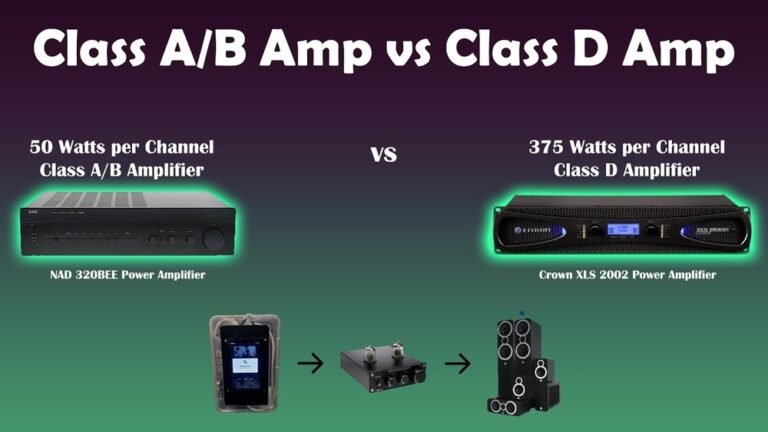
Class Of Amp
- Class D: Most common for subwoofers. Efficient, less heat.
- Class AB: Good sound, less efficient. Not as common for subs now.
Practical Example: Finding The Right Amp
Let’s say you bought a Kicker CompR 12” subwoofer:
- RMS: 500W
- Impedance: Dual 4-ohm voice coils
You can wire this subwoofer to 2 ohms (by wiring the voice coils in parallel). So, you need an amp that can deliver 500W RMS at 2 ohms.
Good Choices:
- Kicker CXA800.1 (600W RMS at 2 ohms)
- Rockford Fosgate R500X1D (500W RMS at 2 ohms)
Both are mono, Class D amplifiers—ideal for subwoofers.
How Impedance Affects Your Choice
Impedance matters because an amp’s output power changes with different ohm loads. Using the wrong impedance can lower performance or damage equipment.
Example Power Output Table
Here’s how a typical mono amplifier’s power changes:
| Model | Power @ 4 Ohms | Power @ 2 Ohms | Power @ 1 Ohm |
|---|---|---|---|
| Pioneer GM-D9701 | 500W RMS | 800W RMS | 1200W RMS |
| Alpine S-A60M | 330W RMS | 600W RMS | N/A |
Key tip: Always check your amp’s RMS output at the same ohm load as your subwoofer’s wiring.

Credit: www.amazon.com
Single Vs. Multiple Subwoofers
If you’re using more than one subwoofer, things get more complex. You need to:
- Add up the total RMS power needed
- Decide on wiring (parallel or series) to get the right total impedance
Example
Two 4-ohm subwoofers, 300W RMS each, wired in parallel = 2 ohms total, 600W RMS needed. Find an amp that gives 600W RMS at 2 ohms.
Common Mistakes Beginners Make
1. Ignoring RMS Ratings
Many people match based on “peak” power, which is misleading. Always use RMS.
2. Wrong Impedance
If the sub’s impedance and amp’s rated output don’t match, you’ll get less bass or risk equipment failure.
3. Underpowering
A weak amp forces you to turn the gain up high, causing distortion and possible speaker damage.
4. Overpowering
Too much power can burn out the subwoofer’s coil, especially if you play at maximum volume.
5. Not Considering Wiring
Single vs dual voice coil subs have different wiring needs. Learn the basics before you buy.
Credit: carstereochick.com
How To Wire Your Subwoofer To The Amp
Wiring affects both power and impedance. Here are the main ways:
- Series wiring: Adds impedance. Used if your amp can’t handle low ohms.
- Parallel wiring: Lowers impedance. Used to get more power from amp.
Example wiring for dual 4-ohm subwoofer:
- Series = 8 ohms
- Parallel = 2 ohms
Choose the wiring that matches your amp’s best output range.
Do You Need A Separate Amp For Your Subwoofer?
Factory car stereos and most aftermarket head units don’t have enough power for subwoofers. That’s why a separate amplifier is almost always required.
Exceptions:
- Some under-seat powered subs have built-in amps. These are plug-and-play but not as powerful as custom setups.
Budget And Brand Considerations
You don’t have to buy the most expensive gear. Many reliable brands make quality car amps for every budget.
Popular Brands For Beginners
- Rockford Fosgate
- Kicker
- Alpine
- Pioneer
- JBL
Price Example Table
| Brand & Model | RMS Power | Price Range (USD) |
|---|---|---|
| Kicker CXA400.1 | 400W @ 2 ohms | $140–$180 |
| Rockford Fosgate R500X1D | 500W @ 2 ohms | $130–$170 |
| Alpine S-A60M | 600W @ 2 ohms | $180–$220 |
Installation Tips For Best Performance
- Use quality wiring kits (at least 8-gauge for most setups).
- Ground your amp securely to bare metal.
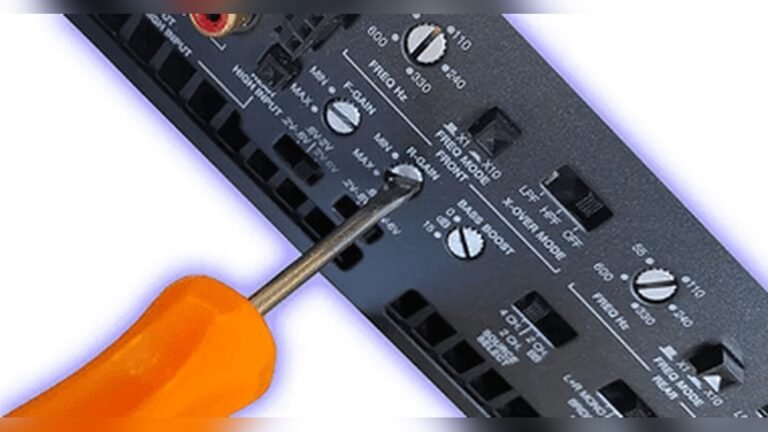
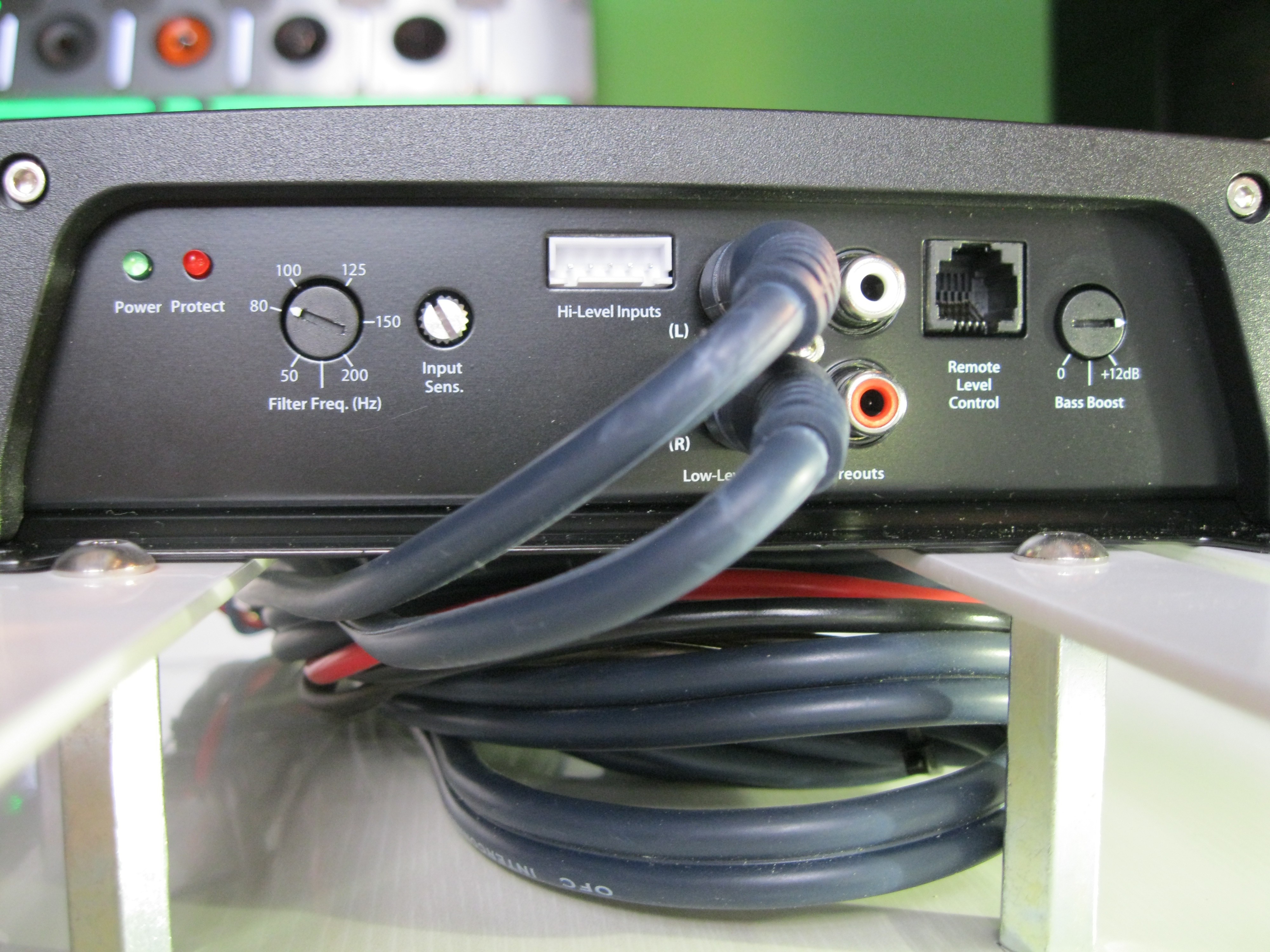
- Set your amp’s gain and low-pass filter correctly.
- Avoid mounting amps where they can overheat.
- Double-check all connections before turning on your system.
Real-world Example: Step-by-step Matching
Let’s walk through a full match:
Subwoofer: JL Audio 10W0v3-4
RMS: 300W
Impedance: 4 ohms
Step 1: Search for a mono amp with 300W RMS at 4 ohms.
Step 2: Compare options:
- Alpine MRV-M500: 300W RMS @ 4 ohms
- Rockville dB11: 300W RMS @ 4 ohms
Step 3: Choose wiring (single sub, so just connect to amp’s output).
Step 4: Install with 8-gauge wiring kit, set gain, enjoy deep bass.
Advanced Tips Most Beginners Miss
1. Amplifier Headroom
Choosing an amp with a little extra power (up to 125% of your sub’s RMS) gives you headroom. This means your amp won’t strain at high volumes, so the sound stays clean.
2. Subsonic Filter
Some amps include a subsonic filter. This protects your subwoofer from trying to play notes too low for it to handle (especially important in ported boxes).
3. True Output Ratings
Not all brands rate their amps honestly. Look for CEA-2006 compliant ratings—these are tested to industry standards.

Credit: www.youtube.com
When To Get Professional Help
If wiring diagrams and ohms confuse you, consider a professional installer. They can:
- Choose the right amp and wire it safely
- Tune your system for best sound and reliability
- Help avoid voiding warranties or damaging your car electronics
For more technical details, you can also check resources like the Wikipedia Car Audio page.
Final Checklist Before Buying
- Know your subwoofer’s RMS rating and impedance
- Match amplifier’s RMS output at the same ohm load
- Decide if you want a mono or multi-channel amp
- Check your amp’s class (Class D is best for subwoofers)
- Buy from reputable brands
- Plan for a quality wiring kit
- Consider professional installation if unsure
Frequently Asked Questions
What Happens If My Amplifier Is Too Powerful For My Subwoofer?
If your amp’s RMS output is much higher than your subwoofer’s RMS rating, you can easily damage the subwoofer, especially if you play music loud. The voice coil can overheat and fail. It’s safer to match power closely.
Can I Use A 2-channel Amp For My Subwoofer?
Yes, but it’s not ideal. You can “bridge” a 2-channel amp to power a single sub, but mono amps are usually more efficient for bass and have better features for subwoofers.
Do I Need A Capacitor With My Subwoofer Amp?
Most systems don’t need a capacitor. Capacitors are only useful if you notice your headlights dimming when the bass hits. This usually means your car’s electrical system needs support.
What Gauge Wire Should I Use For My Amp?
For most subwoofer amps up to 500W RMS, use at least 8-gauge wire. For higher power (over 800W RMS), use 4-gauge wire for safety and better performance.
How Do I Set My Amplifier Gain Correctly?
Start with your head unit volume at 75%. Turn the amp gain down, then slowly turn it up until you hear distortion, then back off a little. This ensures you get loud, clean bass without damaging your subwoofer.
Getting the right amplifier for your subwoofer isn’t hard once you understand the basics. Match the power, check the impedance, use good wiring, and enjoy the music. Your car audio system can deliver amazing bass—just take your time, double-check your specs, and don’t be afraid to ask for help if you need it.