How to Connect Subwoofer to Receiver Without Subwoofer Output Easily
Connecting a subwoofer to a receiver without a dedicated subwoofer output can be confusing, especially for beginners. Many older or budget receivers don’t have a labeled “SUB OUT” port. But that doesn’t mean you can’t enjoy deep bass in your home theater or music system.
There are several ways to make the connection, using basic tools and cables you may already have. This guide explains these methods step by step, with clear language, real-life examples, and practical tips. By the end, you’ll know exactly how to get your subwoofer working—even if your receiver seems outdated or limited.
Understanding Subwoofer And Receiver Connections
A subwoofer is designed to play low-frequency sounds—bass that makes music and movies feel powerful. Most subwoofers connect using an RCA cable to a receiver’s “SUB OUT” jack. But if your receiver doesn’t have this output, you need another method.
Receivers usually have two types of outputs:
- Speaker-level outputs (for regular speakers, using speaker wire)
- Line-level outputs (usually RCA ports, for powered devices)
If you don’t see a port labeled “SUB OUT” or “LFE,” you’re not alone. Many stereo receivers, especially older models, only offer speaker outputs. The good news: there are still ways to connect your subwoofer.
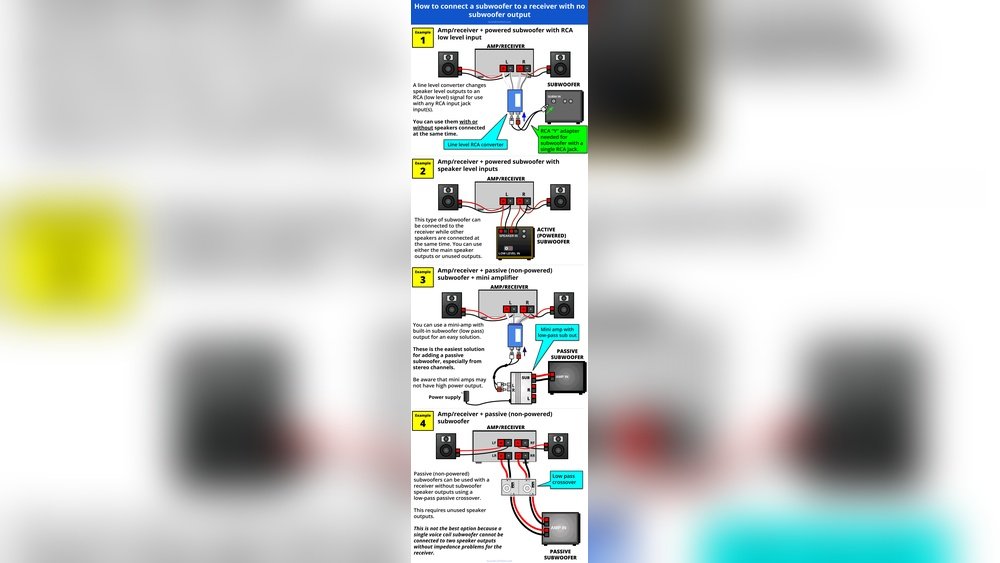
Method 1: Using Speaker-level Inputs On The Subwoofer
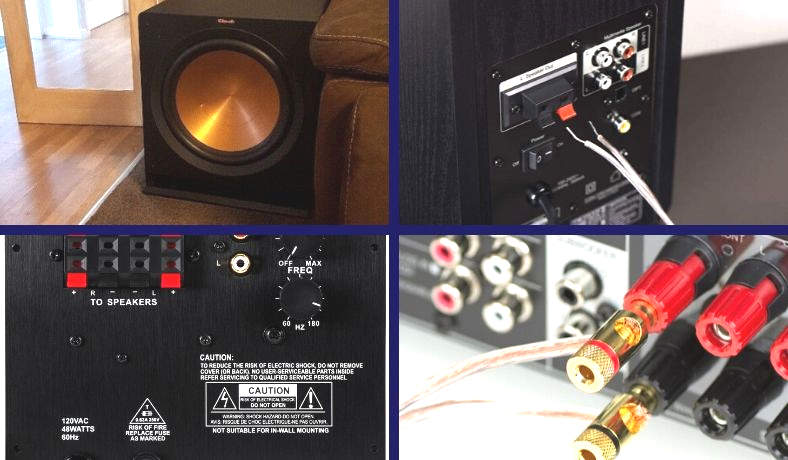
Many powered subwoofers have special connectors called speaker-level inputs (sometimes labeled “High Level In”). These allow you to connect the subwoofer directly to your receiver’s speaker outputs.
How To Connect
- Turn off your receiver and subwoofer before making any connections.
- Run speaker wire from your receiver’s left and right speaker outputs to the subwoofer’s speaker-level input terminals.
- Connect the speakers to the subwoofer’s output terminals (if your subwoofer supports “pass-through” connections). Otherwise, use speaker wire splitters or “Y” connectors to feed both the subwoofer and speakers.
Example
Suppose your receiver has binding posts for “Front Left” and “Front Right.” You run two sets of speaker wires from these posts:
- One set goes to your main speakers.
- The other set goes to the subwoofer’s “High Level In” terminals.
The subwoofer reads the bass frequencies and plays them, while your main speakers continue playing the rest of the audio.
Practical Tips
- Use good-quality speaker wire (16-gauge or thicker for longer runs).
- Make sure the subwoofer is set to “Auto On” or “On.”
- Start with a low volume on the subwoofer, then adjust to taste.
Common Mistakes
- Don’t connect speaker wires to line-level (RCA) inputs on the subwoofer. This can damage the subwoofer.
- Check your receiver’s manual for the minimum speaker impedance.

Credit: www.youtube.com
Method 2: Using Line Out Or Pre-out Connections
Some receivers have line out or pre-out RCA jacks for connecting external devices. Even if not labeled “subwoofer,” these can work for a powered subwoofer.
How To Connect
- Identify line out/pre-out jacks on your receiver (usually labeled “Tape Out,” “Pre Out,” or “Rec Out”).
- Use an RCA cable to connect from the receiver’s line out to the subwoofer’s line in (usually the “LFE In” or “Line In”).
- If your subwoofer has only one RCA input and your receiver has left and right outputs, use an RCA Y-adapter to combine both channels into one.
Example
If your receiver has “Tape Out” (left and right), connect an RCA cable from these jacks to the subwoofer’s RCA inputs. Set the subwoofer’s crossover control to match your main speakers’ frequency range.
Practical Tips
- The “Tape Out” or “Rec Out” jacks usually send a fixed-level signal, so you’ll control the volume from the subwoofer itself.
- Set the subwoofer’s crossover to 80-120 Hz for most systems.
- If the subwoofer has a phase switch, start at 0° and adjust if the bass sounds thin.
Common Mistakes
- Don’t connect “phono out” jacks (meant for turntables) to the subwoofer. These are not the same as line-level outputs.
- Remember that using “Tape Out” may keep the subwoofer playing even when the receiver is muted.
Method 3: Using A Speaker To Line Level Converter
If your subwoofer doesn’t have speaker-level inputs, you can use a speaker to line level converter. This device, sometimes called a “high-to-low converter,” turns speaker-level signals into RCA line-level signals.
How To Connect
- Connect the converter to your receiver’s speaker outputs using speaker wire.
- Run RCA cables from the converter’s output to your subwoofer’s line-level inputs.
- Adjust the converter’s output to match the subwoofer’s sensitivity.
Example
Let’s say your receiver only has speaker outputs and your subwoofer only accepts RCA input. Connect the converter to the same speaker terminals as your front speakers. Then run an RCA cable from the converter to the subwoofer.
Practical Tips
- Choose a quality converter for clear bass (some car audio brands work well for home audio).
- Avoid cheap adapters with poor noise filtering.
- Always turn off your gear before connecting.
Common Mistakes
- Don’t overload your receiver by connecting too many devices to one output.
- Match the converter’s output to the subwoofer’s input level to avoid distortion.
Comparing The Main Connection Methods
Here’s a quick comparison of the three most common ways to connect a subwoofer when your receiver lacks a subwoofer output:
| Method | When to Use | Pros | Cons |
|---|---|---|---|
| Speaker-Level Inputs | Subwoofer has high-level inputs | Simple; no extra devices needed | Not all subwoofers support this |
| Line Out/Pre Out | Receiver has RCA outputs | Clean signal; easy setup | May require manual volume control |
| Speaker to Line Converter | Only speaker outputs available | Works with almost any gear | Needs extra device; possible signal loss |
Important Things To Consider
Subwoofer Type
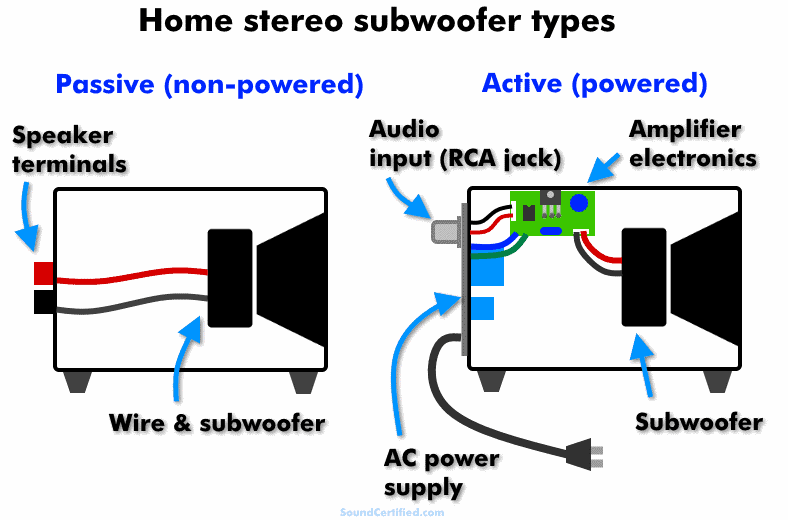
- Powered subwoofers (with built-in amplifiers) work best with these methods.
- Passive subwoofers (no built-in amp) need a separate power amplifier.
Receiver Power And Impedance
Check your receiver’s manual for:
- Minimum speaker impedance (measured in ohms)
- Maximum total load (avoid wiring too many devices in parallel)
Cable Length And Quality
- Keep speaker wire runs under 50 feet for best sound.
- Use shielded RCA cables for long line-level connections.
Credit: soundcertified.com
Can You Use A Passive Subwoofer?
A passive subwoofer does not have a built-in amplifier. To use it with a receiver (without subwoofer output), you need to:
- Connect the subwoofer to a separate power amplifier.
- Use a speaker to line level converter if only speaker outputs are available.
This setup is less common in home systems but sometimes seen in custom or vintage audio setups.
Example: Connecting An Old Stereo Receiver
Imagine you have a classic stereo receiver from the 1980s. It has only speaker terminals and no RCA pre-outs. You own a powered subwoofer with line-level (RCA) inputs.
Step-by-step:
- Buy a speaker to line level converter.
- Connect the converter to the receiver’s left and right speaker outputs.
- Run an RCA cable from the converter to the subwoofer’s input.
- Adjust levels on the subwoofer for smooth bass blending.
This approach lets you modernize old equipment without major upgrades.
Troubleshooting Common Problems
No Sound From Subwoofer
- Check all cables and connections.
- Make sure the subwoofer is powered on and set to the right input.
- Try different crossover and volume settings.
Distorted Or Weak Bass
- Lower the subwoofer’s volume or input sensitivity.
- Move the subwoofer closer to a wall or corner for better bass.
- Check for loose wires or poor-quality adapters.
Receiver Overheating
- Don’t connect too many speakers or subwoofers to one output.
- Use proper gauge speaker wire to reduce resistance.
Advanced Tip: Using Zone 2 Or Multi-room Outputs
Some receivers have Zone 2 or multi-room RCA outputs. These can also send a signal to your subwoofer, though you may need to configure the receiver’s settings.
- Enable Zone 2 output in your receiver’s menu.
- Connect Zone 2 out to the subwoofer’s line in.
This method works well if you want bass in another room or a separate area.
Sample Setup For Different Systems
Here’s a comparison of how you might connect a subwoofer in three common home audio setups:
| System Type | Receiver Output | Best Connection Method | Extra Devices Needed? |
|---|---|---|---|
| Vintage Stereo | Speaker-level only | Speaker to Line Converter | Yes (converter) |
| Budget Home Theater | Line Out (Tape/Rec Out) | RCA Cable to Subwoofer | No |
| Modern AV Receiver | Zone 2 or Multi-Room RCA | RCA Cable to Subwoofer | No |
Two Insights Beginners Often Miss
- Crossover Settings Matter: Many beginners forget the crossover frequency on the subwoofer. Set it to match your main speakers’ lowest frequency. For bookshelf speakers, 80-120 Hz is common. This ensures smooth blending and avoids gaps or overlaps in the sound.
- Volume Control May Be Manual: If you use line out or tape out connections, the subwoofer volume might not change with your receiver’s main volume. You’ll need to set the subwoofer volume directly on the subwoofer and adjust it for different listening levels.
Safety And Best Practices
- Always turn off all equipment before connecting or disconnecting cables.
- Label your wires if your setup is complex.
- Avoid running speaker wires parallel to power cords to reduce hum or noise.
When Should You Upgrade?
If you find these workarounds too limiting, or if your subwoofer can’t keep up with your system, consider upgrading your receiver to one with a dedicated subwoofer output. Modern AV receivers offer better integration, automatic bass management, and easier setup. But for many people, the methods above provide deep, powerful bass without buying new equipment.
For more technical details about audio connections, you can check this Wikipedia subwoofer article.
Credit: soundcertified.com
Frequently Asked Questions
Can I Connect A Subwoofer To A Receiver Without A Subwoofer Output?
Yes, you can. Use speaker-level inputs on the subwoofer, line out/pre-out RCA jacks, or a speaker to line level converter. Make sure your subwoofer is powered (has its own amplifier).
What If My Subwoofer Only Has Rca Input But My Receiver Has Only Speaker Outputs?
Use a speaker to line level converter. This device lets you connect speaker wire from your receiver and gives you an RCA output for your subwoofer.
Will Connecting A Subwoofer This Way Damage My Receiver?
Not if you connect things properly. Use the correct input types and don’t overload your receiver’s speaker outputs. Always check your gear’s manuals.
Why Doesn’t My Subwoofer Volume Change With The Receiver’s Volume?
If you connect using “Tape Out” or “Rec Out,” the signal is fixed-level. Adjust the subwoofer volume manually, or try using speaker-level connections for automatic volume control.
Can I Use A Passive (non-powered) Subwoofer With These Methods?
Not directly. Passive subwoofers need a separate amplifier. You can connect them if you have an external amp, but it’s more complex than with powered subwoofers.
Adding a subwoofer to a receiver without a subwoofer output is easier than many think. With the right method and a bit of patience, you can enjoy rich, deep bass no matter how old or simple your audio system is.