How to Bridge 2 Amps Together for Maximum Power Output
Many music lovers and car audio enthusiasts want louder, clearer sound. Sometimes, a single amplifier isn’t enough to power big speakers or subwoofers. Bridging two amps together can solve this problem, delivering more power and better audio performance. But doing this isn’t as simple as connecting wires.
It requires careful planning and safe steps. In this guide, you’ll learn how to bridge two amps together, why it matters, and what to watch out for—all explained in simple, clear English.
What Does Bridging Amps Mean?
Bridging means combining two amplifier channels so they work as one. Instead of each channel powering a separate speaker, they join forces to deliver more power to a single speaker or subwoofer. With two amps, bridging can mean linking both to work together for one device, or using each amp for its own set of speakers.
Why Bridge Two Amps?
- More power output: Useful for large speakers and subwoofers.
- Improved sound quality: Louder and clearer audio.
- Flexible setup: Can power multiple devices or bigger systems.
For beginners, bridging two amps usually means connecting them to drive a bigger subwoofer or a pair of speakers. It’s common in car audio and home theaters.
Tools And Materials Needed
Before you start, gather these essentials:
- Two amplifiers (with bridging capability)
- Speakers or subwoofers (compatible with higher power)
- Speaker wires (heavy gauge for higher power)
- RCA cables (for signal transfer)
- Y-splitter RCA adapter (for input signal)
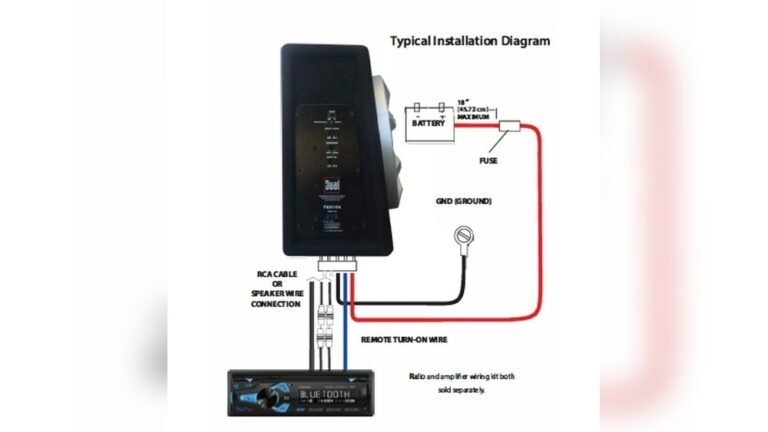
- Power cables (with fuse protection)
- Multimeter (to check connections)
- Amplifier manual (for wiring diagrams)
- Wire strippers and connectors
Having the right tools prevents mistakes and makes setup easier.
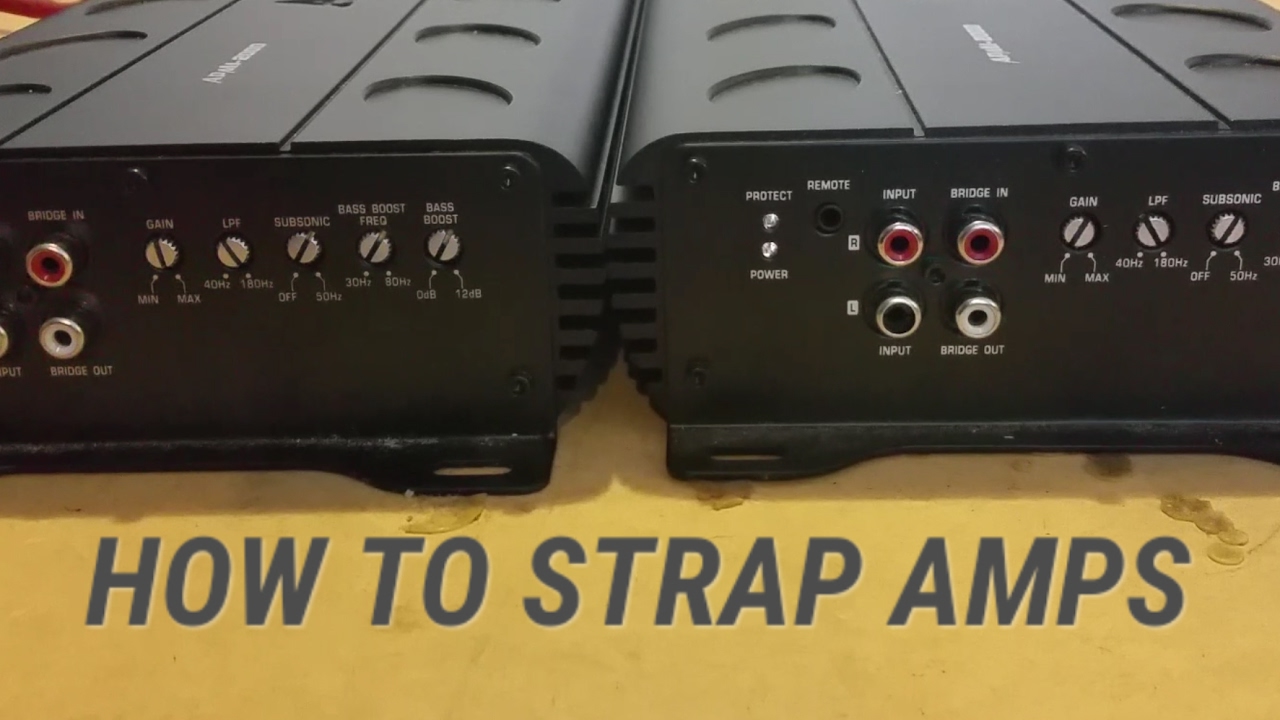
Credit: www.youtube.com
Types Of Amplifiers And Bridging Compatibility
Not all amps can be bridged. Check if your amps support bridging by looking for “bridgeable” or “bridge mode” in their manual. There are two main amp types:
| Type | Can Be Bridged? | Typical Use |
|---|---|---|
| Mono | No | Single subwoofer |
| 2-channel | Yes | Speakers or small subs |
| 4-channel | Yes (for pairs) | Multiple speakers |
Tip: Always check the manual or specs. Trying to bridge non-bridgeable amps can damage them.
Step-by-step: How To Bridge 2 Amps Together
1. Check Compatibility
- Both amps should be bridgeable and similar in power rating.
- Speakers/subs must handle the combined wattage.
Example: Two 2-channel amps rated at 100W each can deliver up to 200W when bridged, but only if your speaker can take that power.
2. Power Off And Plan Layout
- Turn off and unplug all equipment.
- Decide where amps, speakers, and wires will go.
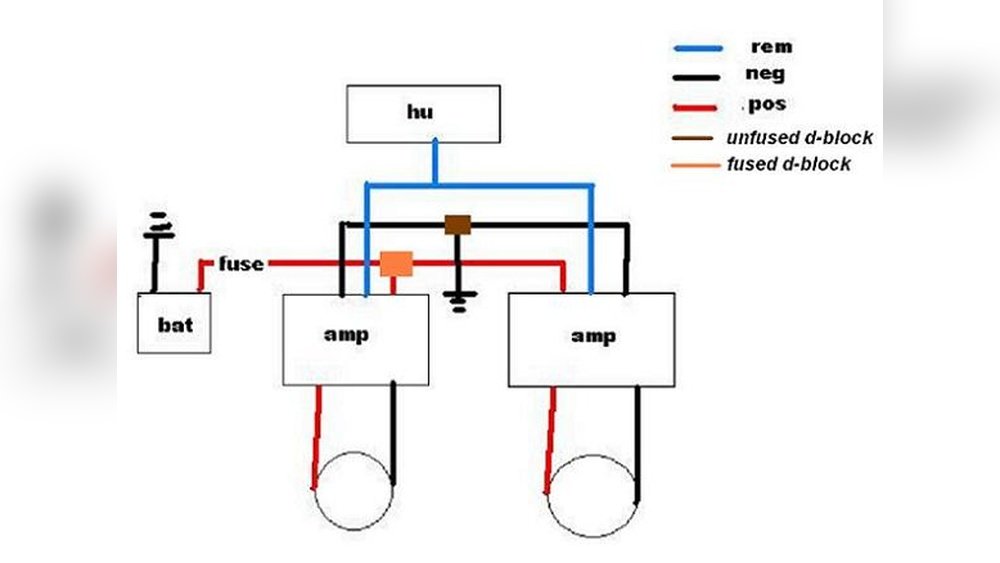
- Use a diagram or sketch for clarity.
3. Connect Input Signals
- Use a Y-splitter RCA adapter to send the same audio signal to both amps.
- Plug RCA cables from your audio source to the Y-splitter, then to each amp.
4. Bridge Each Amp
- Follow your amp’s manual for bridging instructions.
- Usually, connect the positive terminal of one channel and the negative terminal of the other channel to the speaker.
Example Wiring:
- Amp 1: Channel A (+) and Channel B (–) to speaker/sub.
- Amp 2: Same as above for another speaker, or combine for higher output.
5. Connect Amps Together (if Needed)
Some setups allow both amps to power one speaker. This is rare and needs special gear like a bridging module or a dual-input speaker. Most beginners use each amp for separate speakers.
6. Wire Speakers/subwoofers
- Use thick, high-quality speaker wire.
- Connect as per the manual’s bridging diagram.
7. Power Up Safely
- Connect amps to power source, using proper fuses.
- Double-check all connections.
- Turn on the amps and test the sound.
8. Test And Adjust
- Use a multimeter to check voltage and continuity.
- Play audio at low volume first.
- Adjust gain and balance settings for best sound.
Practical Example: Bridging Two 2-channel Car Amps
Let’s say you have two 2-channel amps, each rated at 120W RMS per channel. You want to power two big subwoofers.
- Each amp is set to bridge mode, delivering 240W to each sub.
- You connect the positive from channel 1 and negative from channel 2 to one subwoofer per amp.
- Use a Y-splitter to send the same bass signal to both amps.
Result: You now have 480W total power for two subs, with clear bass and minimal distortion.
Common Mistakes Beginners Make
Many beginners damage their amps or speakers by making these errors:
- Bridging non-compatible amps: Always check specs.
- Wrong wiring: Mixing up positive/negative leads can cause shorts.
- Overloading speakers: If your speakers can’t handle the bridged power, they may blow.
- Skipping fuse protection: Always use proper fuses on power cables.
- Ignoring impedance: Speaker impedance must match amp output for safe use.
| Mistake | Consequence | Prevention |
|---|---|---|
| Wrong wiring | Short circuit, damage | Follow manual diagrams |
| Too much power | Speaker failure | Match wattage and impedance |
| No fuse | Fire risk | Install fuse near battery |
Key Facts About Bridging Amps
- Bridging increases wattage but also stress on the amp.
- Most amps double output in bridge mode, but only if the speaker impedance is correct.
- Speaker impedance (measured in ohms) is critical. Too low can burn out the amp.
- Use heavy gauge wires for safety and performance.
Non-obvious insight: Bridging two amps rarely means connecting both directly to a single speaker. Usually, each amp is bridged for its own speaker. True amp-to-amp bridging requires special gear and is not common for beginners.
Bridging For Home Audio Vs. Car Audio
Bridging is used in both car and home audio, but there are differences.
| Feature | Car Audio | Home Audio |
|---|---|---|
| Voltage | 12V DC | 110/220V AC |
| Common amps | 2-channel, 4-channel | Stereo, AV receivers |
| Speaker type | Subwoofers, coaxial | Floor speakers, bookshelf |
| Bridging ease | Simple with car amps | Less common, needs more care |
Tip: Car audio amps often have clear bridging instructions. Home audio amps may not support bridging, or may require extra adapters.

Credit: www.youtube.com
Safety Tips And Best Practices
- Use only bridgeable amps.
- Check speaker impedance: Most bridged amps need 4–8 ohm speakers.
- Install fuses: Protect amps and wiring from power surges.
- Avoid mixing amp brands: Use similar amps for balanced sound.
- Double-check wiring: Incorrect wiring can cause permanent damage.
- Keep cables neat: Messy cables lead to shorts and interference.
How To Choose The Right Speaker For Bridged Amps
Bridging increases the power delivered to your speaker. If you use the wrong speaker, it may burn out quickly.
- Check RMS rating: Match amp output with speaker power rating.
- Check impedance: Most bridged amps require 4 ohm speakers, never use 2 ohm unless specified.
- Quality matters: Use high-quality speakers for best sound and safety.
Example: If your amp delivers 300W RMS when bridged, your speaker should handle at least 300W RMS at 4 ohms.
Bridging Two Amps For One Speaker: Is It Possible?
For most beginners, bridging two amps to one speaker is NOT recommended. It requires special equipment and careful synchronization. Without these, amps may fight each other, causing damage.
- Special modules exist for pro setups, but are expensive and complex.
- Most users bridge each amp for its own speaker.
Non-obvious insight: True amp-to-amp bridging is rare outside advanced audio systems. Beginners should avoid it unless they have expert guidance.
Troubleshooting Bridged Amp Problems
Problems can happen even with careful setup. Here’s how to fix common issues:
- No sound: Check wiring, input signal, and amp settings.
- Distortion: Lower gain, check speaker impedance.
- Amp shuts off: Overheating or power overload, check fuses and connections.
- Speaker hum: Use shielded cables, keep power and signal wires separate.
If you get stuck, consult the amp’s manual or ask an audio expert.
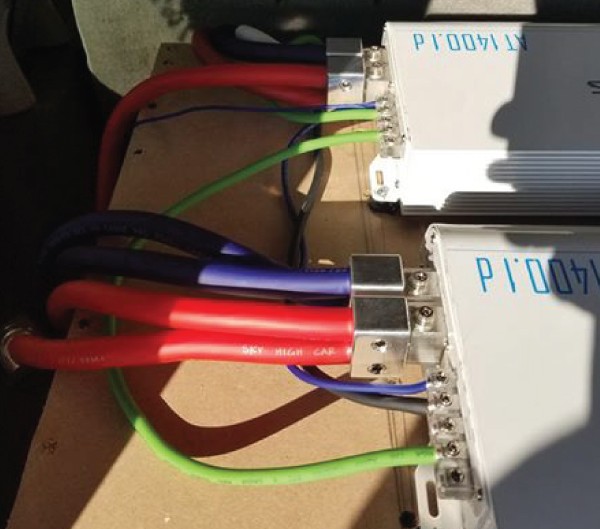
Credit: www.ctsounds.com
Frequently Asked Questions
What Does “bridgeable” Mean For An Amplifier?
A bridgeable amp can combine two channels to power one speaker, delivering more wattage. This is explained in the amp’s manual. Not all amps are bridgeable.
Can I Bridge Any Two Amps Together?
No. Only amps that support bridging and have similar specs can be bridged. Mixing brands or types often leads to poor performance or damage.
What Happens If I Connect Too Much Power To A Speaker?
The speaker may blow out or distort. Always match the amp’s output to the speaker’s RMS rating and impedance for safe use.
Is Bridging Amps Safe For Beginners?
Yes, if you follow instructions, use compatible equipment, and install proper fuses. Avoid advanced setups like bridging both amps to one speaker.
Where Can I Find More Detailed Bridging Diagrams?
Many amp manufacturers offer diagrams and guides. For reliable info, visit Crutchfield for expert bridging instructions.
Bridging amps can boost your audio system’s power and clarity. With careful planning, the right gear, and safe steps, even beginners can enjoy better sound. Always check manuals, use proper wiring, and match your speakers. With these tips, you’re ready to bridge two amps together—confidently and safely.