Connecting a Powered Subwoofer With a Line Output Converter: Easy Guide
Connecting A Powered Subwoofer With A Line Output Converter
Adding a powered subwoofer to your car or home audio system can make a big difference. Bass becomes deeper, movies sound more exciting, and music feels richer. But what if your stereo doesn’t have the right outputs for a subwoofer? This is where a Line Output Converter (LOC) comes in. Even if you’re new to audio setups, you can connect a powered subwoofer using a LOC with the right guidance. In this article, you’ll learn how to connect a powered subwoofer using a LOC, understand why it’s needed, and avoid common mistakes that can damage your audio system.
Why Use A Line Output Converter?
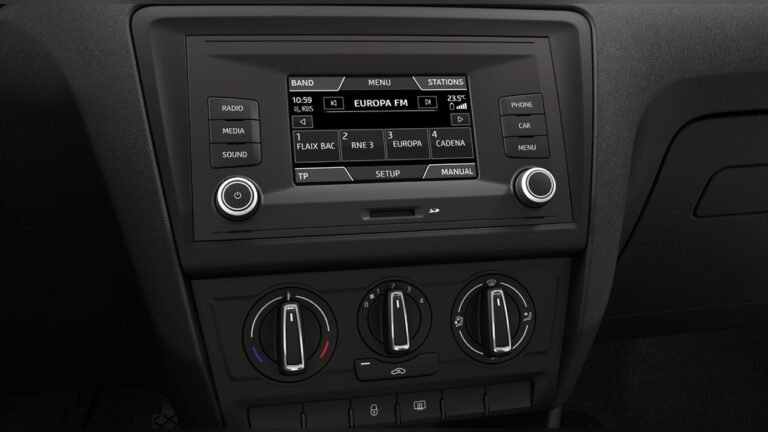
Many factory-installed car stereos, and some home stereos, don’t have RCA outputs for connecting a subwoofer. Instead, they provide speaker-level outputs designed for standard speakers. A powered subwoofer usually needs RCA (low-level) signals. The Line Output Converter solves this by changing speaker-level signals into RCA signals.
Key Benefits Of A Loc
- Compatibility: Lets you add a subwoofer to almost any system—even if it’s an older or factory stereo.
- Protects Equipment: Prevents damage to subwoofers and amplifiers by sending the right type of signal.
- Easy Upgrades: You don’t need to replace your entire stereo just to add more bass.
What You Need Before Starting
To connect a powered subwoofer with a LOC, gather these items:
- Powered subwoofer (includes built-in amplifier)
- Line Output Converter (LOC)
- Speaker wire
- RCA cables
- Wire connectors (butt connectors, T-taps, or solder)
- Electrical tape
- Fuse holder and fuse (if adding a power line)
- Basic tools: Wire stripper, screwdriver, crimp tool
Having all parts ready makes the installation smoother and safer.

Credit: www.ctsounds.com
Understanding Line Output Converters
A Line Output Converter is a small device, usually about the size of a smartphone, that converts high-voltage speaker signals down to the lower voltage RCA signals.
How A Loc Works
- Input: Takes the speaker-level signal from your stereo’s speaker wires.
- Conversion: Lowers the voltage and matches impedance.
- Output: Sends RCA-level signals to your subwoofer’s input.
Some LOCs include extra features like ground loops or remote turn-on outputs. For most beginners, a basic two-channel LOC is enough.
Example: Loc Specifications
Here’s a typical comparison of LOC features you might find:
| Feature | Basic LOC | Advanced LOC |
|---|---|---|
| Channels | 2 | 4-6 |
| Remote Turn-On Output | No | Yes |
| Adjustable Gain | Yes | Yes |
| Ground Loop Isolation | No | Yes |
| Price Range | $10–$30 | $40–$100 |
For most powered subwoofer installations, a basic 2-channel LOC is enough.
Step-by-step Guide To Connecting A Powered Subwoofer With A Loc
Connecting a powered subwoofer isn’t as hard as it sounds. Here’s a simple, step-by-step approach.
1. Disconnect The Battery (car Installations)
Safety first. Before you touch any wires, disconnect the negative terminal of your car battery. This prevents short circuits and protects you and your equipment.
2. Find The Speaker Wires
Locate the speaker wires behind your stereo or at the rear speakers. These wires carry the audio signal that the LOC will use.
- Tip: Use a wiring diagram for your specific car or stereo model to find the correct wires.
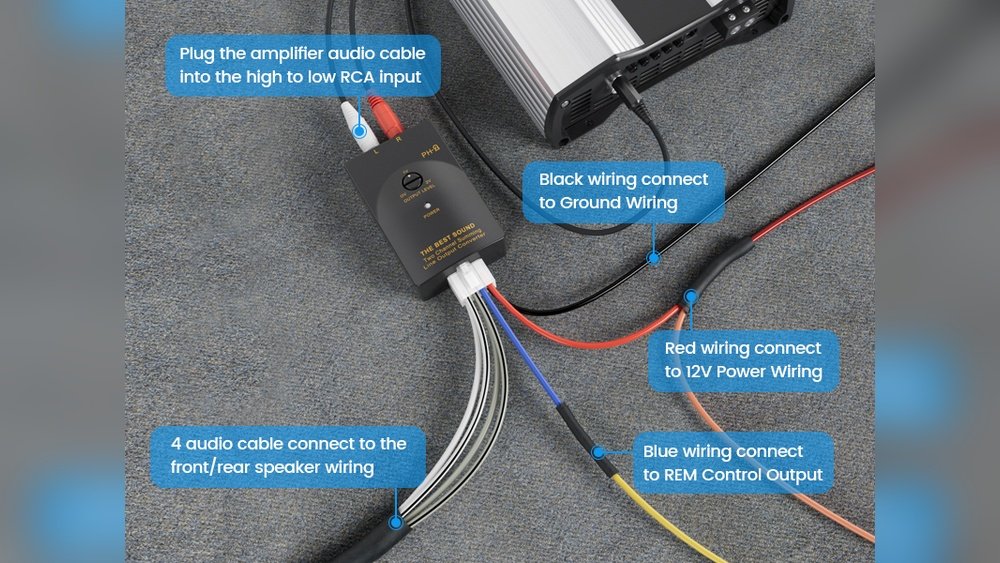
3. Connect The Loc To Speaker Wires
- Cut or tap into the left and right speaker wires (usually two pairs: Positive and negative for each).
- Connect the LOC input wires to these speaker wires.
- Secure the connections with wire connectors and wrap with electrical tape.
Non-obvious insight: Tapping into rear speaker wires often gives better bass response for subwoofers.
4. Connect Rca Cables
Plug RCA cables into the output of the LOC. Run these cables to the powered subwoofer’s RCA input.
- Keep the RCA cables away from power wires to avoid unwanted noise.
5. Power Up The Subwoofer
- For cars: Run a dedicated power wire from the car battery to the subwoofer, including a fuse holder close to the battery.
- For home: Plug the subwoofer into an AC outlet as per the manufacturer’s instructions.
Tip: Always use a fuse to protect your equipment in case of a power short.
6. Connect The Remote Turn-on Lead
Most powered subwoofers need a remote turn-on signal. Some LOCs provide this; if not, tap into a switched power source (like the car’s accessory wire).
- Connect the remote wire to the subwoofer’s remote input.
7. Ground The Subwoofer
Attach the ground wire from the subwoofer to a clean, unpainted metal surface (car chassis or home electrical ground).
8. Double-check All Connections
Check that all wires are secure and connections match the wiring diagram.
9. Reconnect The Battery And Test
Reconnect your battery or power source. Turn on the stereo at low volume first. Test the subwoofer output and adjust the LOC gain as needed.
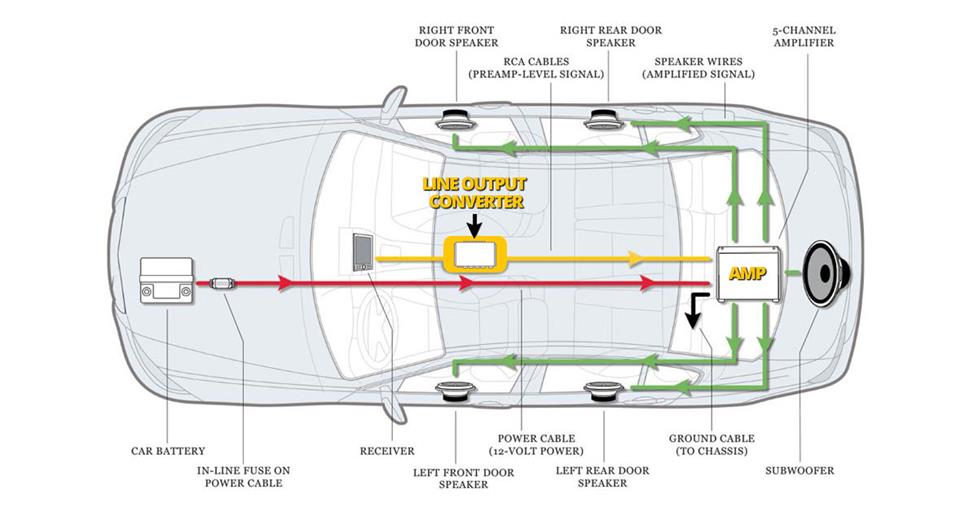
Example: Car Subwoofer Connection Diagram
This shows a typical connection setup:
| Component | Connected To |
|---|---|
| LOC Input | Rear speaker wires (+/-) |
| LOC Output | Subwoofer RCA input |
| Subwoofer Power | Car battery (with fuse) |
| Subwoofer Ground | Car chassis |
| Remote Turn-On | Radio accessory wire |
Common Problems And How To Avoid Them
1. Ground Loop Noise
If you hear a whining noise or hum when your subwoofer plays, you may have a ground loop. This happens when the subwoofer and stereo have different ground points.
- Solution: Ground all equipment to the same point. Use a ground loop isolator if needed.
2. Weak Bass Or No Sound
If your subwoofer is not producing enough bass:
- Check the LOC gain setting. Turn it up slowly.
- Make sure RCA cables are plugged in tightly.
- Verify all power and ground connections.
3. Blown Fuse
If your fuse blows soon after powering up:
- Check for short circuits in the power or ground wires.
- Use the correct fuse size for your subwoofer’s power rating.
4. Distorted Sound
Distortion usually means the LOC input is set too high or the subwoofer gain is too high.
- Lower the stereo volume and adjust the LOC gain to a middle position.
- Increase volume slowly and adjust for clean sound.
Non-obvious insight: Overdriving a LOC can damage both the subwoofer and your stereo’s output.
Adjusting And Tuning For Best Sound
After connecting everything, spend a few minutes tuning your setup.
- Set your stereo’s bass and volume controls to normal.
- Adjust the LOC gain knob until the bass sounds clean and strong.
- If your subwoofer has a phase switch, try both settings to find fuller bass.
Practical Example
Let’s say your car stereo has only speaker outputs. You install a basic 2-channel LOC, connect it to the rear speaker wires, and run RCA cables to your subwoofer. After connecting power and ground, you notice the bass is weak. You then:
- Increase the LOC gain slightly.
- Move the ground wire to a better metal spot.
- Adjust the subwoofer’s low-pass filter to 80 Hz.
The result: deep, clean bass that fits your car’s size and music taste.
Choosing The Right Line Output Converter
Not all LOCs are equal. Picking the right one makes your installation easier and your sound better.
Factors To Consider
- Number of channels: Most powered subwoofers only need a 2-channel LOC.
- Remote turn-on: If your subwoofer needs a turn-on signal, choose a LOC with this feature.
- Adjustable gain: Allows for better tuning.
- Brand reputation: Stick to known brands for reliability.
Loc Comparison
Here’s how some popular LOCs compare:
| Model | Channels | Remote Turn-On | Price |
|---|---|---|---|
| Scosche LOC2SL | 2 | Yes | $18 |
| AudioControl LC2i | 2 | Yes | $90 |
| Metra Axxess LOC | 2 | No | $12 |
For most beginners, a basic model like the Scosche LOC2SL is enough.
Safety Tips And Mistakes To Avoid
Safety First
- Always disconnect the battery before wiring.
- Use fuses with all power wires.
- Avoid running RCA and power wires together to reduce noise.
Common Mistakes
- Skipping the fuse: Can cause fires or equipment damage.
- Poor ground connections: Lead to noise and weak subwoofer output.
- Wrong wire gauge: Thin wires can overheat; use the recommended gauge from your subwoofer manual.
Credit: www.crutchfield.com
Real-world Examples
Case 1: Factory Stereo, No Rca Outputs
Maria wants to add a subwoofer to her Honda Civic’s factory stereo. She uses a 2-channel LOC, taps into the rear speaker wires, and gets great bass without changing her car’s dashboard.
Case 2: Home Stereo With Speaker Terminals Only
John’s old home receiver has only speaker wire outputs. He uses a LOC to connect a powered subwoofer for movie nights, upgrading his sound without a new receiver.
When To Ask For Professional Help
If you feel unsure about any step or face problems like persistent noise or no sound, don’t hesitate to ask for help from a professional installer. Some cars have complex wiring or active noise cancellation systems that can make DIY installs tricky.

Credit: www.amazon.com
Frequently Asked Questions
How Does A Line Output Converter Work?
A line output converter takes high-level signals from speaker wires and reduces them to low-level RCA outputs. This lets you connect a powered subwoofer to a stereo that doesn’t have RCA outputs.
Can I Use A Loc For Home Audio Systems?
Yes, you can use a LOC in home audio setups. If your receiver only has speaker wire outputs and your powered subwoofer needs RCA input, a LOC can bridge the gap.
What Size Fuse Do I Need For My Powered Subwoofer?
Check your subwoofer’s manual for recommended fuse size. For most powered subwoofers (100–250 watts), a 15–30 amp fuse is typical. Always use a fuse rated just above your subwoofer’s max current draw.
Why Is My Subwoofer Making A Humming Noise?
A humming noise often means a ground loop or poor grounding. Make sure all equipment shares the same ground point. Use a ground loop isolator if noise continues.
Where Can I Learn More About Line Output Converters?
You can find detailed guides and product reviews on sites like Crutchfield for more advanced info.
Bringing deep, powerful bass to your car or home system doesn’t have to be hard. With a little planning and the right parts, connecting a powered subwoofer using a line output converter is a straightforward upgrade. Take your time, double-check your connections, and enjoy the difference a subwoofer can make in your audio experience.