How to Calculate Subwoofer Displacement: Step-by-Step Guide
Calculating subwoofer displacement is a crucial step for anyone building a speaker box or upgrading a car audio system. If you skip this, your subwoofer might not sound right, or worse, you could damage your audio equipment. Many beginners think only about the box size and forget that the subwoofer itself takes up space inside the box.
This mistake can lead to poor bass response and wasted money. Understanding subwoofer displacement helps you get the most out of your sound system, with deep bass and clear audio.
What Is Subwoofer Displacement?
Subwoofer displacement is the amount of space inside a speaker enclosure that the physical subwoofer itself occupies. When you install a subwoofer, it takes up a certain volume that reduces the total air space inside the box. This lost space must be subtracted from your enclosure’s internal volume to ensure your subwoofer performs as designed.
- If you ignore this, your subwoofer enclosure will be too small.
- The result: Weak bass, poor efficiency, or even damage to your woofer.
Why does this matter?
- Subwoofers are designed to work in a specific internal box volume.
- Even a small error in volume can change the sound quality.
- Manufacturers often provide the ideal enclosure size, but you must subtract the subwoofer displacement for an accurate result.
Key Terms To Know
Before you start, it’s important to know a few basic terms:
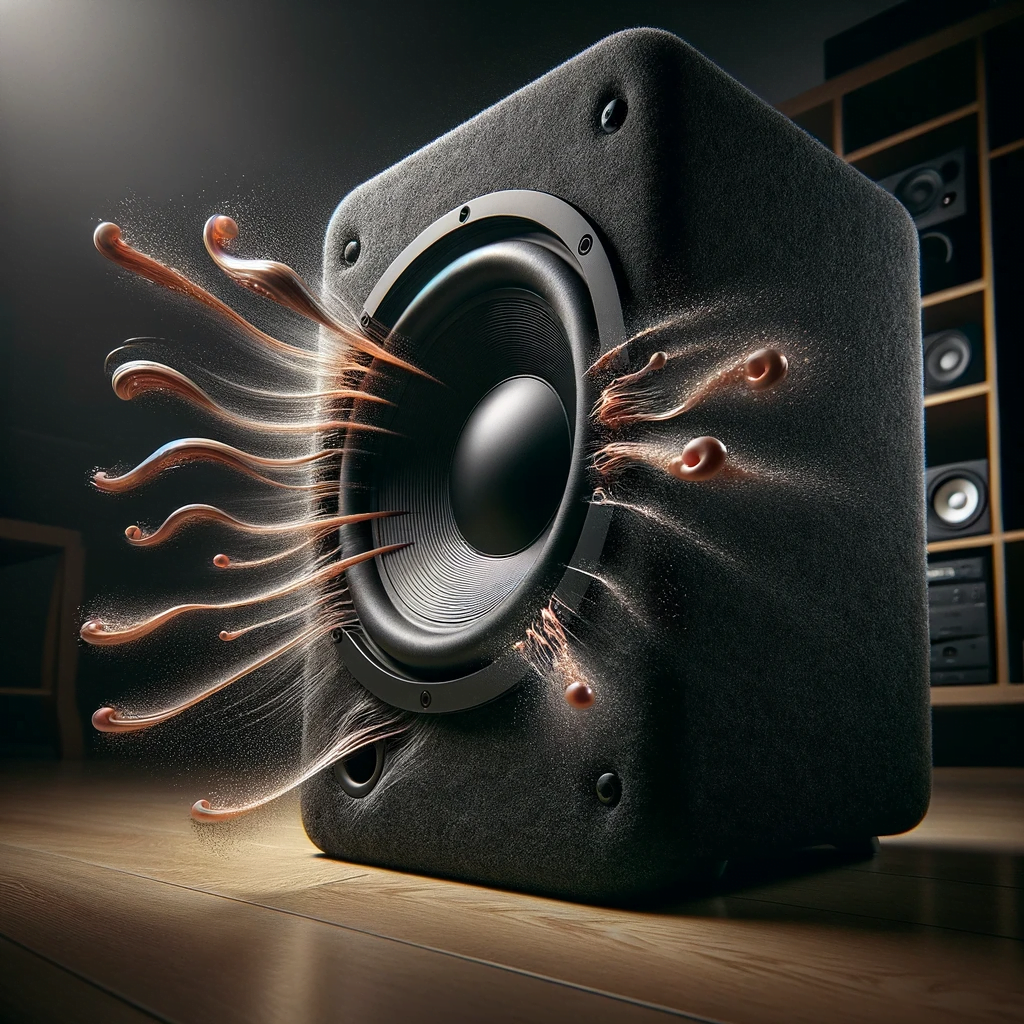
- Mounting depth: How deep the subwoofer is from the mounting surface to the bottom.
- Mounting diameter: The size of the hole needed to mount the subwoofer.
- Displacement (Vd): The volume the subwoofer basket, magnet, and cone take up inside the box.
- Enclosure net volume: The air space left after subtracting all internal objects (subwoofers, braces, ports).
These terms will appear in subwoofer manuals and box design calculators.
Credit: proline-x.com
Why Subwoofer Displacement Calculation Is Important
Many new builders skip this step, but the effects can be dramatic:
- Incorrect tuning: If your enclosure is too small, bass becomes “boomy” or weak.
- Possible damage: Subwoofers in wrong-sized boxes can overheat or reach their mechanical limits.
- Wasted money: You might spend extra on a bigger box but get poor results.
When you calculate displacement correctly, you:
- Protect your subwoofer
- Get cleaner, deeper bass
- Match your setup to the manufacturer’s specs
What You Need Before You Start
Gather these items for accurate calculation:
- Subwoofer manual or datasheet (for specs)
- Measuring tape or ruler
- Calculator
- Pen and paper
- Internet access (optional, for online calculators)
Having the subwoofer’s dimensions and specifications makes this process much easier.
Methods To Calculate Subwoofer Displacement
There are two main ways to find subwoofer displacement:
- Manufacturer Specifications
- Manual Calculation (Geometric Method)
1. Using Manufacturer Specifications
Most subwoofer brands provide displacement data in the manual or online. This is the easiest and most accurate way.
- Look for terms like displacement, Vd, or volume occupied.
- Typical values range from 0.05 ft³ (compact 8-inch) to 0.25 ft³ (large 15-inch).
Example:
- A 12-inch subwoofer might have a displacement of 0.13 cubic feet (3.68 liters).
- If your box needs to be 1.25 cubic feet net, you should build it at least 1.38 cubic feet gross (1.25 + 0.13).
Tip: Always check if the manufacturer’s number includes the grille or mounting ring. If not, add those yourself.
2. Manual Calculation (geometric Method)
If you can’t find the manufacturer’s specs, you can estimate the displacement by measuring your subwoofer and using basic geometry.
Step-by-step Example:
Let’s say your subwoofer is roughly shaped like a cylinder.
- Measure the diameter (D): For example, 12 inches.
- Measure the depth (H): For example, 6 inches.
Volume of a cylinder:
Volume = Π × (radius²) × Height
- Radius = Diameter / 2 = 6 inches
- Volume = 3.1416 × (6 × 6) × 6 = 678.58 cubic inches
Convert cubic inches to cubic feet:
1 Cubic Foot = 1,728 Cubic Inches
678.58 / 1,728 = 0.39 Cubic Feet
This is a rough estimate, as real subwoofers are not perfect cylinders. Most subwoofers have frames and magnets that reduce the actual volume.
More accurate method:
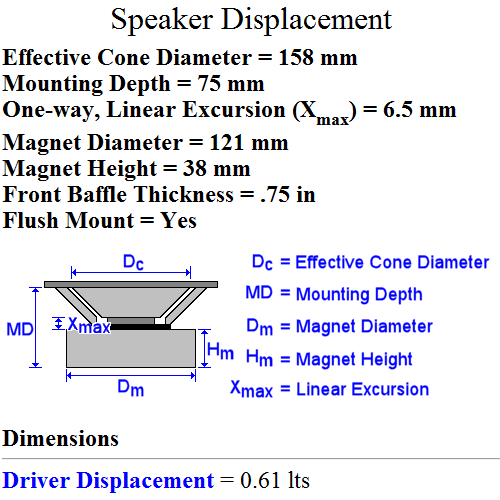
Measure only the parts inside the box (usually the magnet and basket).
- For a 12-inch sub, this might be a 6-inch diameter magnet and a 2-inch depth:
Volume = 3. 1416 × (3 × 3) × 2 = 56. 55 cubic inches
56.55 / 1,728 = 0.033 Cubic Feet
Note: If unsure, always round up. It’s better to make the box slightly larger.
Practical Tip: Use Online Calculators
Many websites offer free subwoofer displacement calculators. Just enter the measurements, and they do the math. This saves time and reduces mistakes.
How To Adjust Box Size For Subwoofer Displacement
Once you know your subwoofer’s displacement, you must adjust your enclosure size.
Example Calculation:
- Manufacturer recommends 1.00 cubic foot net volume.
- Subwoofer displacement: 0.12 cubic foot.
- If you want to add a port (0.05 cubic foot) and bracing (0.02 cubic foot):
Total gross volume needed:
- 00 + 0.12 + 0.05 + 0.02 = 1.19 cubic feet
Build your box to 1. 19 cubic feet inside. After subtracting the subwoofer, port, and bracing, you’ll have the correct air space.
Credit: www.diyaudioandvideo.com
Common Mistakes Beginners Make
- Ignoring displacement: Many forget to subtract the subwoofer, leading to poor sound.
- Confusing net vs. gross volume: Net is after all objects are inside. Gross is total box size.
- Not including bracing or ports: Internal supports and ports also take up space.
- Using outside dimensions: Always calculate the internal (not external) box volume.
- Wrong units: Mixing cubic inches, liters, and cubic feet causes errors. Always convert units.
Example: Calculating Subwoofer Displacement For A 12-inch Sub
Suppose you have a 12-inch subwoofer with these measurements:
- Magnet diameter: 6 inches
- Magnet depth: 3 inches
- Basket diameter: 10 inches
- Basket depth: 2 inches
Step 1: Calculate magnet volume (cylinder):
- Volume = π × (3 × 3) × 3 = 84.82 cubic inches
Step 2: Calculate basket volume (cylinder):
- Volume = π × (5 × 5) × 2 = 157.08 cubic inches
Step 3: Add both:
- 84.82 + 157.08 = 241.90 cubic inches
Step 4: Convert to cubic feet:
- 241.90 / 1,728 = 0.14 cubic feet
Result: Your 12-inch subwoofer takes up approximately 0.14 cubic feet.
Insight: Many beginners measure only the magnet. Don’t forget the basket and any protruding parts inside the box.
How Subwoofer Displacement Affects Sound Quality
- Too small enclosure: Bass is weak, and distortion increases.
- Too large enclosure: Bass is loose and less controlled.
- Correct enclosure: Deep, clean bass and efficient performance.
The displacement might seem small, but for a compact box, losing even 0. 10 cubic feet can change the sound a lot.
Subwoofer Displacement And Different Box Types
The impact of displacement changes with box design:
- Sealed boxes: Most sensitive to lost volume. Always subtract displacement.
- Ported boxes: Ports also take up space, so double-check all objects inside.
- Bandpass boxes: Even more complex, as multiple chambers are involved.
Tip: Always plan for all items inside your box—not just the subwoofer.
Real-world Data: Subwoofer Displacement Chart
Here’s a comparison of typical subwoofer displacements by size and brand.
| Subwoofer Size | Average Displacement (ft³) | Example Model |
|---|---|---|
| 8 inch | 0.05 – 0.07 | Kicker CompC 8″ |
| 10 inch | 0.08 – 0.12 | JL Audio 10W0v3 |
| 12 inch | 0.12 – 0.18 | Rockford Fosgate P3D4-12 |
| 15 inch | 0.18 – 0.25 | Skar Audio EVL-15 |
Insight: Always check the actual manual, as even similar-sized subs can vary.
Subwoofer Displacement Vs. Box Volume—visual Comparison
Let’s see how subwoofer displacement compares to a typical box volume.
| Box Size (ft³) | Subwoofer Displacement (ft³) | % of Box Volume Lost |
|---|---|---|
| 0.75 | 0.08 | 10.7% |
| 1.00 | 0.12 | 12.0% |
| 1.50 | 0.14 | 9.3% |
| 2.00 | 0.18 | 9.0% |
As you can see, the smaller the box, the bigger the effect of subwoofer displacement.

Credit: www.youtube.com
Tips For Accurate Subwoofer Displacement Calculation
- Double-check measurements: Even a small error can change the result.
- Use manufacturer specs when possible: They are more precise.
- Don’t forget bracing or ports: Every object inside the box reduces air space.
- Convert all units: Keep everything in cubic feet or liters.
- If in doubt, go slightly bigger: A little extra space is safer than too little.
Useful Resources
For more information on enclosure design and subwoofer specs, visit the Wikipedia Subwoofer Page.
Frequently Asked Questions
How Do I Find Subwoofer Displacement If The Manufacturer Doesn’t Provide It?
Measure the parts of the subwoofer that go inside the box (magnet and basket). Use the cylinder volume formula for each part, add them together, and convert to cubic feet or liters.
Do I Need To Include The Subwoofer’s Grille And Mounting Ring In Displacement?
Yes. Anything that sits inside the box, including grilles, mounting rings, or extra hardware, must be counted as displacement.
What Happens If I Ignore Subwoofer Displacement In My Box Design?
Ignoring displacement makes your enclosure too small. This leads to poor bass, reduced efficiency, and possible subwoofer damage.
How Do I Adjust My Enclosure For Multiple Subwoofers?
Multiply the displacement by the number of subwoofers. Subtract the total from your desired net volume to calculate the correct gross volume.
Are Ports And Bracing Also Part Of Displacement?
Yes. Both ports and bracing take up internal air space. Their volume must be subtracted along with the subwoofer’s displacement for accurate box design.
Getting subwoofer displacement right is not hard, but it makes a big difference in your audio results. With a little math and careful measuring, you can build a box that matches your subwoofer perfectly and enjoy powerful, clean bass for years.