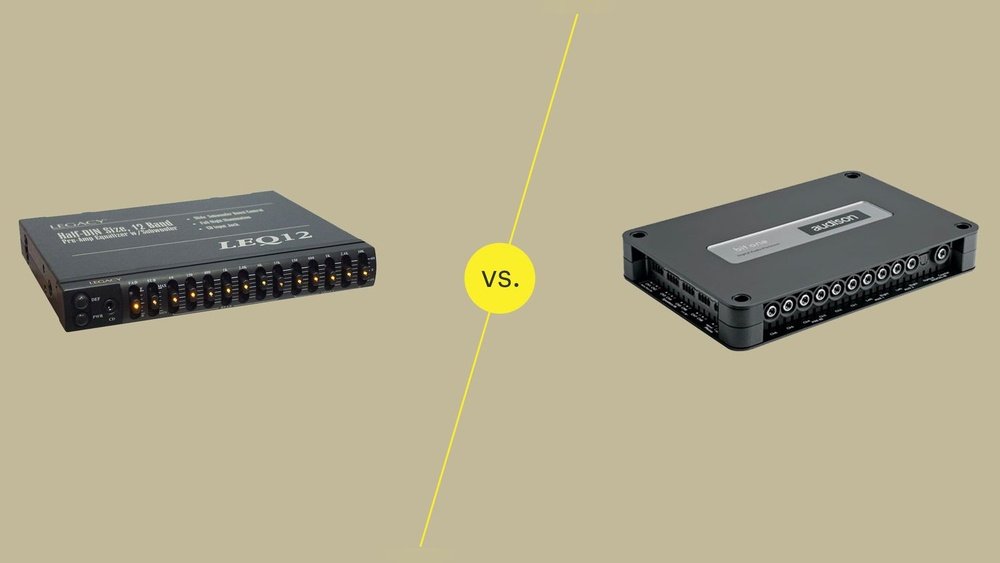
DSP vs Equalizer: Which Audio Solution Is Right for You?
Digital sound processing has changed how we enjoy music and audio. Today, terms like DSP (Digital Signal Processor) and equalizer are common in car stereos, home theaters, and headphones. But what do they really mean? Many people confuse these two, or think they do the same thing. If you want better sound, it’s important to understand the difference. Let’s break down DSP and equalizer in simple words, compare their functions, and see how they affect your audio experience.
What Is A Dsp?
A Digital Signal Processor (DSP) is a small computer chip or software that processes audio signals in real time. Its main job is to change or improve the sound before it reaches your speakers or headphones.
How Dsp Works
- The DSP takes the incoming sound (digital or analog).
- It uses math (algorithms) to change the signal.
- The output is a new, often improved, version of the sound.
DSP is like a chef who can change the taste, texture, and temperature of food before serving. It doesn’t just add salt or pepper; it can bake, fry, or even blend the dish.
Common Uses For Dsp
- Noise reduction: Removes background noise in car audio or headphones.
- Surround sound: Creates 3D sound effects in home theaters.
- Bass enhancement: Makes bass stronger without distortion.
- Echo cancellation: Reduces echo in phone calls or meetings.
- Crossover management: Sends high and low sounds to the right speakers.
DSPs are found in many devices, from car stereos to smart speakers. The goal is to improve clarity, realism, and overall quality of audio.
Practical Example
If you’re in a car with road noise, a DSP can reduce the unwanted sounds and boost your music. It can also correct timing, so every speaker sounds in sync, making music feel like it’s coming from the center of your dashboard.
What Is An Equalizer?
An equalizer (EQ) is a tool to adjust the balance of different sound frequencies. It lets you boost or cut bass, midrange, or treble to match your taste or your room.
How Equalizer Works
- Audio is divided into frequency bands (bass, mid, treble).
- You can turn each band up or down.
- The final sound is a mix based on your choices.
An equalizer is like adding seasoning to a finished dish. You can add more salt (bass) or sugar (treble), but you can’t change how the food was cooked.
Types Of Equalizers
- Graphic EQ: Has fixed frequency bands. You move sliders up or down.
- Parametric EQ: Lets you choose which frequencies to adjust and by how much.
- Shelving EQ: Boosts or cuts everything above or below a certain frequency.
Most music players, car stereos, and streaming apps have a basic EQ.
Practical Example
If you like strong bass, you can use the EQ to boost low frequencies. If you find vocals too sharp, you can reduce the treble band. You shape the sound to fit your ears.
Dsp Vs Equalizer: Key Differences
Understanding the main differences helps you choose the right tool for your needs.
| Feature | DSP | Equalizer |
|---|---|---|
| Function | Processes and changes the whole audio signal | Adjusts balance of frequency bands only |
| Complexity | Advanced (can change timing, space, effects) | Simple (boost or cut frequencies) |
| Uses | Noise reduction, surround sound, crossovers | Personal sound taste, room correction |
| Control | Automatic or manual (software control) | Manual (sliders/knobs) |
| Learning Curve | Medium to High | Low |
Real-world Example
Imagine you buy a smart speaker. The DSP inside makes sure the sound is clear, balanced, and adapts to your room’s shape. The equalizer lets you add more bass or treble if you want.
When To Use Dsp And When To Use Equalizer
Both tools serve different roles. Here’s when each one helps:
Use A Dsp When:
- You want automatic sound correction for rooms or cars.
- You need noise reduction for clearer calls or music.
- You want special effects like surround sound or bass boost.
- You have a multi-speaker setup and need to adjust timing or phase.
Use An Equalizer When:
- You want to customize the sound to your taste.
- You find music too boomy, sharp, or dull.
- You have simple needs: Just want more bass or less treble.
Some advanced DSPs include an equalizer as one of their features. But not all EQs have DSP functions.

Credit: www.amazon.com
How Dsp And Equalizer Work Together
In many devices, DSP and equalizer work together. The DSP handles complex processing first. Then, the equalizer lets you fine-tune the sound.
For example:
- In a car audio system, the DSP corrects timing and balances speaker output. The EQ lets you adjust bass and treble for your personal taste.
This two-step process gives you both a clear sound and a custom sound.
Key Benefits And Limitations
Both DSP and equalizer have strengths and weaknesses.
Dsp Benefits
- Automatic correction: Fixes problems you may not notice.
- Flexible: Adds effects, removes noise, and manages complex setups.
- Room correction: Can adapt to different rooms or cars.
Dsp Limitations
- Complexity: Harder to set up for beginners.
- Cost: More expensive than simple EQs.
Equalizer Benefits
- Easy to use: Simple sliders or controls.
- Personal touch: Adjusts sound to your liking.
- Widely available: Found in most audio apps and devices.
Equalizer Limitations
- Limited control: Only changes bass, mid, or treble.
- No advanced features: Can’t fix timing, noise, or phase issues.
Audio Quality: Data And Research
How much do DSP and equalizer really affect the audio quality? Let’s look at some practical data.
- Studies show that a well-tuned DSP can improve speech clarity by up to 30% in noisy environments.
- In cars, DSP-based room correction can increase soundstage realism and imaging by up to 40% (source: AES Journals).
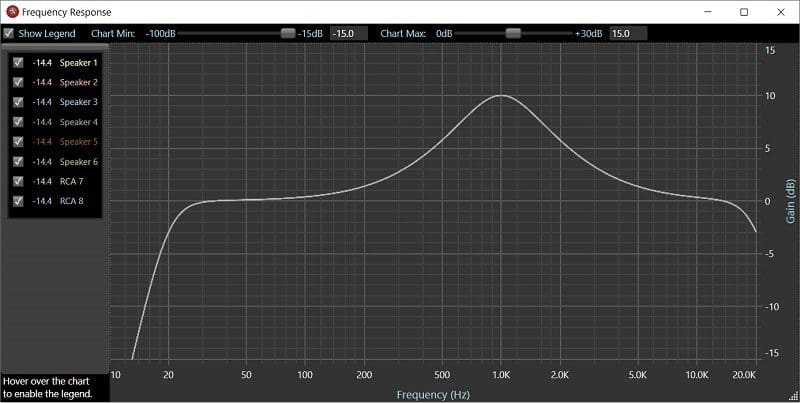
- Equalizers can adjust up to ±12 dB per band in most consumer devices. This is enough to make music sound very different.
But, too much EQ boost can cause distortion. Beginners often make this mistake, thinking more bass is always better. A DSP can prevent this by limiting the maximum boost.
Common Mistakes Beginners Make
If you’re new to audio, it’s easy to misunderstand how to use DSP and equalizer. Here are two mistakes to avoid:
- Over-boosting EQ: Too much bass or treble can make music sound muddy or harsh. Start small—adjust by 2-3 dB at a time.
- Ignoring DSP settings: Many people leave the DSP on default, missing out on better sound. Take time to explore presets or room correction features.
A non-obvious insight: If you use both, always set up the DSP first, then fine-tune with the EQ.
Credit: 919motoring.com
Popular Devices Using Dsp And Equalizer
Many modern devices use both DSP and equalizer. Here are some examples:
- Car stereos: DSP for noise reduction and sound stage; EQ for personal taste.
- Smartphones: DSP for voice calls and music enhancement; EQ in music apps.
- Home theater receivers: DSP for surround sound and room correction; EQ for speaker tuning.
- Headphones: DSP for noise canceling; EQ for bass/treble adjustment.
Comparing Dsp And Equalizer In Different Situations
Let’s see how they stack up in real-life scenarios.
Car Audio
- DSP: Corrects speaker delay, reduces road noise, manages subwoofers.
- EQ: Lets you boost bass for your favorite songs.
Home Theater
- DSP: Creates surround sound, adapts to room size, removes echo.
- EQ: Adjusts treble if movies sound too sharp.
Headphones
- DSP: Active noise canceling, improves clarity in phone calls.
- EQ: Adds extra punch to music genres like hip-hop or jazz.
Table: Dsp And Equalizer In Devices
| Device | DSP Features | Equalizer Features |
|---|---|---|
| Car Audio | Noise reduction, time alignment | Bass, treble sliders |
| Home Theater | Surround sound, room correction | Speaker EQ settings |
| Headphones | Noise canceling, voice clarity | App-based EQ presets |
| Smartphones | Speech enhancement | Music app EQ |
How To Choose: Dsp Or Equalizer?
Choosing between DSP and equalizer depends on your needs and your device.
- If you want automatic improvement and advanced features, look for products with DSP.
- If you only want to change bass or treble quickly, a simple EQ is enough.
- If your device offers both, use the DSP to set a strong foundation, then adjust with the EQ for personal taste.
A tip: Read your device manual or try the app controls. Often, DSP features are hidden in settings or advanced menus.

Credit: www.youtube.com
The Future Of Dsp And Equalizer
Audio technology is moving fast. Today, AI-powered DSP is becoming common. These can adapt the sound based on your environment—like lowering noise when you enter a busy street. Equalizers are getting smarter too, with presets for podcasts, movies, or specific music genres.
High-end streaming apps now offer both, letting you enjoy studio-like sound at home or on the go.
Key Takeaways
- DSP is for advanced, automatic sound improvement and effects.
- Equalizer is for simple, manual adjustment of bass, mid, and treble.
- Both tools can work together for the best audio experience.
- Start with the DSP, then adjust with the EQ.
- Avoid over-boosting EQ bands to prevent distortion.
If you want to dive deeper into digital signal processing, you can explore this Wikipedia guide.
Frequently Asked Questions
What Is The Main Difference Between Dsp And Equalizer?
The main difference is that DSP processes and improves the entire audio signal, adding effects or fixing problems automatically. The equalizer only lets you adjust the balance of bass, mid, and treble frequencies.
Can I Use Both Dsp And Equalizer At The Same Time?
Yes, in many devices both are used together. The DSP handles complex corrections first, then the equalizer lets you fine-tune the sound for your taste.
Is A Dsp Necessary For Good Sound Quality?
No, it’s not necessary but it helps. A DSP can fix problems you might not hear, like speaker delay or room echo. If you want the best sound, DSP is very useful.
Do All Headphones Have Dsp And Equalizer?
Not all, but most modern headphones use a DSP for noise canceling and clarity. Many also let you use an equalizer through a smartphone app.
What Is A Common Beginner Mistake With Equalizers?
A common mistake is boosting bass or treble too much. This can make music sound unnatural or cause distortion. For best results, make small changes and listen carefully.
With these basics, you can now enjoy better sound—whether you’re in your car, at home, or on the go.