How Do You Bridge a 4 Channel Amp: Step-by-Step Guide
Bridging a 4 channel amplifier can feel confusing for beginners. But with the right steps, you can safely get more power for your subwoofers or speakers. This guide explains the process in easy language, with real examples and clear tables to help you understand.
Whether you want more bass in your car or better sound for your home system, you’ll learn exactly how to bridge a 4 channel amp the right way.
What Does “bridging” An Amp Mean?
Bridging means combining two amplifier channels into one, doubling the power sent to a single speaker. Most 4 channel amplifiers allow you to bridge them, turning four channels into two. This is useful if you want to power two strong speakers or subwoofers.
- Why Bridge?
- Get more power for bigger speakers
- Run fewer speakers with more volume
- Use one amplifier for both full-range and subwoofer needs
Important: Not all amplifiers support bridging. Always check your amp’s manual before you start.
Key Benefits And Risks Of Bridging A 4 Channel Amp
Bridging isn’t always the best choice. Here’s what to consider:
Benefits:
- More Power: Double the wattage for big speakers or subwoofers
- Simpler Wiring: Fewer wires for two strong speakers
- Versatile Setup: One amp can power a subwoofer and two speakers
Risks:
- Overheating: Amp works harder, can get hot
- Speaker Damage: Too much power can blow small speakers
- Wrong Load: Low speaker impedance can damage the amp
Pro Tip: Use speakers rated for higher wattage and the correct impedance (usually 4 ohms or higher per bridged channel).
When Should You Bridge A 4 Channel Amp?
Bridging is not always necessary. Here’s when it’s a good idea:
- Powering two subwoofers with more wattage
- Running two large door or rear speakers in a car
- Mixing two full-range speakers and one subwoofer (with special wiring)
- Your amp supports “bridged mode” (check the manual)
If you only have small speakers, bridging is not recommended.
Basic Tools And Parts You’ll Need
- 4 channel amplifier (bridgeable)
- Quality speaker wire
- Speakers or subwoofers (4 ohms or higher each)
- Wire strippers
- Screwdriver
- Amp manual (for reference)
Optional: Multimeter for checking connections.

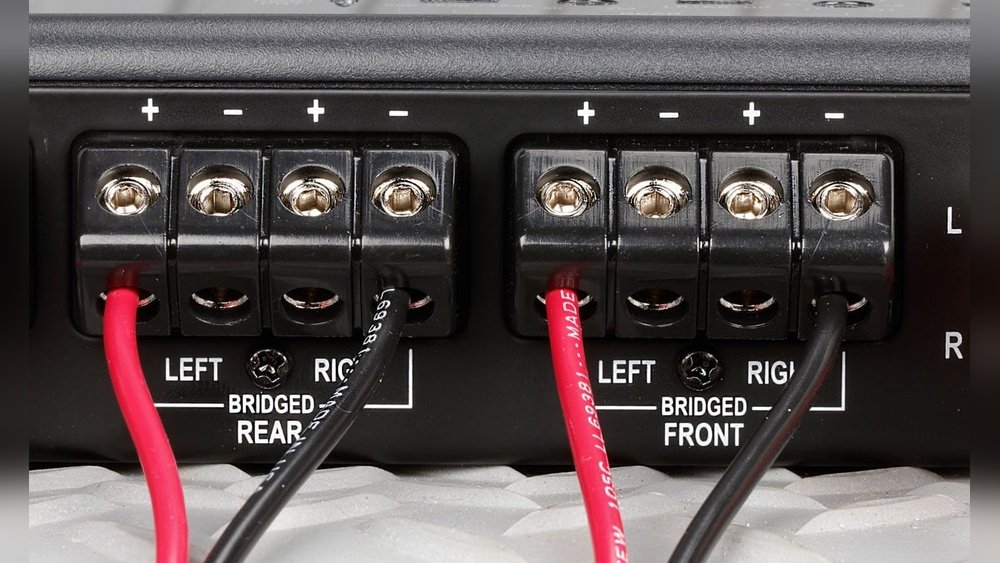
Credit: audiocontrol.com
Understanding 4 Channel Amp Bridging Options
There are four main ways to bridge a 4 channel amplifier. Each method serves a different need. Let’s explore each one.
1. Bridging For Two Speakers (2-channel Mode)
This is the most common method. It turns your 4 channel amp into a powerful 2 channel amp.
How It Works:
- Channels 1 and 2 are combined to power one speaker
- Channels 3 and 4 are combined to power a second speaker
Wiring Example:
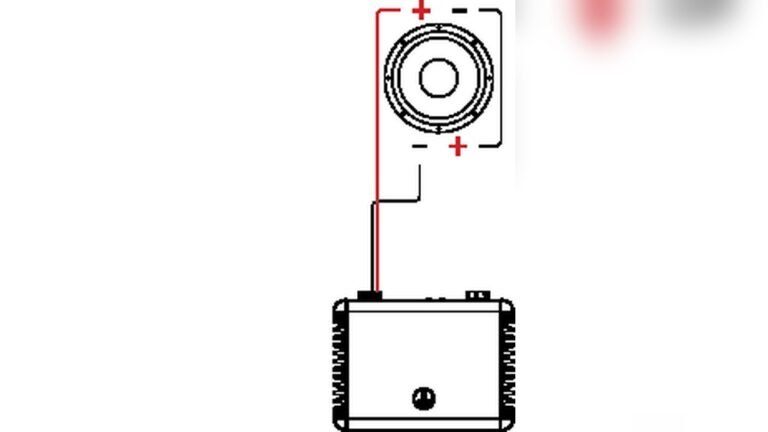
- Connect the positive wire from speaker 1 to the “+” of channel 1
- Connect the negative wire from speaker 1 to the “-” of channel 2
- Repeat for speaker 2 using channels 3 and 4
Typical Use: Big front door speakers or two subwoofers.
| Channel Pair | Speaker Connection | Power Output (Watts, RMS) |
|---|---|---|
| Ch 1 & 2 | Speaker 1 | 120W x 1 |
| Ch 3 & 4 | Speaker 2 | 120W x 1 |
Beginner Insight: Many people forget to check their amp’s minimum impedance in bridged mode. Most amps want 4 ohms or higher when bridged.
2. Bridging For A Subwoofer And Two Speakers (3-channel Mode)
You can bridge two channels for a subwoofer, and use the other two for regular speakers.
How It Works:
- Channels 1 and 2 are bridged to one subwoofer
- Channels 3 and 4 power two separate speakers
Wiring Example:
- Subwoofer positive wire to “+” of channel 1, negative to “-” of channel 2
- Speakers connect to “+” and “-” of channels 3 and 4
Typical Use: One subwoofer and two front speakers in a car.
| Channel | Speaker Type | Power Output (Watts, RMS) |
|---|---|---|
| Ch 1 & 2 (Bridged) | Subwoofer | 200W x 1 |
| Ch 3 | Front Left Speaker | 60W x 1 |
| Ch 4 | Front Right Speaker | 60W x 1 |
Beginner Insight: When mixing a subwoofer and speakers, set your amp’s filters. Use high-pass for the speakers and low-pass for the subwoofer.
3. Bridging All Four Channels For Maximum Power (2 Large Speakers Or Subs)
If you only need to power two very large speakers or subwoofers, bridge all four channels (pair by pair).
How It Works:
- Channels 1 and 2 power speaker/sub 1 (bridged)
- Channels 3 and 4 power speaker/sub 2 (bridged)
Wiring Example:
- Same as in the 2-channel bridge above
Typical Use: High-power car audio or PA systems.
Warning: This setup puts maximum stress on your amp. Make sure your speakers are rated for high wattage.
| Channel Pair | Speaker/Sub | Max Power Output (Watts, RMS) |
|---|---|---|
| Ch 1 & 2 | Subwoofer 1 | 150W x 1 |
| Ch 3 & 4 | Subwoofer 2 | 150W x 1 |
Beginner Insight: Many users forget to change the amp’s crossover settings. For subwoofers, set the low-pass filter to block high frequencies.
4. Bridging To Power A Single Subwoofer (mono Mode)
Some people want to use all four channels for just one subwoofer. This is called “strapped” or “mono” bridging. Not all amps support this.
How It Works:
- All four channels are combined to send power to one subwoofer
Wiring Example:
- Special wiring is needed (see your amp’s manual)
- Sometimes, you bridge channels 1+2 and 3+4, then connect both pairs in parallel to the subwoofer
Typical Use: One very large subwoofer that needs lots of power
Warning: Only do this if your amp’s manual says it’s safe. Most regular 4 channel amps are not built for full mono bridging.
Pro Tip: If you need more power for one subwoofer, sometimes it’s better to use a dedicated monoblock amplifier.
Step-by-step: How To Bridge A 4 Channel Amp
Here’s a simple guide for beginners:
- Turn off the amp and disconnect the power.
- Read your amplifier’s manual for the correct bridging instructions and diagrams.
- Identify the bridging terminals (usually marked on the amp’s case as “Bridged” or “Mono”).
- Connect the speaker wires:
- For each bridged pair, use the positive terminal of channel 1 (or 3) and the negative terminal of channel 2 (or 4).
- Double-check the polarity before powering on.
- Set the crossover filters (low-pass for subwoofers, high-pass for speakers).
- Reconnect power and test the system at low volume.
- Check for distortion or overheating. If you hear crackling or the amp gets hot, turn it off and recheck wiring.
Common Mistake: Connecting both wires to the positive or negative of one channel. Bridging always uses the positive from one channel and negative from the other.
Practical Example: Bridging For Car Subwoofers
Let’s say you have a 4 channel amp rated at 60W x 4 at 4 ohms, and you want to power two 4-ohm subwoofers.
Steps:
- Bridge channels 1+2 for subwoofer 1, and 3+4 for subwoofer 2.
- Connect sub 1’s positive wire to Ch 1 (+), negative to Ch 2 (–).
- Connect sub 2’s positive wire to Ch 3 (+), negative to Ch 4 (–).
Each sub now gets about 120W (double the normal channel power).
Tip: If your subwoofers are 2-ohm, do not bridge unless your amp supports 2-ohm bridged mode, or you risk damaging the amp.
Amplifier And Speaker Compatibility
Not every amp or speaker is a good fit for bridging.
- Amp must be bridgeable: Some budget amps can’t be bridged.
- Speaker must handle more power: Too small and it will blow.
- Impedance must match: Most amps need 4 ohms or higher when bridged.
Check the manual for “Minimum Bridged Impedance” before connecting.
Real-world Data: Output Power Comparison
Below is a comparison of typical power output for a 4 channel amp (at 4 ohms):
| Mode | Channels Used | Power Output (Watts, RMS) |
|---|---|---|
| Normal (Unbridged) | 4 | 60W x 4 |
| Bridged (2-Channel) | 2 | 120W x 2 |
| Bridged + Stereo (3-Channel) | 3 | 200W x 1 (sub), 60W x 2 (speakers) |
Notice how bridging doubles the available power per channel.
Tips For Safe And Effective Bridging
- Read the manual first—never guess.
- Use correct speaker impedance (usually 4 ohms or higher).
- Set crossovers to protect your speakers or subwoofers.
- Use thick enough wires for the higher power.
- Test at low volume first to check for problems.
- Don’t block your amp’s cooling vents—bridging creates more heat.
Expert Tip: If you notice your amp gets hot or goes into protect mode, check your wiring and speaker impedance immediately.
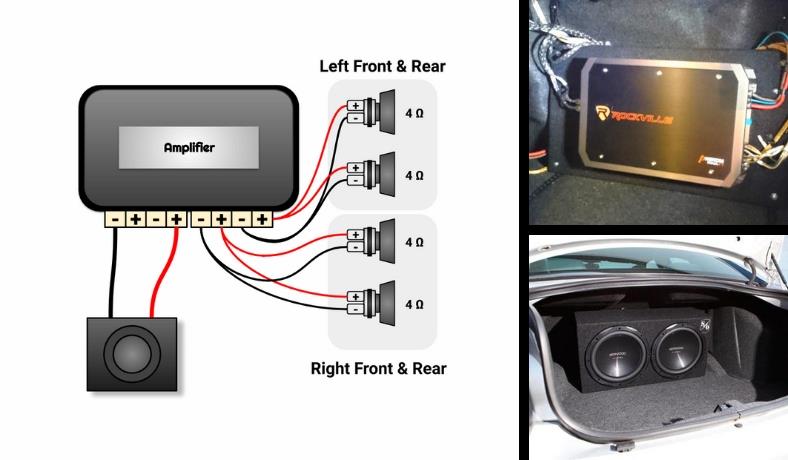
Credit: soundcertified.com
Common Beginner Mistakes
- Bridging unsupported amps: Not all amps can be bridged safely.
- Wrong speaker impedance: Using 2-ohm speakers can burn out many amps in bridged mode.
- Incorrect wiring: Mixing up positive and negative connections.
- Ignoring filters: Not setting crossovers can damage your speakers.
- Overpowering small speakers: Only use large, high-wattage speakers or subwoofers.
Troubleshooting: What If It Doesn’t Work?
- No sound? Double-check wiring and that the amp is set to bridged mode.
- Amp turns off? Check for overheating or low impedance speakers.
- Distorted sound? Check for loose wires or wrong filter settings.
- One channel much louder? Check balance settings on your head unit or receiver.
If problems continue, return to your amp’s manual. Or ask on trusted car audio forums or your local installer.

Credit: www.reddit.com
Frequently Asked Questions
How Do I Know If My 4 Channel Amp Can Be Bridged?
Check your amplifier’s manual or the labels near the speaker terminals. Most modern amps have bridgeable channels, but some do not. If you’re not sure, contact the manufacturer or read their online documentation.
What Speaker Impedance Should I Use When Bridging?
Most 4 channel amps need a minimum 4 ohm speaker per bridged channel. Using a lower impedance (like 2 ohms) can make the amp overheat or fail. Always check your amp’s specifications.
Can I Bridge A 4 Channel Amp To Run Two Subwoofers?
Yes, this is a common setup. Bridge channels 1+2 for subwoofer 1, and channels 3+4 for subwoofer 2. Make sure both subwoofers are 4 ohms or higher.
What’s The Difference Between Bridging And Running In Stereo?
Bridging combines two channels for more power to one speaker. Stereo means each channel powers its own speaker for left and right sound. Bridging is for more power, not stereo separation.
Is Bridging Better Than Buying A Monoblock Amp?
For one big subwoofer, a monoblock amp is usually better and safer. Bridging is handy if you want to use your 4 channel amp for more power, but dedicated monoblocks are made for high power and low impedance. Learn more about amplifier types at Wikipedia.
Bridging a 4 channel amplifier can unlock much more power and flexibility in your audio system. With the right knowledge, tools, and careful setup, you’ll enjoy bigger sound without risking your gear. Always start with your amp’s manual, use proper wiring, and double-check your speaker compatibility.
Take your time and enjoy the upgrade—good sound is worth the effort!