How Do You Wire a Dual Voice Coil Subwoofer: Step-by-Step Guide
Wiring a dual voice coil subwoofer can seem confusing when you’re new to car audio or home theater setups. With two coils and four terminals instead of two, there are more choices—and mistakes can lead to poor sound or even damage. This guide will explain everything in simple steps, with examples, diagrams, and tables. By the end, you’ll know how to wire your subwoofer for the best sound and safety.
What Is A Dual Voice Coil Subwoofer?
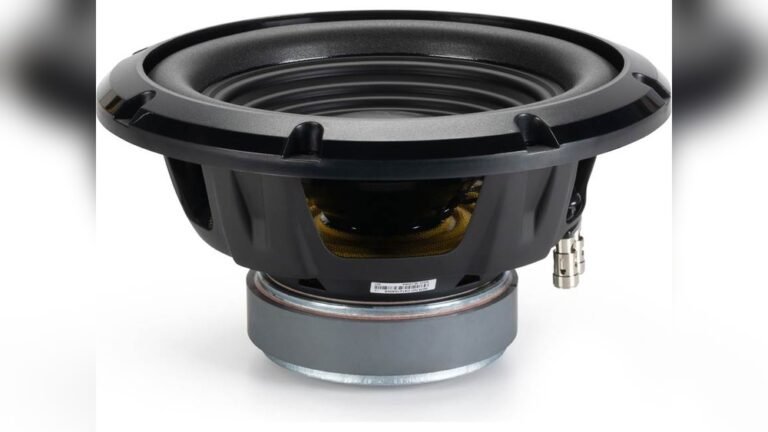
A dual voice coil (DVC) subwoofer has two separate voice coils. Each coil has its own set of terminals. This is different from a single voice coil (SVC) sub, which has only one coil and two terminals.
Why Does This Matter?
- You get more wiring options for matching your sub to your amplifier.
- DVC subs allow for parallel, series, or independent wiring.
- You can adjust the impedance (the “resistance” the amp sees), which affects power and sound quality.
Most common DVC subwoofers are 2-ohm or 4-ohm per coil.
Common Applications
- Car audio systems where you want to get the most power from your amp.
- Home theater setups for deep, controlled bass.
Understanding your options helps you get louder, cleaner bass.
Why Impedance Matters
Impedance (measured in ohms) is critical when wiring subwoofers. The right impedance makes sure your amplifier:
- Works efficiently
- Doesn’t overheat or shut down
- Delivers the right amount of power
If the impedance is too low, the amp may overheat. If too high, you won’t get enough power.
Example
If you have a DVC 4-ohm subwoofer, you can wire it for 2 ohms (parallel) or 8 ohms (series). This flexibility is the main advantage of DVC subs.
Tools And Materials Needed
Before wiring, gather the right tools:
- Speaker wire (14- or 16-gauge is common)
- Wire stripper/cutter
- Screwdriver
- Your DVC subwoofer
- Amplifier
- Crimp connectors or solder (optional)
- Electrical tape
Having the right tools makes the process safer and quicker.
Basic Wiring Methods For Dvc Subwoofers
There are three main wiring options for one DVC subwoofer:
- Series wiring
- Parallel wiring
- Independent wiring (less common, used for special setups)
Each method changes the final impedance.
Series Wiring
Wire the positive terminal of one coil to the amplifier’s positive. Connect the negative of that coil to the positive of the second coil. Finally, connect the negative of the second coil to the amplifier’s negative.
This adds the impedance of both coils.
Example:
- DVC 4-ohm sub: 4 + 4 = 8 ohms (series)
Parallel Wiring
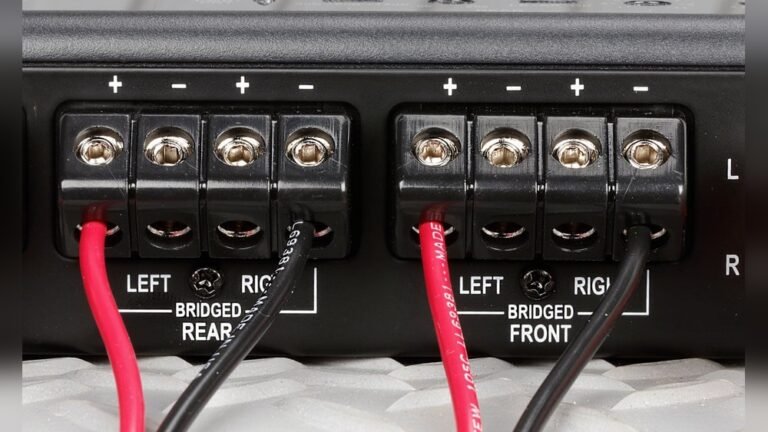
Connect both positive terminals together and to the amplifier’s positive. Do the same for the negative terminals.
This halves the impedance.
Example:
- DVC 4-ohm sub: (4 × 4) / (4 + 4) = 2 ohms (parallel)
Independent Wiring
Each coil is wired to a separate amp channel. This is rarely used for subwoofers, but some multi-channel amps allow it.
Step-by-step: How To Wire A Dvc Subwoofer
Let’s walk through wiring a single DVC 4-ohm subwoofer in both series and parallel.
Series Wiring (for 8 Ohms)
- Cut two speaker wires about 18 inches long.
- Strip about 1/2 inch of insulation from each end.
- Connect the amp’s positive to the first coil’s positive terminal.
- Connect the first coil’s negative to the second coil’s positive terminal.
- Connect the second coil’s negative to the amp’s negative.
You’ll get an 8-ohm load.
Parallel Wiring (for 2 Ohms)
- Cut two pairs of wires.
- Strip both ends.
- Connect both positive terminals to the amp’s positive.
- Connect both negative terminals to the amp’s negative.
Now you have a 2-ohm load.
Visual Reference
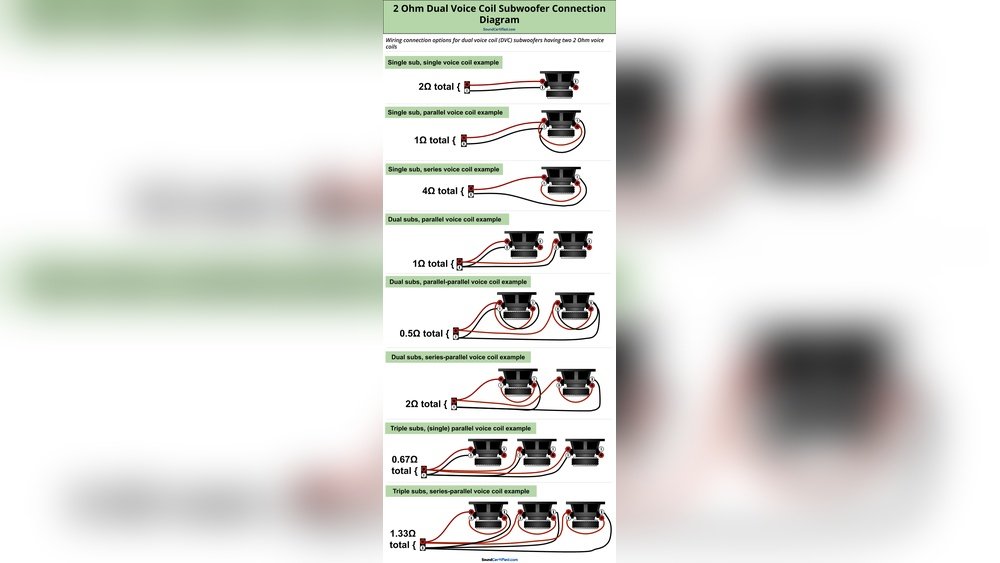
Here’s a quick table showing the wiring options and results for a typical DVC subwoofer:
| Wiring Type | Subwoofer (Per Coil) | Final Impedance | When to Use |
|---|---|---|---|
| Series | 4 Ohms | 8 Ohms | High-impedance amps |
| Parallel | 4 Ohms | 2 Ohms | Most car amps |
| Series | 2 Ohms | 4 Ohms | Standard home amps |
| Parallel | 2 Ohms | 1 Ohm | Special 1-ohm stable amps |
Wiring Multiple Dvc Subwoofers
Many car and home systems use two or more subwoofers. The wiring gets more complex, but the rules are the same.
- Combine series and parallel methods to reach your target impedance.
- Always check your amp’s minimum impedance rating.
Example: Two Dvc 4-ohm Subs
If you want a 2-ohm load:
- Wire each sub in series (each at 8 ohms)
- Then, wire both subs in parallel (8 ohms/2 = 4 ohms)
If you want a 1-ohm load (for special amps):
- Wire each sub in parallel (each at 2 ohms)
- Then, wire both in parallel again (2 ohms/2 = 1 ohm)
Quick Reference Table
This table shows final impedance for two DVC 4-ohm subs:
| Wiring | Each Sub | Resulting Ohms |
|---|---|---|
| Series-Parallel | Series (8Ω), then parallel | 4Ω |
| Parallel-Parallel | Parallel (2Ω), then parallel | 1Ω |
| Series-Series | All in series | 16Ω |

Credit: soundcertified.com
Important Tips For Safe And Clean Wiring
- Double-check polarity: Wrong connections can cause weak or distorted sound.
- Use quality wire: 14-gauge is good for most setups. Thicker wire for high power.
- Tighten connections: Loose wires lead to noise or loss of sound.
- Avoid shorts: Make sure bare wires don’t touch other terminals.
- Test before final install: Play music at low volume to check wiring.
Common Mistakes And How To Avoid Them
Many beginners make simple errors when wiring a DVC subwoofer. Here’s what to watch for:
- Mixing up series and parallel wiring: This can damage your amp or reduce output.
- Ignoring the amp’s impedance rating: Always check what your amplifier supports.
- Poor wire connections: Can cause crackling or intermittent sound.
- Not securing wires: Loose wires can vibrate and disconnect.
Non-obvious Insight
A common beginner mistake is using too many connectors or unnecessarily long wire runs. Short, direct wires reduce resistance and improve sound quality.
Another overlooked detail: Some amplifiers have different power ratings at different impedances. Always compare the amp’s RMS (continuous power) at your target impedance, not just the “max” or “peak” rating.
Choosing The Right Wiring For Your System
How do you decide between series and parallel wiring? It depends on your equipment:
- Check your amplifier’s specs. Look for the “minimum impedance” it supports.
- Decide how many subs you want to use.
- Choose wiring that matches the amp’s ideal load.
For example, if your amp is stable at 2 ohms, wire your DVC 4-ohm sub in parallel.
Example Scenarios
- Car audio: Most amps are 2-ohm stable. Parallel wiring is common for DVC 4-ohm subs.
- Home theater: Many receivers only handle 8 ohms. Series wiring may be safer.
If in doubt, always go with a higher impedance. Too low can break your amp.
How To Read Wiring Diagrams
Wiring diagrams are common in subwoofer manuals. Here’s how to read them:
- Solid lines show connections between terminals.
- + and – symbols mark positive and negative.
- Curved lines often mean a jumper wire between coils.
Don’t just match wire colors—follow the actual path from amp to sub.
Sample Wiring Diagram (text Description)
Imagine a DVC subwoofer with four terminals:
- Top left: Coil 1 positive (+)
- Top right: Coil 2 positive (+)
- Bottom left: Coil 1 negative (–)
- Bottom right: Coil 2 negative (–)
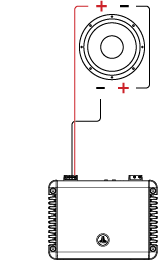
For parallel wiring, connect both + to amp +, both – to amp –.
Credit: retailer.ru
When To Seek Professional Help
If you’re unsure or using a high-powered system, it’s smart to get expert help. Professionals:
- Test your system for safety
- Recommend the best wiring for your amp and speakers
- Prevent costly mistakes
For more technical details, see Wikipedia’s subwoofer entry.
Frequently Asked Questions
How Do I Know If My Subwoofer Is Dual Voice Coil?
Check the back of the subwoofer. If it has four terminals (two positive, two negative), it’s a DVC subwoofer. The model number or manual also lists this.
Can I Wire A Dvc Subwoofer To Only Use One Coil?
Technically, yes, but it’s not recommended. Using one coil can reduce power handling and change the sub’s performance. Always use both coils for best results.
What Gauge Wire Should I Use For Wiring My Subwoofer?
For most DVC subwoofer setups, 14-gauge speaker wire is enough. For high-power systems (over 500 watts RMS), use 12-gauge wire for less resistance.
What Happens If I Wire My Subwoofer To The Wrong Impedance?
If the impedance is too low for your amp, it may overheat or shut down. Too high, and you lose power and volume. Always match the amp’s rated impedance.
Is There A Difference In Sound Between Series And Parallel Wiring?
Yes. Parallel wiring usually gives more power and louder sound, but your amp must support the lower impedance. Series wiring is safer for amps that need higher impedance, but may sound quieter.
Wiring a DVC subwoofer doesn’t have to be hard. With simple tools, careful steps, and attention to your amplifier’s needs, you’ll get deep, clean bass and a reliable system. Remember to double-check your wiring, use the right wire gauge, and test before final installation.
The right setup rewards you every time the bass drops.
Credit: support.garmin.com