How to Wire Dvc 4 Ohm Sub for Maximum Bass Performance
Wiring a DVC 4 Ohm subwoofer can feel confusing for beginners. But the right wiring can boost your sound quality and protect your equipment. This guide walks you through every step, explains key terms, and gives real-world examples so you can wire your sub safely and confidently. Whether you want louder bass or want to match your amp, you’ll find clear answers here.
Understanding Dvc 4 Ohm Subwoofers
Before wiring, it’s important to know what a DVC (Dual Voice Coil) 4 Ohm subwoofer is.
- Dual Voice Coil means the subwoofer has two separate coils. Each coil has two terminals: Positive (+) and negative (–).
- 4 Ohm is the resistance (impedance) of each coil. It affects how much power the subwoofer needs and how it interacts with your amplifier.
Why does this matter?
- You can wire DVC subs in different ways to get different total impedances.
- The way you wire affects how much power your amp sends to the sub.
Example: If you wire both coils together, you change the total impedance. This can be 2 Ohm, 8 Ohm, or still 4 Ohm, depending on your method.
Tools And Materials Needed
To wire your DVC 4 Ohm sub, you’ll need:
- Speaker wire (12–16 gauge)
- Wire cutters and strippers
- Electrical tape or wire connectors
- A screwdriver
- Your amplifier’s manual
Pro tip: Use oxygen-free copper wire for better signal.
Credit: www.crutchfield.com
Four Key Wiring Methods For Dvc 4 Ohm Subs
There are four main ways to wire a DVC 4 Ohm subwoofer. Each method creates a different impedance and fits different setups. Here’s how each works:
1. Series Wiring (8 Ohm Load)
Series wiring connects the coils end-to-end, so the amp “sees” both coils as one longer coil.
Steps:
- Connect the positive terminal of Coil 1 to the positive output on the amp.
- Connect the negative terminal of Coil 1 to the positive terminal of Coil 2.
- Connect the negative terminal of Coil 2 to the negative output on the amp.
Result: Total impedance is 8 Ohms (4 + 4).
When to use:
- If your amplifier is rated for higher impedance.
- When you want less power sent to the sub (safer for small amps).
Pros:
- Protects the amp from overload.
- Good for sound quality in home systems.
Cons:
- Lower power output.
- Not ideal for car audio if you want loud bass.
Example: If your amp gives 100W at 8 Ohm, wiring your sub in series means it will use that power safely.
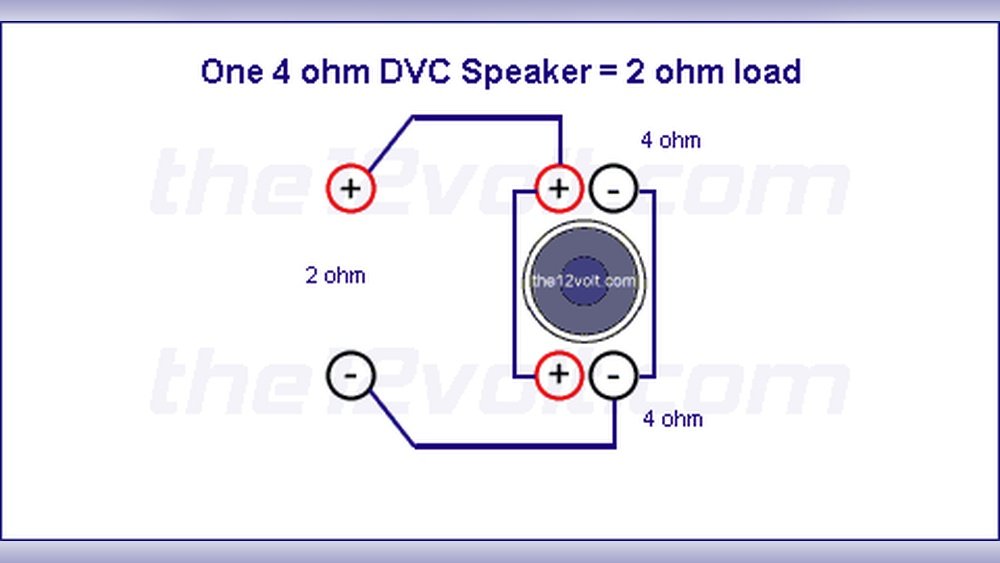
2. Parallel Wiring (2 Ohm Load)
Parallel wiring connects both coils directly to the amp, so the amp “sees” both coils at once.
Steps:
- Connect both positive terminals to the amp’s positive output.
- Connect both negative terminals to the amp’s negative output.
Result: Total impedance is 2 Ohms (halved).
When to use:
- If your amp is stable at 2 Ohms.
- When you want maximum power for loud bass.
Pros:
- Higher power output.
- Great for car audio.
Cons:
- Can stress the amp if it’s not rated for 2 Ohms.
- Not suitable for all home systems.
Example: If your amp gives 400W at 2 Ohm, wiring your sub in parallel lets you use all that power.
3. Single Coil Wiring (4 Ohm Load)
This method uses only one coil of the DVC subwoofer.
Steps:
- Connect the positive and negative terminals of one coil to the amp.
- Leave the other coil unused (insulate its terminals).
Result: Total impedance stays at 4 Ohms.
When to use:
- If you only need moderate bass.
- If your amp matches 4 Ohms and can’t handle lower or higher loads.
Pros:
- Simple wiring.
- Safe for most amps.
Cons:
- Wastes one coil.
- Lower performance compared to dual-coil wiring.
Example: If your amp gives 200W at 4 Ohms, using one coil will use that power, but you won’t get full subwoofer performance.
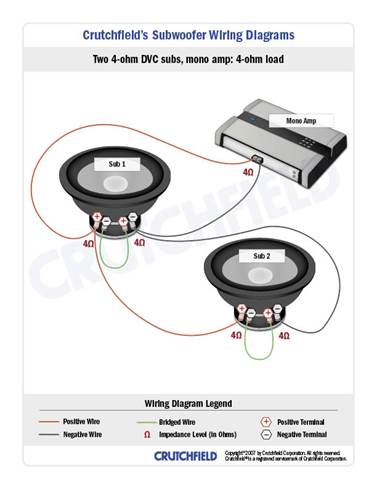
4. Series-parallel Wiring (multiple Subs, 4 Ohm Load)
This method is used when you have two DVC 4 Ohm subwoofers. It balances power and impedance for more complex setups.
Steps:
- Wire each sub’s coils in series (as in method 1).
- Then wire the two subs in parallel to the amp.
Result: Total impedance is 4 Ohms.
When to use:
- If you want to run two subs from one amp.
- If your amp is optimized for 4 Ohms.
Pros:
- Balanced power and sound.
- Makes full use of both subs.
Cons:
- More wiring steps.
- Requires careful planning.
Example: Two DVC 4 Ohm subs wired this way will let your amp deliver 300W at 4 Ohms to both subs.
Wiring Diagrams And Data Tables
Visuals and numbers help you understand wiring better. Here are practical examples and data:
| Wiring Method | Number of Subs | Total Impedance | Power Output (Amp Example) |
|---|---|---|---|
| Series | 1 | 8 Ohms | 100W |
| Parallel | 1 | 2 Ohms | 400W |
| Single Coil | 1 | 4 Ohms | 200W |
| Series-Parallel | 2 | 4 Ohms | 300W |
Tip: Always check your amp’s manual for the power ratings at each impedance.

Credit: soundcertified.com
Choosing The Right Wiring For Your Setup
The best wiring method depends on your equipment and goals.
Consider these factors:
- Amp compatibility: Check if your amp supports 2, 4, or 8 Ohms.
- Desired power output: Lower impedance means more power, but may stress the amp.
- Number of subwoofers: Series-parallel is best for two subs.
- Sound preference: Parallel gives more bass, series gives cleaner sound.
Common mistake: Wiring for the wrong impedance can cause weak sound or damage your amp.
Example scenario:
- You have a car amplifier rated for 2 Ohms. Parallel wiring is ideal for max bass.
- You have a home amp rated for 8 Ohms. Series wiring protects the amp and gives clear sound.
Step-by-step Wiring Guide
Let’s break down each method so you can wire confidently.
Series Wiring
- Cut two lengths of speaker wire.
- Strip the ends.
- Connect amp’s positive to Coil 1’s positive.
- Connect Coil 1’s negative to Coil 2’s positive.
- Connect Coil 2’s negative to amp’s negative.
- Secure connections.
Parallel Wiring
- Cut two wire pairs.
- Strip ends.
- Connect both Coil positives to amp’s positive.
- Connect both Coil negatives to amp’s negative.
- Double-check connections.
Single Coil Wiring
- Choose one coil.
- Connect its positive and negative to amp.
- Insulate unused coil terminals.
Series-parallel Wiring (two Subs)
- Wire each sub in series.
- Connect both subs’ positives together to amp’s positive.
- Connect both subs’ negatives together to amp’s negative.
Safety tip: Always disconnect power before wiring.

Credit: www.reddit.com
Real-world Examples And Amp Compatibility
Here’s how wiring affects a common amplifier:
| Amp Model | Rated Power (2 Ohms) | Rated Power (4 Ohms) | Rated Power (8 Ohms) |
|---|---|---|---|
| Rockford Fosgate R500X1D | 500W | 300W | 150W |
| Pioneer GM-D9701 | 1200W | 800W | 400W |
Insight: Many car amps work best at 2 or 4 Ohms. Home amps often prefer 8 Ohms.
Practical Tips For Beginners
- Use high-quality wire for better sound.
- Avoid mixing wire sizes.
- Secure connections with tape or connectors.
- Double-check impedance before turning on the amp.
- Start with moderate volume to test wiring.
- If unsure, consult your amp’s manual or a professional.
Non-obvious tip: If you wire two DVC subs in parallel, your impedance can drop below 2 Ohms—this is risky for most amps.
Common Wiring Mistakes
Beginners often make these errors:
- Not checking amp’s impedance rating.
- Using the wrong gauge wire (too thin = bad sound).
- Failing to secure wires (can cause shorts).
- Leaving unused coil terminals exposed (risk of short).
How to avoid: Always plan your wiring, use correct tools, and test with low volume first.
Advanced Insights For Better Performance
- Matching impedance is more important than raw power. An amp wired to the wrong impedance can overheat or shut down.
- DVC subs allow flexibility. You can switch wiring methods later if you upgrade your amp.
- Wiring affects not just loudness, but clarity and control of bass.
Example: A DVC sub wired for 2 Ohms will be loud, but may distort if your amp isn’t stable at low impedance.
Frequently Asked Questions
What Is The Difference Between Dvc And Svc Subwoofers?
A DVC (Dual Voice Coil) subwoofer has two voice coils, allowing more wiring options. An SVC (Single Voice Coil) sub has only one coil, so you can’t change impedance as easily. DVC subs are more flexible for different amp setups.
Can I Wire A Dvc 4 Ohm Sub For 6 Ohms?
No. With a DVC 4 Ohm sub, the main options are 2 Ohms (parallel), 4 Ohms (single coil), or 8 Ohms (series). 6 Ohms is not possible with standard wiring.
Is Parallel Or Series Wiring Better For Bass?
Parallel wiring usually gives more bass because the amp sends more power at lower impedance. But your amp must be stable at 2 Ohms. Series wiring gives cleaner sound but less volume.
What Happens If I Wire Wrong?
Wrong wiring can cause weak sound, distortion, or even damage your amp and subwoofer. Always check your amp’s impedance rating and wiring diagrams before connecting.
Where Can I Find Reliable Wiring Diagrams?
A good place for wiring diagrams and more info is Crutchfield, which offers step-by-step guides and visuals.
Wiring a DVC 4 Ohm subwoofer doesn’t have to be difficult. With the right method, tools, and knowledge, you can get the sound you want safely. Start by checking your amp’s specs, pick the right wiring method, and follow the steps above. Always test your setup gently, and enjoy the powerful bass your system can deliver.