How to Connect an Amplifier to a Factory Stereo: Step-by-Step Guide
Many car owners want better sound quality, but replacing a factory stereo is not always possible. Maybe your car has a complicated dash or built-in controls. The good news: you can connect an amplifier to your factory stereo and enjoy powerful, clear audio. You don’t need to be a pro installer—just follow the right steps and use the right tools.
Let’s break down everything you need to know, step by step. You’ll learn what equipment you need, how to connect everything safely, and how to avoid common mistakes. If you’re new to car audio, this guide will help you install an amplifier without damaging your stereo or voiding your warranty.
Why Add An Amplifier To A Factory Stereo?
Factory stereos often lack power. Even if your car has many speakers, the built-in amplifier is usually weak. Here’s why you might want to connect an amplifier:
- Better sound quality: More power means clearer music, especially at higher volumes.
- Louder output: You can enjoy music without distortion or buzzing.
- Support for subwoofers: Factory stereos can’t drive big subwoofers alone.
- Keep original features: You don’t lose steering wheel controls or factory navigation.
Example: A 2019 Honda Accord’s factory stereo outputs about 12–18 watts per channel. An aftermarket amplifier can deliver 50–100 watts or more per channel. That’s a big difference in sound quality!
What You Need Before You Start
You’ll need a few items to safely connect an amplifier to your factory stereo. Here’s a checklist:
- Amplifier: Pick an amp that matches your speaker needs (2-channel, 4-channel, or mono for subwoofer).
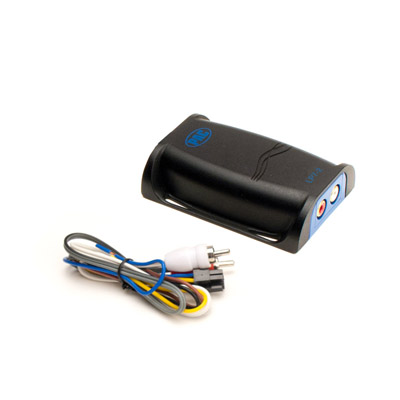
- Line Output Converter (LOC): This device converts your stereo’s speaker wires to RCA outputs that your amplifier can use.
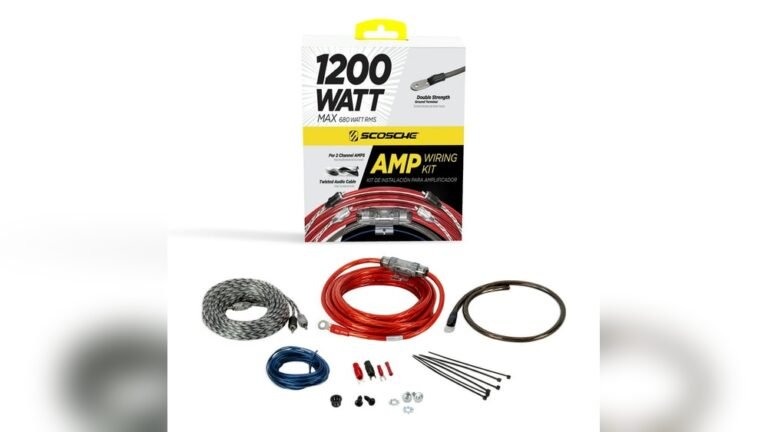
- Amplifier wiring kit: Includes power cable, ground wire, fuse, RCA cables, and speaker wire.
- Wire tap connectors: For connecting to factory speaker wires without cutting them.
- Panel removal tools: Helps you access the stereo and wiring without damaging panels.
- Multimeter: For checking voltage and connections.
- Electrical tape or heat shrink tubing: For safe, clean wiring.
Pro Tip: Some amplifiers have “high-level inputs” and can connect directly to speaker wires without an LOC. But using an LOC is safer for most beginners.
Understanding Signal Types: High-level Vs. Low-level Inputs
Before you begin, it’s important to understand the difference between high-level and low-level signals:
- High-level (speaker-level) signals: These come from your factory stereo’s speaker wires. They have higher voltage and are not ready for direct connection to most amplifiers.
- Low-level (RCA) signals: These are used by aftermarket stereos and amplifiers. They have lower voltage and offer cleaner sound.
A line output converter (LOC) turns high-level signals into low-level signals, making it possible to add an amplifier without replacing the stereo.
Here’s a quick comparison:
| Signal Type | Source | Use Case | Typical Voltage |
|---|---|---|---|
| High-level | Factory stereo speaker wires | Adding amp to factory system | 5–10V |
| Low-level (RCA) | Aftermarket stereo | Direct amp connection | 0.5–2V |
Step-by-step Guide: Connecting An Amplifier To A Factory Stereo
1. Plan Your Installation
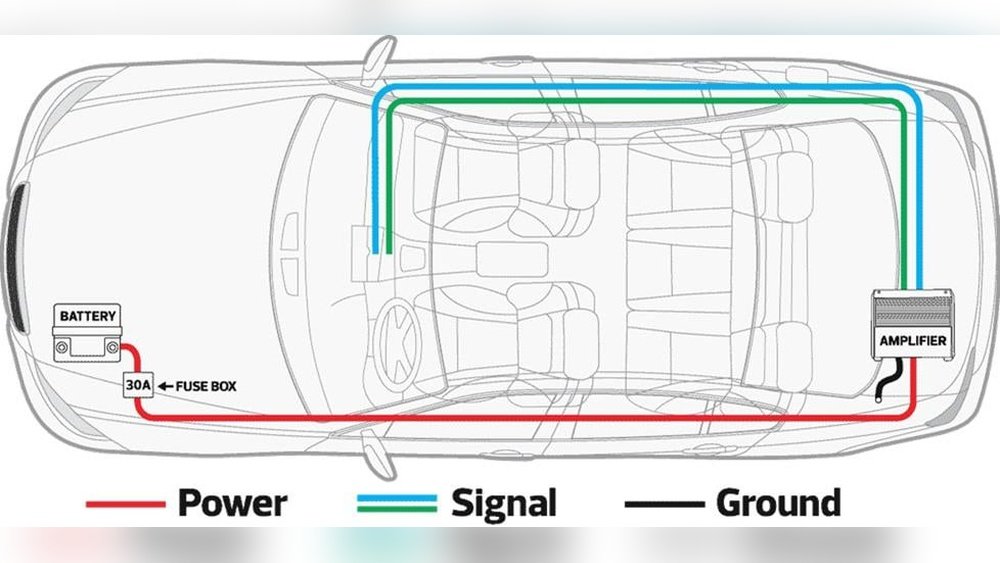
Look at your car’s layout and decide where to place the amplifier. Common spots are under a seat or in the trunk. Plan your wiring path to avoid power wires crossing over signal wires (this reduces noise).
2. Disconnect The Battery
Before working with any wires, disconnect the negative battery terminal. This prevents shocks and protects your car’s electrical system.
3. Access The Factory Stereo’s Speaker Wires
- Remove panels or the stereo unit to reach the speaker wires.
- Use a wiring diagram for your car (search online or in your car’s manual).
- Identify the left and right speaker wires. You need both left and right channels for most amps.
Tip: Don’t guess the wires. Use a multimeter or test probe to confirm.
4. Install The Line Output Converter (loc)
- Tap into the factory stereo’s speaker wires using wire tap connectors.
- Connect the LOC’s input wires to the matching speaker wires (left positive/negative, right positive/negative).
- Secure all connections with electrical tape or heat shrink tubing.
- Attach the LOC’s ground wire to a metal point on the car.
5. Connect The Loc To The Amplifier
- Run RCA cables from the LOC to the amplifier’s input.
- Keep RCA cables away from power wires to avoid interference.
6. Run Power And Ground Wires
- Use the amp wiring kit’s power cable.
- Run the power cable from the car battery through the firewall to the amplifier location.
- Install the inline fuse within 18 inches of the battery.
- Find a solid metal point near the amp for grounding. Clean the area to bare metal before attaching the ground wire.
Example: Use an 8-gauge power wire for amplifiers up to 600 watts RMS, or 4-gauge for higher power.
7. Connect Remote Turn-on Wire
- The amplifier needs a signal to turn on and off with the stereo.
- If your LOC has a remote output, use it.
- If not, tap into a fuse that only has power when the car is on (like the radio or cigarette lighter fuse).
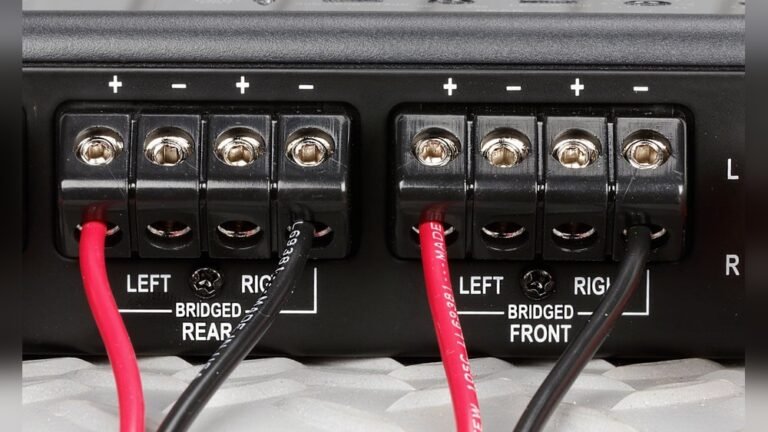
8. Connect The Amplifier To The Speakers
- Run speaker wire from the amplifier to your speakers, or use the factory speaker wires.
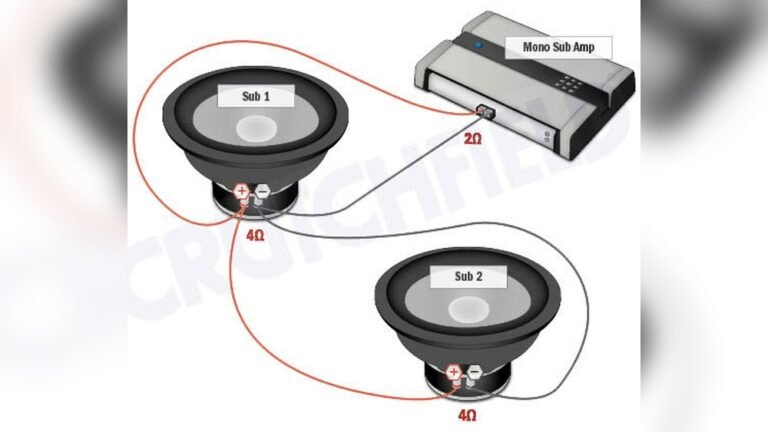
- For a subwoofer, connect the amplifier’s output directly to the sub.
Important: Double-check polarity (positive to positive, negative to negative) for all connections.
9. Test The System
- Reconnect the battery.
- Turn on the stereo and check for sound.
- Adjust the amplifier gain and LOC settings for the best sound without distortion.
- Listen for buzzing or humming—if you hear noise, check your ground connections and wire routing.
Common mistake: Setting the amplifier gain too high causes distortion and can damage speakers.
Practical Example: Connecting A 4-channel Amplifier
Let’s say you want to add a 4-channel amp to power all your car’s speakers. Here’s a simple wiring overview:
| Connection | From | To | Notes |
|---|---|---|---|
| Speaker wires (front left/right, rear left/right) | Factory stereo harness | LOC inputs | Tap wires, match polarity |
| RCA cables | LOC outputs | Amplifier inputs | Run under carpet, avoid power wires |
| Power cable | Car battery | Amplifier | Use inline fuse |
| Ground wire | Amplifier | Car chassis | Clean metal contact |
| Speaker wires | Amplifier output | Speakers | Run new wire if possible |
Important Tips For A Clean And Safe Installation
- Label your wires: This prevents confusion during installation or future repairs.
- Secure all wiring: Use zip ties to keep wires out of moving parts.
- Avoid power and signal wire overlap: Run power on one side of the car, RCA/speaker wires on the other.
- Check connections: Loose wires can cause noise or even damage your equipment.
- Fuse location: Always keep the fuse close to the battery for maximum protection.

Credit: www.youtube.com
Troubleshooting Common Problems
No sound from speakers
- Check the amplifier’s power and ground connections.
- Make sure the LOC is wired to the correct speaker wires.
- Verify the amplifier’s gain and input settings.
Buzzing or humming noise
- Move RCA cables away from power wires.
- Recheck your ground connection; it should be bare metal.
Amp won’t turn on
- Test the remote turn-on wire for voltage when the stereo is on.
- Check the fuse near the battery.
Distorted sound
- Lower the amplifier gain.
- Make sure the LOC is adjusted correctly.
Blown fuse
- Check for short circuits in your power or ground wiring.
How To Choose The Right Amplifier For Your Factory Stereo
When adding an amplifier, match its power to your speakers. Too much power can damage factory speakers, while too little won’t make a difference.
Key factors:
- Channels: Use a 2-channel amp for front speakers, 4-channel for front and rear, or a mono amp for subwoofers.
- Power rating: Match the RMS (continuous) power of the amp to your speakers’ RMS rating.
- Size: Make sure the amp fits in your planned location.
Example:
- Factory door speakers: 25 watts RMS each
- Choose a 4-channel amp rated at 30–50 watts RMS per channel
Here’s a quick amplifier selection guide:
| Speaker Setup | Recommended Amp Type | Typical Power (RMS per channel) |
|---|---|---|
| Front speakers only | 2-channel | 30–75 W |
| Front & rear speakers | 4-channel | 30–75 W |
| Subwoofer only | Mono | 150–500 W |
| Full system | 5-channel | 30–75 W (speakers), 150–500 W (sub) |
Two Non-obvious Insights For Beginners
- Speaker Impedance Matters: Most factory speakers are 4 ohms. If you upgrade to aftermarket speakers or subs, check the impedance rating. Connecting a 2-ohm speaker to an amp designed for 4 ohms can overheat the amp and damage it.
- Fader and Balance Controls Change Signal: When you tap into factory speaker wires, using your stereo’s fader or balance can affect the amp’s input signal. If possible, tap into all four speaker outputs (front and rear) for full control.
Safety And Warranty Tips
- Do not cut factory wiring if you want to keep your car’s warranty. Use wire taps or buy a plug-and-play wiring harness.
- Disconnect the battery before working with any car wiring.
- Double-check all connections before reconnecting the battery.
- Secure the amplifier so it cannot move around in the car.
Credit: carstereochick.com
Useful Resources
For more details about car audio installation and wiring diagrams, check out this helpful guide from Crutchfield.
Frequently Asked Questions
How Do I Know Which Wires To Connect To The Loc?
You need to identify the factory speaker wires behind the stereo. Use a wiring diagram for your car’s make and model. Usually, you tap into the front left and right speaker wires. If you’re not sure, test with a multimeter or ask a car audio shop for advice.
Can I Use My Amplifier If My Factory Stereo Has No Rca Outputs?
Yes, you can! That’s what a line output converter (LOC) is for. It converts the speaker-level signal to RCA outputs, which your amplifier can use. Some modern amplifiers also accept high-level inputs directly.
Will Adding An Amplifier Void My Car’s Warranty?
It depends. If you cut or damage the factory wiring, the warranty might not cover electrical problems. To be safe, use wire taps or plug-and-play harnesses. Always disconnect the battery before starting.
How Much Power Does My Amplifier Need?
Match the amplifier’s RMS power to your speakers’ RMS rating. For factory speakers, 30–50 watts RMS per channel is usually enough. For subwoofers, you may need 150–500 watts RMS or more.
What Is The Best Place To Mount My Amplifier?
Most people mount the amp under a seat or in the trunk. Make sure the amp has good ventilation and is not exposed to water or moving parts. Always secure it with screws or brackets.
Connecting an amplifier to a factory stereo is a smart upgrade for better sound. With careful planning and the right tools, beginners can do this safely and enjoy a much better audio experience.

Credit: soundcertified.com