How to Calculate Subwoofer Box Volume: Easy Steps for Perfect Sound
Calculating the right subwoofer box volume is a must for deep, clear bass. Many beginners think it’s just about buying a box and dropping in a subwoofer. But the truth is, box volume makes a huge difference in sound quality and speaker health. If the box is too big or too small, your subwoofer can sound weak, distorted, or even get damaged. This guide will help you calculate subwoofer box volume step-by-step, using simple words and real examples. Whether you want to build your own box or just check if your current one is correct, you’ll learn everything you need to know.
Why Subwoofer Box Volume Is Important
The box is not just a container. It controls how the subwoofer cone moves, which affects:
- Bass response: How deep and strong the bass sounds.
- Speaker safety: Prevents over-excursion and damage.
- Sound clarity: Reduces distortion and unwanted noise.
Manufacturers test their subwoofers in different box sizes. They publish the best volume (in cubic feet or liters) in the spec sheet. Always check this before building or buying a box.
What Happens If You Get It Wrong?
- Too small: Tight, punchy bass but less deep. Can stress the subwoofer.
- Too large: Louder, deeper bass but risks distortion and “boomy” sound.
- Wrong shape: Causes standing waves and poor sound.
Even a small mistake in box volume can change your sound a lot.
Key Terms You Need To Know
Before you start, learn these basic terms. They will help you follow the steps easily.
- Internal volume: The air space inside the box, not counting wood or bracing.
- Gross volume: Total space inside the box, before subtracting subwoofer and port.
- Net volume: Final volume after subtracting the subwoofer, port, and bracing.
- Displacement: Space taken up by the subwoofer, port, or anything inside the box.
Manufacturers give recommended box volume as net volume. Always aim for this.
What You Need Before Calculating
To get the right box volume, gather:
- Subwoofer specs: Look for “recommended box volume” on the datasheet.
- Measuring tape: For checking box dimensions.
- Calculator: Simple math is needed.
- Pen and paper: To write down numbers.
- Box design (if building): Know if the box is sealed or ported.
Having these ready will make the process smooth.
Find The Manufacturer’s Recommended Volume
The first step is always to check the subwoofer’s specs. Most makers (like JL Audio, Rockford Fosgate, Pioneer) tell you the best box size for each model.
Example:
- Sealed box: 1.0 cubic feet (net)
- Ported box: 1.5 cubic feet (net)
If you use a box outside this range, you risk poor sound or damage.
If you can’t find the specs, check the company’s website or ask customer support. For older or rare subwoofers, you can estimate using the Thiele/Small parameters (like Vas, Qts, Fs), but beginners should stick to manufacturer advice.
Credit: www.bcae1.com
How To Measure Subwoofer Box Volume
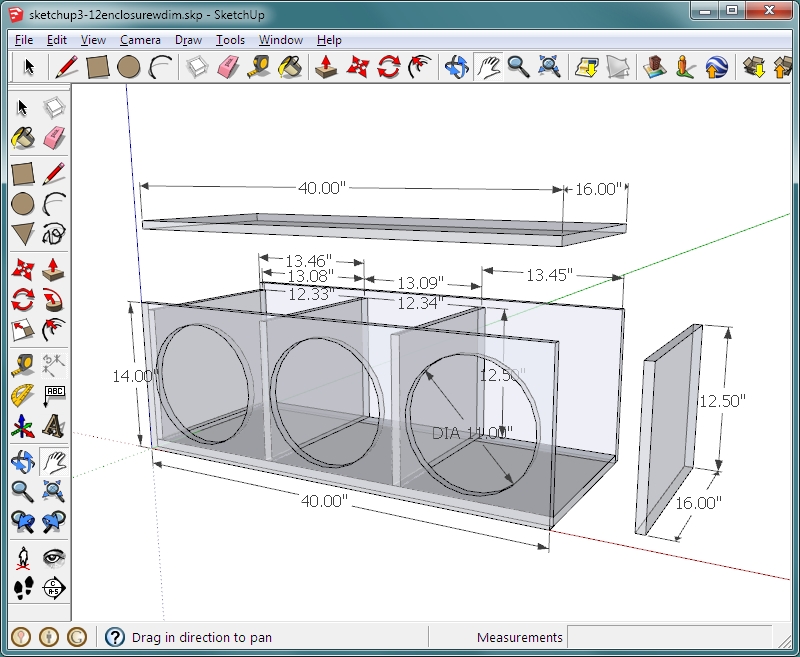
Let’s get practical. There are different box shapes, but the most common are:
- Rectangular (cube or rectangle)
- Wedge (slanted back)
- Cylinder (rare)
We’ll focus on rectangular and wedge boxes, as they are easiest to build and measure.
Calculating Volume For Rectangular Boxes
This is the most common shape. It’s simple to calculate.
Formula:
Volume = Length × Width × Height
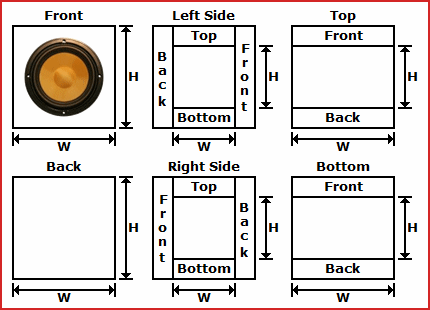
But, always measure the internal dimensions (not outside).
Steps:
- Measure the inside length, width, and height (in inches).
- Multiply them together.
- Divide the answer by 1,728 to get cubic feet (since there are 1,728 cubic inches in a cubic foot).
Example:
- Inside length: 20 inches
- Inside width: 14 inches
- Inside height: 12 inches
Volume = 20 × 14 × 12 = 3,360 cubic inches
Cubic Feet = 3,360 ÷ 1,728 ≈ 1.94 Cubic Feet
So, the box is about 1. 94 cubic feet (before subtracting sub and port).
Calculating Volume For Wedge Boxes
Wedge boxes save space and fit behind seats. The volume formula is a bit different.
Formula:
Volume = (Top width + Bottom width) ÷ 2 × Height × Length
- Top width: Inside width at the top
- Bottom width: Inside width at the bottom
- Height: Inside height
- Length: Inside length (side to side)
Multiply these, then divide by 1,728 to get cubic feet.
Example:
- Top width: 6 inches
- Bottom width: 12 inches
- Height: 14 inches
- Length: 24 inches
Volume = (6 + 12) ÷ 2 × 14 × 24
= 18 ÷ 2 × 14 × 24
= 9 × 14 × 24 = 3,024 Cubic Inches
Cubic Feet = 3,024 ÷ 1,728 ≈ 1.75 Cubic Feet
Checking Your Work
It’s easy to make mistakes. If your answer is much higher or lower than the recommended volume, double-check your math and measurements.
Convert Between Inches, Cubic Inches, And Liters
In the US, box volume is usually in cubic feet. But you may see liters or cubic inches.
- 1 cubic foot = 1,728 cubic inches
- 1 cubic foot = 28.32 liters
Quick Conversions:
- To go from cubic inches to cubic feet: Divide by 1,728
- To go from cubic feet to liters: Multiply by 28.32
Example:
1.5 Cubic Feet × 28.32 = 42.48 Liters
Knowing these conversions helps if you buy a subwoofer or box from Europe or Asia.
Credit: www.diyaudioandvideo.com
Subtract Subwoofer And Port Displacement
The box’s net volume should match the subwoofer’s recommended volume. But the speaker and any port also take up space.
How to adjust:
- Find the subwoofer’s displacement in the specs (usually 0.10–0.20 cubic feet for a 12” sub).
- If your box has a port, calculate or look up its volume (length × width × height for a slot port).
- Subtract these from your box’s gross volume.
Example:
- Box gross volume: 1.94 cubic feet
- Subwoofer displacement: 0.15 cubic feet
- Port displacement: 0.10 cubic feet
Net volume = 1. 94 – 0. 15 – 0. 10 = 1. 69 cubic feet
This is the final number you compare to the manufacturer’s recommendation.
Common Mistakes Beginners Make
Many first-time builders make the same errors. Watch out for these:
- Measuring outside dimensions instead of inside
- Forgetting to subtract subwoofer and port displacement
- Not sealing the box properly (leaks lower the volume)
- Using the wrong units (mixing inches and feet)
- Not checking the subwoofer’s recommended volume
Even small errors can hurt your sound.
Example Box Volume Calculation (step-by-step)
Let’s put it all together with a real-world example.
Suppose you have:
- Subwoofer: 12” Pioneer TS-A300D4
- Recommended sealed box volume: 1.25 cubic feet (net)
- Subwoofer displacement: 0.11 cubic feet
You want to build a rectangular box.
- Choose inside dimensions that multiply to about 1.36 cubic feet (to allow for displacement).
- Example dimensions: 16” (length) × 14” (width) × 10.5” (height)
- Volume = 16 × 14 × 10.5 = 2,352 cubic inches
- Cubic feet = 2,352 ÷ 1,728 = 1.36 cubic feet (gross)
- Net volume = 1.36 – 0.11 = 1.25 cubic feet
Now, your box matches the subwoofer’s recommendation.
Comparing Box Types: Sealed Vs. Ported
The type of box changes both the volume needed and the sound you get. Here’s a quick comparison:
| Type | Typical Volume | Sound Profile | Best For |
|---|---|---|---|
| Sealed | Smaller (1.0–1.5 cu ft for 12″) | Tight, accurate bass | Music, clarity |
| Ported | Larger (1.5–2.5 cu ft for 12″) | Louder, deeper bass | Movies, max output |
A sealed box is easier for beginners. Ported boxes are more complex and need exact volume and port size.
Tools And Apps That Can Help
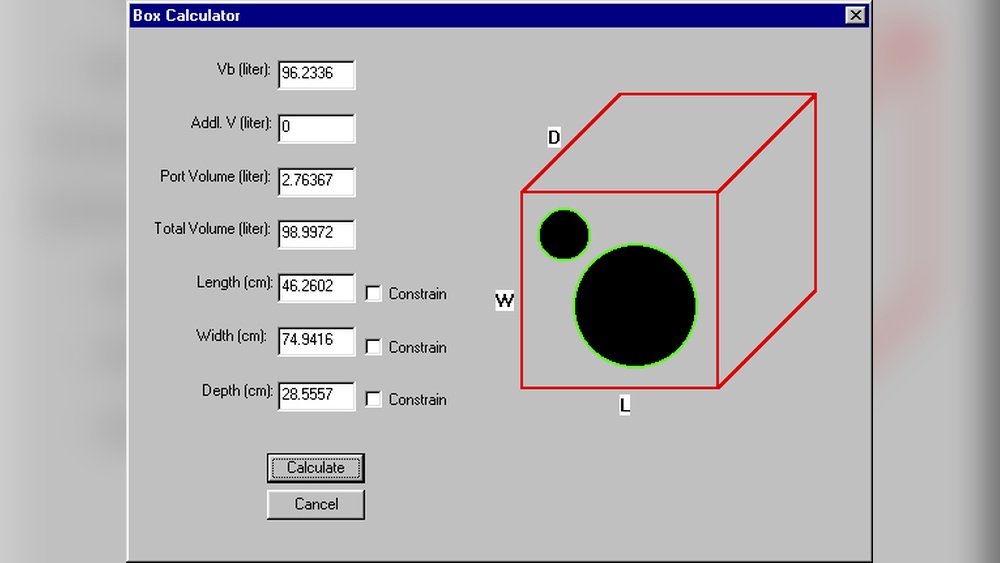
You don’t have to do all the math by hand. Many free online calculators and apps will help you:
- Subwoofer box calculators (search online)
- Mobile apps for box design
- Manufacturer websites (like Crutchfield)
These tools let you enter your subwoofer’s specs and try different box shapes.
Practical Tips For Accurate Box Volume
- Always measure twice, cut once.
- Allow for the thickness of wood (use 0.75” MDF for most boxes).
- Seal all joints with glue and silicone to prevent air leaks.
- Check your math with a calculator or app.
- Don’t guess – always use the recommended volume.
Many beginners forget to seal the inside edges. Even small air leaks can make the box act much larger than it is, lowering sound quality.
Real-world Subwoofer Box Volume Examples
Here are some popular 12” subwoofers and their recommended box volumes:
| Subwoofer Model | Sealed Box (cu ft) | Ported Box (cu ft) | Sub Displacement (cu ft) |
|---|---|---|---|
| JL Audio 12W3v3 | 1.0 | 1.75 | 0.07 |
| Rockford Fosgate P3D4-12 | 1.02 | 1.79 | 0.13 |
| Pioneer TS-A300D4 | 1.25 | 1.50 | 0.11 |
Adjust your box size based on the subwoofer’s needs—not just what fits in your car.
Advanced Tip: Polyfill And Tuning
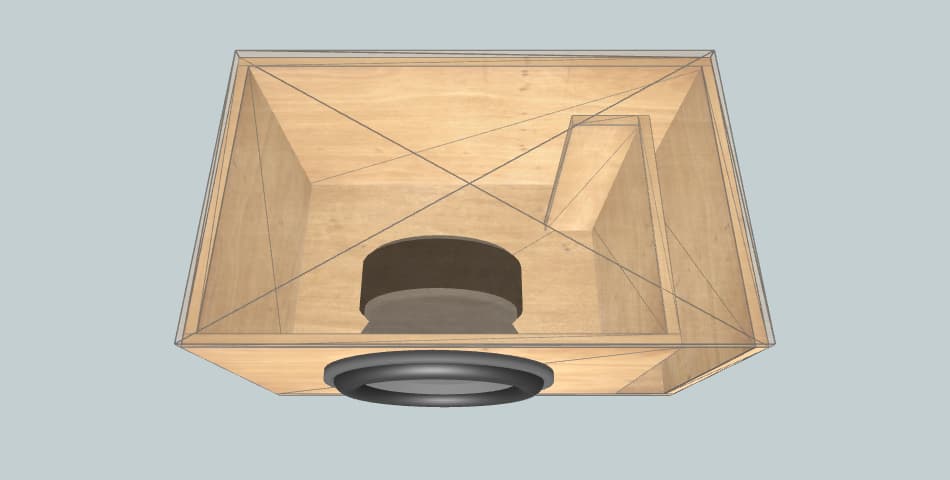
If your box is a little too small, you can add polyfill (pillow stuffing). This tricks the subwoofer into “seeing” a slightly larger box (about 10% more volume). But don’t rely on this for big errors. Always build as close as possible to the recommended size.
Credit: subbox.pro
Frequently Asked Questions
What Happens If My Box Volume Is Too Large Or Small?
A box that’s too large can make your bass sound boomy and uncontrolled. Too small, and the sound is tight but less deep, and your subwoofer may struggle or get damaged.
Can I Use An Old Box For A New Subwoofer?
You can, but only if the net volume matches the new subwoofer’s recommendation. Always check both the sub and the box specs before reusing.
How Do I Measure The Inside Dimensions If I Only Have Outside Measurements?
Measure the outside, then subtract the wood thickness (usually 0. 75” for MDF) from each side. For example, if the box is 16” wide outside, and the wood is 0. 75”, the inside width is 16 – 0. 75 – 0.
75 = 14. 5”.
Do I Need To Fill The Box With Anything?
Most sealed boxes use some polyfill for better sound. Ported boxes usually don’t need it. Too much can hurt performance, so use about 0.5–1 pound per cubic foot.
Are Online Box Calculators Accurate?
Most online calculators are accurate if you enter the right numbers. Always double-check your results and use them as a guide—not a final answer.
Building or choosing the right subwoofer box volume is not as hard as it seems. With careful measurement, simple math, and attention to the manufacturer’s recommendations, you’ll get clear, powerful bass. Take your time, avoid common mistakes, and enjoy the music the way it was meant to be heard. If in doubt, ask experts or use tools from trusted sources like Crutchfield. Happy listening!