Can You Run 4 Ohm Speakers at 2 Ohms? Expert Guide
Can You Run 4 Ohm Speakers At 2 Ohms?
Many people who build their own sound systems have questions about speaker impedance. One common question is: *Can you run 4 ohm speakers at 2 ohms?* This topic is important for anyone starting with audio setups, car sound systems, or home theaters. If you make the wrong choice, you could damage your equipment, get poor sound quality, or spend extra money. Understanding how impedance works and how to safely connect speakers can help you avoid mistakes and get the best sound.
Understanding Speaker Impedance
Impedance is a measure of resistance in electrical circuits. For speakers, it’s measured in ohms. Most consumer speakers are rated at 4 ohms or 8 ohms. Impedance tells you how much resistance the speaker gives to the amplifier’s output.
- Lower impedance (like 2 ohms) means less resistance.
- Higher impedance (like 8 ohms) means more resistance.
If you connect a lower impedance load than your amplifier can handle, it tries to push out more power. This can cause overheating, distortion, and even damage.
Practical Example
If an amplifier is rated for 4 ohms, and you connect 2 ohms, it will try to double its power output. If the amp isn’t designed for this, it can shut down or break.
Can You Run 4 Ohm Speakers At 2 Ohms?
The simple answer is: You cannot directly run a 4 ohm speaker at 2 ohms. The impedance of the speaker is fixed. However, you can combine multiple speakers or use wiring techniques to create a 2 ohm load for your amplifier.
Why Would You Want A 2 Ohm Load?
- More power output: Some amplifiers deliver more watts at lower impedance.
- Louder sound: More power means higher volume, if your speakers can handle it.
- Car audio setups: Often use 2 ohm loads to maximize output in limited space.
But you must use caution. Not all amplifiers are designed for 2 ohm loads, and not all speakers can handle the extra power.
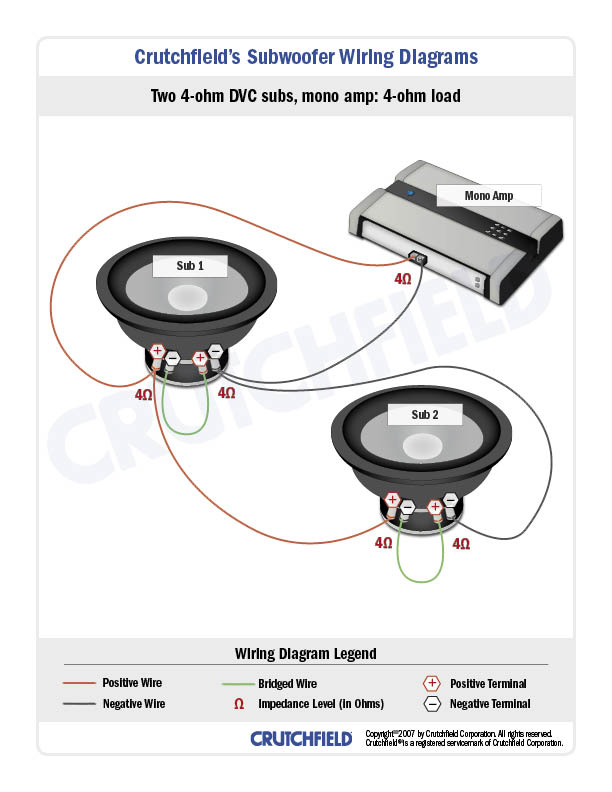
Credit: nilds.gov.ng
Four Ways To Achieve A 2 Ohm Load With 4 Ohm Speakers
If you need a 2 ohm load and only have 4 ohm speakers, there are four main ways to make this happen. Each method has its own pros, cons, and risks. Let’s look at each one in detail.
1. Parallel Wiring Of Two 4 Ohm Speakers
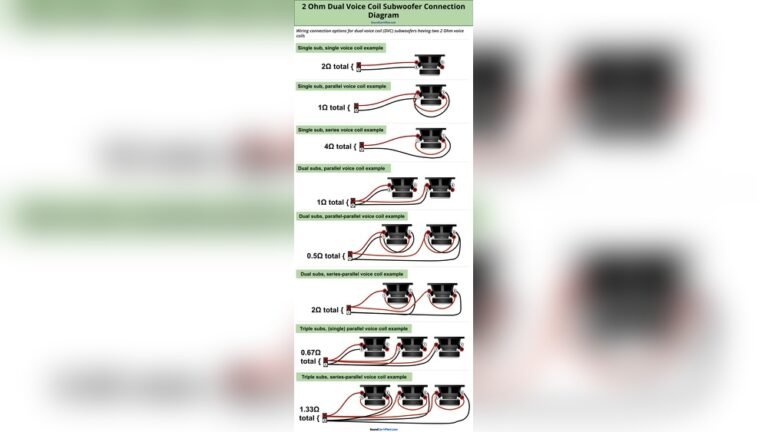
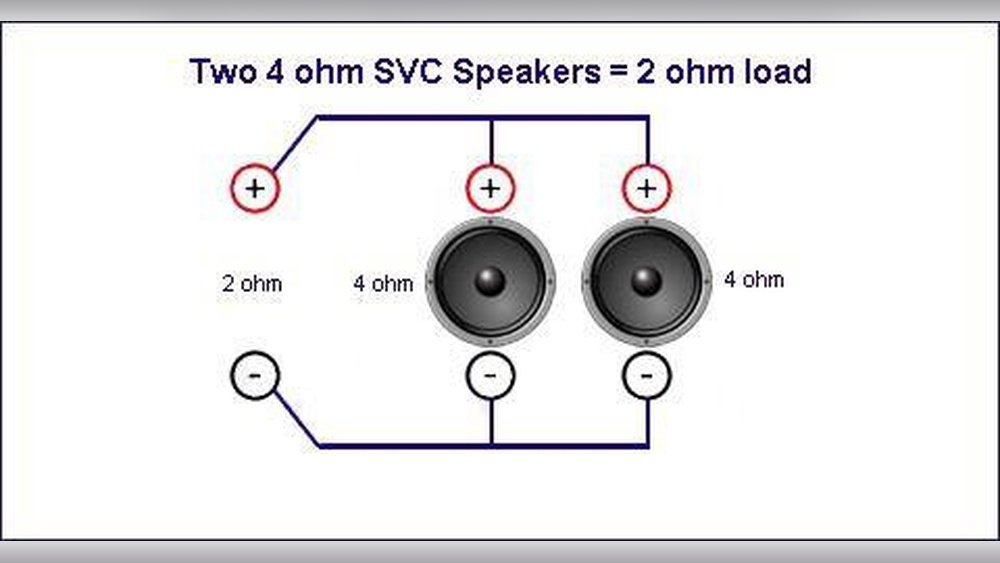
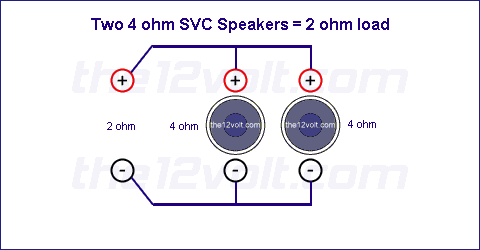
The most common way is to wire two 4 ohm speakers in parallel.
- Parallel wiring means connecting both speaker positives to the amp’s positive, and both negatives to the amp’s negative.
Impedance Calculation:
When two speakers are wired in parallel, the total impedance is:
`total Impedance = (ohm1 X Ohm2) / (ohm1 + Ohm2)`
For two 4 ohm speakers:
`(4 x 4) / (4 + 4) = 16 / 8 = 2 ohms`
Practical Example
If you have two 4 ohm speakers:
- Connect both red wires to the amp’s red terminal.
- Connect both black wires to the amp’s black terminal.
Result: The amplifier sees a 2 ohm load.
Pros And Cons
- Pros:
- Doubles power output (if amp supports 2 ohms)
- Simple wiring
- Cons:
- Amp must support 2 ohm loads
- Speakers must be matched
- Risk of amp overheating
Data Table
Here’s a quick comparison:
| Wiring Type | Number of Speakers | Total Impedance | Power Output (if amp supports 2 ohms) |
|---|---|---|---|
| Parallel | 2 x 4 ohm | 2 ohms | Double |
| Series | 2 x 4 ohm | 8 ohms | Half |
2. Using Four 4 Ohm Speakers In Parallel
If you wire four 4 ohm speakers in parallel, the impedance drops even further.
Calculation:
`1 / Total Impedance = 1/4 + 1/4 + 1/4 + 1/4 = 1`
So:
`total Impedance = 1 Ohm`
This is too low for most amplifiers. You should avoid this unless you have a specialty amp designed for 1 ohm loads.
Practical Example
Four speakers wired in parallel:
- All positive wires go to amp’s positive.
- All negative wires go to amp’s negative.
Result: 1 ohm load (dangerous for most amps).
Pros And Cons
- Pros:
- Loudest possible output
- Cons:
- Most amps will overheat or shut down
- Risk of permanent damage
- Only safe for 1-ohm stable amps
Data Table
Compare amp safety:
| Number of Speakers | Total Impedance | Amp Stability Needed |
|---|---|---|
| 2 x 4 ohm | 2 ohms | 2-ohm stable |
| 4 x 4 ohm | 1 ohm | 1-ohm stable |
3. Bridge Amplifier Channels
Some amplifiers let you bridge two channels into one. This increases power output but changes the impedance requirements.
- Bridging means connecting the speaker across two amp channels, not just one.
Important Insight: When bridging, the amp sees half the speaker’s impedance.
For a 4 ohm speaker, the amp sees 2 ohms. This means bridging a 4 ohm speaker makes the amp work harder.
Practical Example
- If your amp is bridgeable, connect the speaker to the left positive and right negative.
- Check the manual to confirm safe bridging.
Result: Amp sees 2 ohms with a 4 ohm speaker.
Pros And Cons
- Pros:
- Higher power from amp
- Good for single 4 ohm speaker
- Cons:
- Not all amps support bridging
- May void warranty if misused
- Amp must be 2-ohm stable
4. Using Impedance Matching Devices
You can buy impedance matching devices (like speaker selectors or resistors) to make sure your amp sees a safe load.
- These devices balance the load, letting you run more speakers without hurting the amp.
Practical Example:
- Use a speaker selector with impedance matching.
- Connect all 4 ohm speakers to the selector.
- Selector adjusts the load for the amp.
Result: Safe, balanced system.
Pros And Cons
- Pros:
- Protects amp from overload
- Easy setup
- Cons:
- Can reduce sound quality
- Extra cost
Comparison Table Of Methods
Here’s a summary of all four methods:
| Method | Resulting Impedance | Risk Level | Recommended For |
|---|---|---|---|
| Parallel wiring (2 speakers) | 2 ohms | Medium | Car audio, matched amps |
| Parallel wiring (4 speakers) | 1 ohm | High | Specialty amps only |
| Bridging amp channels | 2 ohms | Medium | Single speaker, bridgeable amp |
| Impedance matching device | 4 ohms | Low | Home audio, safety first |
Risks Of Running 4 Ohm Speakers At 2 Ohms
There are several risks if you try to run a 4 ohm speaker setup at 2 ohms without proper planning:
- Overheating: Amplifiers not rated for 2 ohms can get hot and shut down.
- Distortion: Sound quality can drop at high power levels.
- Equipment damage: Burned-out amp or blown speakers.
- Warranty void: Manufacturers may not honor warranties if you use improper loads.
Common Mistakes Beginners Make
- Mixing speakers with different ohms: This can cause uneven sound or damage.
- Ignoring amp ratings: Always check the amp’s manual for minimum impedance.
- Using cheap wires: Thin wires can heat up, lowering performance.
How To Check If Your Amplifier Supports 2 Ohm Loads
Before wiring for 2 ohms, check your amplifier’s specs:
- Look for “minimum impedance” or “2 ohm stable” in the manual.
- Many car amps support 2 ohms; most home amps do not.
- If the amp is not rated for 2 ohms, do not connect the speakers this way.
Example Specs
- Car amplifier: “Rated for 2 ohms per channel”
- Home amplifier: “Minimum load 4 ohms per channel”
Practical Tips For Beginners
- Always match your amp’s impedance rating to your speaker setup.
- Use thick, quality wires for lower impedance systems.
- Check if all speakers are the same ohm rating.
- If unsure, use an impedance matching device to protect your equipment.
- Label all wires to avoid confusion when connecting.
Real-world Data
According to a study by the Consumer Electronics Association, over 30% of car audio failures are due to incorrect speaker wiring and impedance mismatch. Amplifiers running below their minimum impedance are twice as likely to fail within the first year.
Non-obvious Insights
- Speaker sensitivity matters: Lower impedance alone does not guarantee louder sound. If your speakers have low sensitivity, you may not get the expected volume boost.
- Damping factor: Running at lower impedance can affect the amplifier’s control over the speaker, leading to poorer bass response.
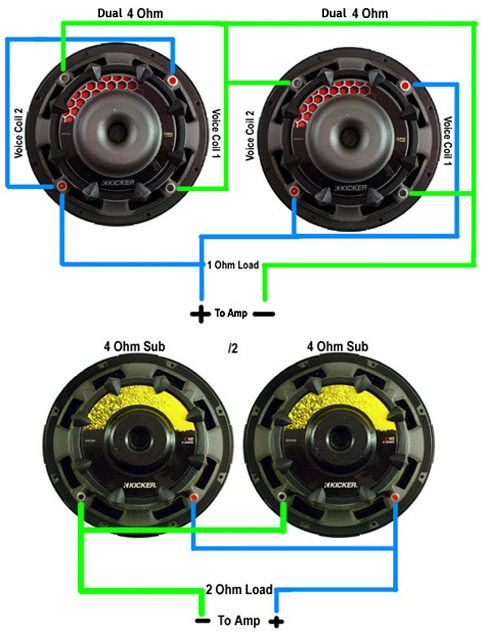
Credit: abtec.co.nz
When Should You Avoid 2 Ohm Loads?
- If your amp is not specifically rated for 2 ohms.
- When using home audio equipment.
- If your speakers are not high-quality or matched.
- If you want long-term reliability.
Frequently Asked Questions
Can I Wire Two 4 Ohm Speakers In Series For A 2 Ohm Load?
No. Series wiring adds the impedance, so two 4 ohm speakers wired in series equal 8 ohms, not 2 ohms.
Is Running Speakers At 2 Ohms Always Louder?
It can be, but only if your amp supports 2 ohms and your speakers can handle the extra power. Poor equipment can distort or fail.
Will Running 4 Ohm Speakers At 2 Ohms Damage My Amplifier?
If your amp is not 2-ohm stable, yes, it can damage the amp. Always check specs before wiring.
What Is The Safest Way To Use Multiple 4 Ohm Speakers?
Use a speaker selector or impedance matching device. This protects your amp and keeps your sound quality stable.
Can I Use This Wiring For Home Theater Systems?
Most home theater amps are not designed for 2 ohm loads. Stick with 4 ohm or 8 ohm wiring unless your amp manual says otherwise.
Credit: www.the12volt.com
Final Thoughts
Understanding speaker impedance and safe wiring is key to a reliable audio system. Running 4 ohm speakers at 2 ohms is possible, but only through careful wiring, matching equipment, and checking amplifier ratings. Beginners should avoid risky setups and always use impedance matching devices if unsure. Smart planning prevents damage and gives the best sound quality. For more technical details, you can check Wikipedia for further reading.