Connecting a Powered Subwoofer With a Line Output Converter: Easy Guide
Connecting A Powered Subwoofer With A Line Output Converter
Adding a powered subwoofer to your car or home audio system can transform your sound experience. Deep bass can make music, movies, and even podcasts feel more immersive. But sometimes, your audio source doesn’t have a dedicated subwoofer output or RCA pre-outs. This is where a line output converter (LOC) comes in. Many beginners are unsure how to connect these components safely and get the best sound. In this guide, you’ll learn everything you need to connect a powered subwoofer using a line output converter, with clear steps, practical tips, and answers to common questions.
What Is A Line Output Converter (loc)?
A line output converter is a small device that converts high-level (speaker) audio signals to low-level (RCA) signals.
- High-level signals come from your car’s speaker wires or home amplifier outputs.
- Low-level signals are the type used by amplifiers and powered subwoofers.
Many factory stereos do not include RCA outputs, so a LOC is needed to connect modern powered subwoofers.
Key Uses
- Adding an aftermarket subwoofer to a factory car stereo
- Connecting powered subwoofers to home audio systems without sub-out jacks
How It Works
The LOC takes audio from your speaker wires and changes it into a signal your subwoofer amp can use. This lets you add bass without changing your main stereo system.
Why You Need A Loc For Powered Subwoofers
Not every audio system is ready for an upgrade. Here’s why the LOC is often necessary:
- Factory stereos often lack RCA or subwoofer outputs.
- Powered subwoofers need a clean, low-level signal to avoid distortion.
- Using speaker-level inputs directly can damage equipment or produce poor sound.
A LOC is a simple solution to bridge the gap between your main system and your new powered subwoofer.
Tools And Materials Needed
Before you start, gather these items:
- Powered subwoofer (with built-in amplifier)
- Line output converter (2-channel is most common)
- RCA cables
- Wire strippers
- Electrical tape or heat shrink tubing
- Basic hand tools (screwdriver, pliers)
- Crimp connectors or soldering kit (optional for secure connections)
It’s important to use the correct gauge of wire. For most subwoofers under 300 watts, 16-gauge wire is enough. Higher power systems may need 12-gauge wire for safe and clean power delivery.
Step-by-step Guide: Connecting A Powered Subwoofer With A Loc
Follow these steps for a safe and effective setup. This guide focuses on car audio, but the process is similar for home systems.
1. Disconnect The Battery (for Car Installs)
Before touching any wires, disconnect the negative terminal of your car battery. This prevents shorts or shocks.
2. Access Speaker Wires
Find the rear speaker wires behind your stereo or in the rear deck. These carry the audio signal you’ll tap for the LOC.
- Use a wiring diagram for your car model to avoid mistakes.
- For home systems, use the speaker terminals on your amplifier.
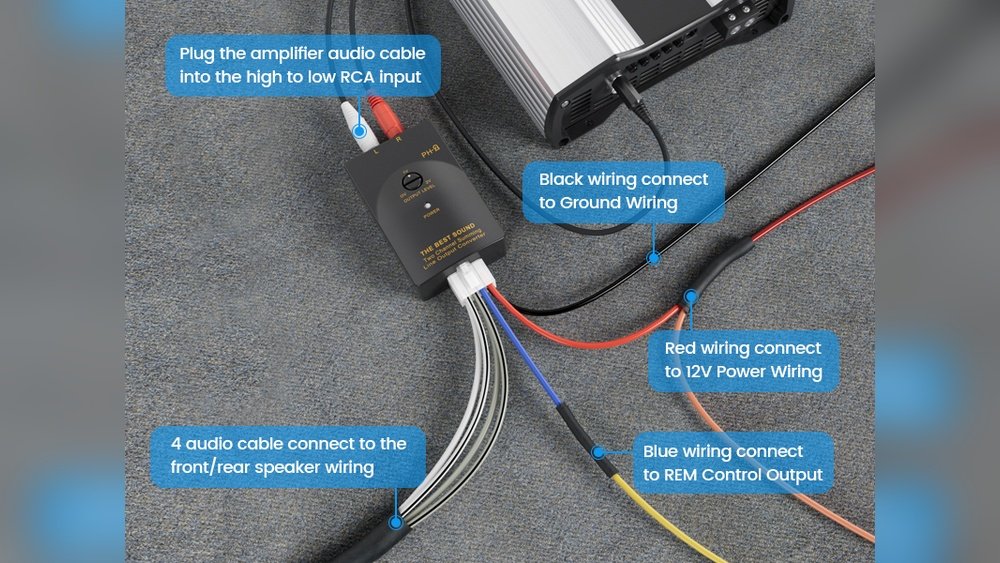
3. Connect The Loc To Speaker Wires
- Cut or strip a small section of the left and right rear speaker wires.
- Connect the input wires of the LOC to the speaker wires:
- Left positive and negative
- Right positive and negative
- Secure with crimp connectors, solder, or wire nuts.
- Wrap connections with electrical tape or heat shrink for safety.
4. Connect Rca Cables To Loc
Plug your RCA cables into the output jacks on the LOC.
- Run these cables to the location of your powered subwoofer.
5. Power And Ground The Subwoofer
- Connect the power wire from the subwoofer to your car battery or home power source.
- Ground the subwoofer to a clean, bare metal surface (car) or the ground terminal (home).
- Use the correct fuse size, usually 20–30 amps for most powered subwoofers.
6. Connect Remote Turn-on Wire
Most powered subwoofers need a remote turn-on signal. This tells the subwoofer when to power up.
- Tap into the remote wire from your head unit or use a switched 12V source.
- Some LOCs provide a remote out feature.
7. Connect Rca To Subwoofer
- Plug the RCA cables from the LOC into the RCA input on your powered subwoofer.
8. Reconnect Battery And Test
- Reconnect your car battery or power source.
- Turn on your audio system at low volume.
- Check for sound and adjust settings as needed.
9. Fine-tune Settings
- Adjust the gain on the subwoofer for balanced sound.
- Set any built-in crossover (often 80–120Hz for subs).
- Avoid setting gain too high, which can cause distortion.
Example Wiring Diagram
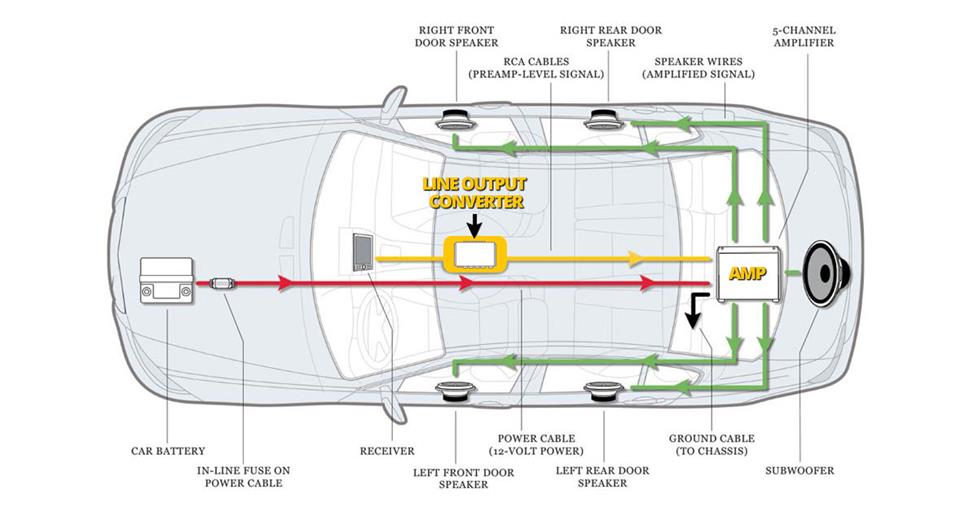
Here’s a simple layout for connecting a powered subwoofer with a LOC.
| Component | Connection Type | Destination |
|---|---|---|
| Stereo Rear Speaker Wires | High-Level Signal | LOC Input |
| LOC Output | RCA Cables | Subwoofer RCA Input |
| Subwoofer Power | +12V Fused Wire | Car Battery |
| Subwoofer Ground | Ground Wire | Vehicle Chassis |
| Remote Turn-On | Remote Wire | Head Unit/LOC Remote Out |
Common Problems And Troubleshooting
Even with careful wiring, issues can happen. Here’s how to handle the most frequent problems.
No Sound From Subwoofer
- Check all wiring for loose or wrong connections.
- Make sure the LOC is connected to the correct speaker wires.
- Confirm that the subwoofer is powered and the remote wire is working.
Distorted Or Weak Bass
- Lower the subwoofer gain; too much can cause distortion.
- Try a different LOC. Some cheap models can color the sound.
- Double-check speaker polarity (positive and negative must match).
Subwoofer Won’t Turn Off
- The remote turn-on wire may be connected to a constant power source.
- Use a switched 12V source or a LOC with auto-sensing turn-on.
Humming Or Noise
- Ground the subwoofer at a clean, bare metal location.
- Use shielded RCA cables.
- Keep power and signal wires apart to reduce interference.
Comparison: Loc Vs Speaker-level Inputs
Some powered subwoofers have speaker-level inputs. Should you use them instead of a LOC?
| Feature | LOC Method | Speaker-Level Inputs |
|---|---|---|
| Sound Quality | Usually better (cleaner signal) | Good, but may add noise |
| Installation | Extra device required | Simpler (direct wiring) |
| Compatibility | Works with all powered subs | Only with subs supporting this input |
| Adjustability | Gain adjustment possible | Usually fixed |
Insight: High-quality LOCs often include noise filters and adjustable gain, giving you more control over your sound.
Choosing The Right Line Output Converter
Not all LOCs are the same. Here’s how to pick the right one:
- Number of Channels
- 2-channel for subwoofers (most common)
- 4-channel if adding more amps later
- Adjustable Gain
- Lets you fine-tune subwoofer volume
- Automatic Turn-On
- Some LOCs sense audio and turn on your sub automatically
- Build Quality
- Higher-quality units have better shielding and longer life
- Brand Reputation
- Popular brands: AudioControl, PAC, Scosche
Price Range
LOCs range from $10 to over $100. For most users, a $20–$40 model is enough. Cheaper units may add noise or break easily.
Safety Tips When Installing
- Always disconnect power before cutting or connecting wires.
- Double-check wire colors with a wiring diagram.
- Use a fuse on the subwoofer’s power wire, close to the battery.
- Keep power and audio signal wires separate to avoid noise.
- Do not use home speaker wire in a car; use automotive-grade wire.
Non-obvious insight: Many beginners forget to connect the ground wire to bare metal, which is a top cause of humming or poor performance.

Credit: www.amazon.com
Real-world Example: Car Audio Upgrade
Let’s say you have a 2015 Honda Civic with a factory stereo, and you want to add a powered subwoofer. Here’s a quick summary:
- You find the rear speaker wires (usually green/purple for Honda).
- You install a 2-channel LOC and connect it to these wires.
- RCA cables run from the LOC to your powered subwoofer in the trunk.
- You use a 12-gauge power wire, with a 25A fuse, to the battery.
- The ground wire is attached to a sanded metal bolt in the trunk.
- After checking everything, your music now has deep, clear bass.
Tip: Always check the subwoofer’s manual for recommended fuse size and wire gauge.
Home Audio: When To Use A Loc
If your home stereo or AV receiver doesn’t have a subwoofer output, use a LOC to add a powered sub. The process is similar:
- Tap into the speaker outputs on your receiver.
- Connect them to the LOC’s input wires.
- Run RCA cables from the LOC to your powered subwoofer.
Important: For home use, always unplug the receiver before working with wires.

Credit: www.electronicsexpo.com
Performance Data: Subwoofer Output With And Without Loc
Here’s a comparison of bass response before and after adding a powered subwoofer with a LOC in a typical car system.
| Frequency (Hz) | Factory System SPL (dB) | With Subwoofer + LOC SPL (dB) |
|---|---|---|
| 40 | 60 | 80 |
| 63 | 65 | 86 |
| 100 | 70 | 90 |
| 200 | 78 | 91 |
SPL stands for sound pressure level (volume). With a powered subwoofer, bass is up to 20dB louder and much clearer.
Mistakes To Avoid
- Mixing up positive and negative speaker wires (causes phase issues)
- Forgetting to fuse the subwoofer power wire (fire risk)
- Using too thin wire (can overheat or reduce sound quality)
- Placing RCA cables next to power wires (can cause buzzing)
Pro tip: Test your system at low volume before turning it up to avoid damage.
Credit: www.crutchfield.com
When To Ask For Professional Help
If you’re not comfortable working with car or home electrical systems, it’s smart to consult a professional installer. A mistake can lead to blown fuses, damaged equipment, or even safety hazards. Many audio shops offer affordable installation packages.
Further Learning
For deeper technical details about line output converters, you can visit the Wikipedia page on line level audio.
Frequently Asked Questions
Can I Use A Loc With Any Powered Subwoofer?
Yes, as long as your subwoofer accepts RCA input. Some subs also have speaker-level inputs, but a LOC is safer for most setups.
How Do I Know Which Speaker Wires To Tap For The Loc?
Check your stereo’s wiring diagram (often in the car’s manual or online). Usually, the rear left and right speaker wires are best for bass signals.
What If My Subwoofer Has Auto Turn-on? Do I Still Need A Remote Wire?
If your subwoofer or LOC has signal sensing auto turn-on, the remote wire may not be needed. Otherwise, connect the remote wire to a switched power source.
Why Is My Subwoofer Making A Humming Noise?
This is usually a grounding issue. Make sure the ground wire is securely connected to clean, bare metal. Move RCA cables away from power wires to reduce interference.
Can I Use A Y-adapter If My Subwoofer Only Has One Rca Input?
Yes, use a Y-adapter to combine the left and right RCA outputs from the LOC into a single input for your subwoofer.
Connecting a powered subwoofer using a line output converter is one of the best upgrades for clearer, deeper bass. With the right tools and careful wiring, you can enjoy powerful sound without changing your main stereo or risking your equipment.
If you follow these steps, you’ll get the most out of your system safely and confidently.