The 8 Best Car Stereo Speakers for Clear, Loud Sound in 2026
As an Amazon Associate, we earn from qualifying purchases. This post contains affiliate links, and buying through one costs you nothing extra.
Best overall: Pioneer TS-F6935R — a 3-way 6″ x 9″ design with a woofer, midrange and tweeter, so it splits the work across three drivers instead of two.
Best for easy upgrades: Kenwood KFC-1666S — a 6-1/2″ 2-way that comes with grilles included and a 90 dB sensitivity rating, so it makes the most of the power you already have.
Best for big power: Skar Audio RPX69 — a 6″ x 9″ 3-way with 270 watts peak per pair and a 92 dB sensitivity rating, built for listeners who plan to add an amplifier.
The rest of this guide walks through each car stereo speaker in plain terms, then answers the questions people ask before they order.
How We Picked
Sensitivity mattered too, because it tells you how hard a speaker is to drive.
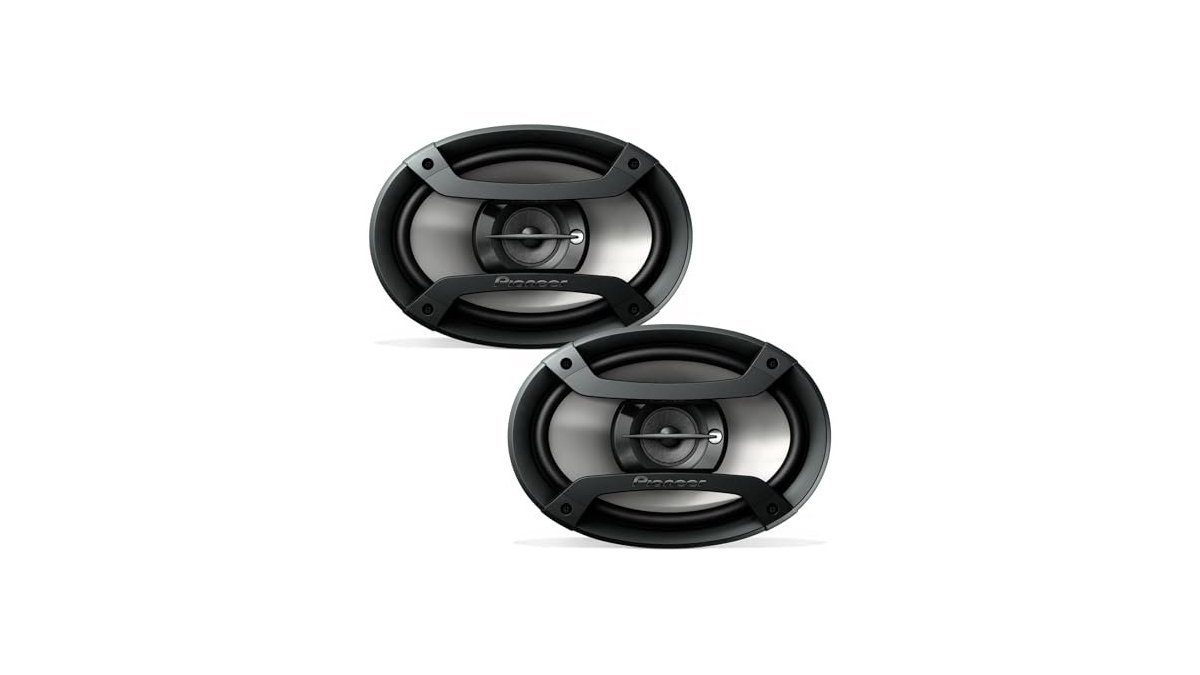
1. PIONEER F-Series TS-F6935R 6″ x 9″ 3-Way Coaxial Car Speakers
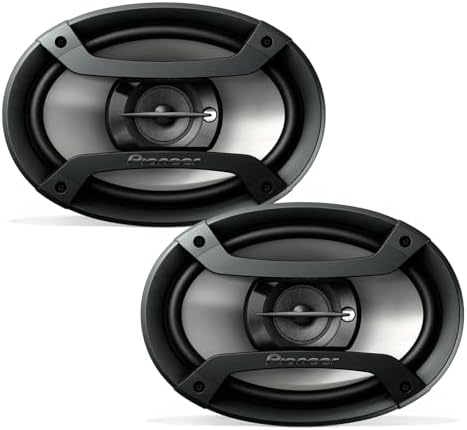
Best for: the buyer who wants one speaker to do everything
This is a 3-way coaxial, which means a woofer, a midrange driver and a tweeter all sit on one frame. In practice that splits the music into three jobs instead of two, so vocals and cymbals land on their own driver rather than sharing. The listing describes the 6″ x 9″ size as standard sizing engineered for a seamless fit.
Pioneer rates it at 230W max and 30W nominal with 4-ohm impedance, and the 87dB sensitivity figure tells you it needs a reasonable amount of power to get loud. That’s the trade-off here. The listing calls it a passive speaker that requires an external amplifier, so if you’re planning to run it straight off a factory head unit, this isn’t the pick for you.
Pros
- Three drivers split lows, mids and highs
- 6″ x 9″ size fits many factory openings
- Black and silver finish looks clean in a door
Cons
- Listing says an external amplifier is required
- Seller recommends professional installation for proper wiring
2. Kenwood KFC-1666S Car Stereo Speaker 6-1/2″ 2-Way Speakers with Powerful

Best for: the first-time buyer upgrading factory speakers
Kenwood builds this around a polypropylene woofer with a treated cloth surround, plus a 1″ PEI balanced dome tweeter. That combination is aimed at precise bass and crisp highs rather than sheer volume. The listing describes the 6-1/2″ size as an easy installation upgrade for your car’s audio system.
The number that matters most here is the 90 dB sensitivity. A higher figure means the speaker turns the power it gets into more sound, which is why this one works well on a factory head unit without an added amplifier. It handles up to 300 watts peak, and the frequency response runs 40-22,000 Hz at 4 ohms.
Grilles come in the box, which protects the cone and saves you buying them separately. If you already run a separate amplifier and want a speaker that soaks up big power, look elsewhere — this one is built for the simple swap.
Pros
- 90 dB sensitivity suits factory head units
- Grilles included for protection
- 6-1/2″ size fits many factory doors
Cons
- 2-way design, so no separate midrange driver
- Peak power figure only; no continuous rating listed
3. JVC CS-J620 300W 6.5″ CS Series 2-Way Coaxial Car Speakers

Best for: the buyer who wants a shallow, easy fit
JVC gives you a 6.5″ mica cone woofer and a 1″ PEI tweeter in a 2-way coaxial, sold as a set of two. The listing pairs the mica cone with a hybrid surround for what it describes as smooth mid-range and detailed highs.
The standout figure is the mounting depth: 1-23/32″. Shallow depth matters because a deep speaker can hit a window track or the glass when the window rolls down. JVC also pre-arranges the mounting holes and includes wire extension cables, screws and mounting tabs, so a job that needs a bit of modification has the parts on hand.
Sensitivity is 92 dB at 4 ohms, and the frequency response runs 35Hz-22KHz. If you want a 3-way design with a dedicated midrange, this isn’t it — this is a clean 2-way built around fitting easily.
Pros
- Shallow 1-23/32″ top mount depth
- Wire extensions, screws and tabs included
- 92 dB sensitivity and 35Hz-22KHz response
Cons
- 2-way design rather than 3-way
- Black ABS grilles only; no finish options listed
4. Skar Audio RPX69 6-Inch x 9-Inch 3-Way Coaxial Speakers

Best for: the listener who plans to add an amplifier
Skar Audio rates this pair at 270 watts peak, or 135 watts per speaker, and pairs that with a 92 dB sensitivity rating. High sensitivity plus real power handling is the combination you want if you’re feeding speakers from an amp and want them to stay composed when you turn it up.
The build uses a microfiber paper cone with a butyl rubber surround, plus a 20mm soft dome silk tweeter and a 44mm mid-range speaker.
If you’re keeping a factory head unit and never plan to amplify, this is more speaker than that setup can use. It rewards an amp.
Pros
- 270 watts peak per pair with 92 dB sensitivity
- Silk dome tweeter and dedicated mid-range
- Frequency response reaches down to 32 Hz
Cons
- Sold as a pair only; no single-speaker option listed
- Peak figure given, not a continuous rating
5. Pioneer TS-501M 5.25″ 4-Way Coaxial Car Speakers 300W Max

Best for: the buyer chasing detail in the high range
A 4-way design means separate drivers for more frequency bands, and Pioneer pairs an 11mm tweeter with a super tweeter plus a 1-5/8″ cellulose fiber cone midrange.
That shows in the listed frequency response of 44 Hz to 52 kHz, which is unusually wide. Peak power handling is 300 watts with 50 watts continuous, and sensitivity is 89 dB. The 5.25″ size is smaller than the 6.5″ and 6″ x 9″ speakers here, so check your opening before ordering — it fits smaller factory spots.
If you want strong low bass from the door, a bigger woofer serves you better. This one is about clarity up top.
Pros
- 4-way design with tweeter and super tweeter
- 300 watts peak, 50 watts continuous
- Frequency response runs 44 Hz to 52 kHz
Cons
- 5.25″ size fits fewer vehicles than 6.5″
- Seller recommends professional installation
6. BOSS Audio Systems CH6530 6.5 Inch Car Speakers

Best for: the buyer who wants a plain, simple pair
BOSS keeps this one straightforward. It’s a 6.5″ 3-way with a poly injection cone, rubber surround and stamped basket, and the listing covers both cabinets.
What you get instead is a simple package with a shallow 2.1″ mounting depth and a 5.5″ mounting hole, plus a light 1.3 lb weight for the pair. Sensitivity is 90 dB, so it works on modest power. The tweeter is a.50-inch piezo with a 1-inch polyimide dome midrange.
If you want a basic pair that fits easily, this does the job.
Pros
- 3-way design with piezo tweeter and dome midrange
- Shallow 2.1″ mounting depth
- 90 dB sensitivity works on modest power
Cons
- Listed response of 100 Hz to 18 KHz is narrower
- Sold as a pair only
7. DS18 PRO-GM6B Loudspeaker

Best for: the buyer building a system in stages
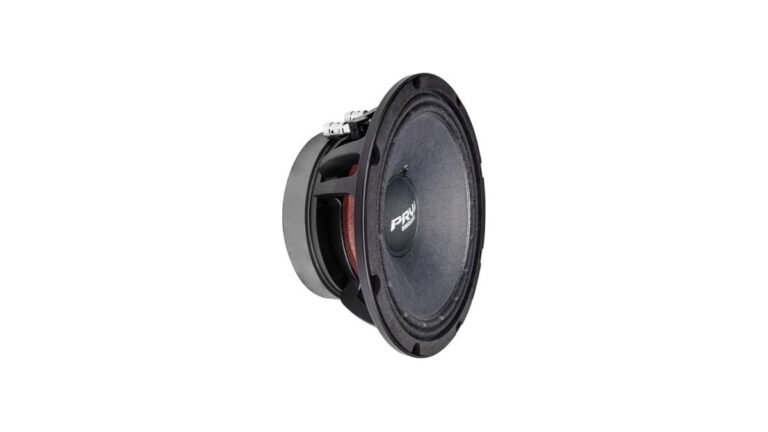
This is a single 6.5″ midrange driver, not a full-range coaxial, and that changes who it’s for. DS18 rates it at 480W max and 140W RMS at 8 ohms, and the listing describes it as handling the middle of the audible range — the part where vocals and instruments live. The 1.5″ high-temperature Kapton voice coil is built to take heat and hold its shape.
The red aluminum bullet design is a look, and each order covers only one unit, so a pair means ordering two.
If you want a drop-in replacement for a factory door speaker, this isn’t that. It’s a piece of a bigger build.
Pros
- 480W max and 140W RMS handling
- 1.5″ Kapton voice coil rated for high heat
- Purpose-built midrange for vocals and instruments
Cons
- 8-ohm impedance differs from typical 4-ohm car speakers
8. DriSentri 6×9 Inch 600W Car Coaxial Speaker Vehicle Door Auto

Best for: the buyer who wants a full-range speaker for many genres
DriSentri builds this 6″ x 9″ around a polypropylene cone with a natural rubber diaphragm, and the listing says it handles popular, classical, jazz, country and rock. The frame is described as uniform-thickness iron for a solid, thick sound, and the voice coil is high-temperature pure copper silver, wound large for efficient conduction and lower distortion.
The listing also highlights moisture resistance, with a PP rubber horn and metal parts for durability. The speaker terminals are marked positive and negative and arranged symmetrically to make wiring simpler. The listing describes universal, nondestructive support for a variety of models.
The power figure of 600W is a peak number with no continuous rating published alongside it, so treat it as a ceiling rather than a working figure. For a general-purpose full-range swap, it covers a lot of ground.
Pros
- Polypropylene cone with natural rubber diaphragm
- Listed as moisture-proof for longer service
- Marked terminals make wiring straightforward
Cons
- 600W figure is peak only, with no continuous rating
Also Worth Considering
DriSentri Car Tweeters is a four-piece set of 800W T-120 dome tweeters, sold on their own rather than as part of a coaxial. That makes them a different kind of purchase: they add high-frequency output to a system that already has woofers, instead of replacing a full-range speaker. If your doors already handle the mids and lows and you just want more sparkle up top, a separate tweeter set is the way to get it. If you’re replacing factory speakers outright, one of the coaxial picks above does more of the work in one part.
How to Choose in Sixty Seconds
What size speaker fits my car?
Measure the opening, not the car. Factory openings vary, and the three common sizes here are 6″ x 9″, 6.5″ and 5.25″. The Pioneer TS-F6935R and Skar Audio RPX69 are 6″ x 9″. The Kenwood KFC-1666S, JVC CS-J620, BOSS CH6530 and DS18 PRO-GM6B are 6.5″. The Pioneer TS-501M is 5.25″. Depth matters as much as width — the JVC CS-J620 lists a shallow 1-23/32″ top mount depth, and the BOSS CH6530 lists 2.1″, both of which help avoid hitting a window track.
Do I need an amplifier?
It depends on the speaker’s sensitivity and impedance, and on what’s already in your dash. Sensitivity tells you how much sound a speaker makes from the power it gets. The Kenwood KFC-1666S lists 90 dB and the JVC CS-J620 lists 92 dB, both of which work on modest power. The Pioneer TS-F6935R lists 87 dB and its listing says an external amplifier is required. If you’re keeping a factory head unit, start with a higher sensitivity figure.
Should I pick 2-way or 3-way speakers?
More ways means more drivers sharing the frequency range, which usually means each one covers a narrower band and does it more cleanly. The Kenwood KFC-1666S and JVC CS-J620 are 2-way designs. The Pioneer TS-F6935R, Skar Audio RPX69 and BOSS CH6530 are 3-way. The Pioneer TS-501M goes further with a 4-way layout and a super tweeter. It’s not automatically better, so check the materials and the listed response.
Frequently Asked Questions
What power does a car speaker actually need?
Peak wattage is a ceiling, not a working figure. Sensitivity, measured in dB, tells you more: the JVC CS-J620 and Skar Audio RPX69 list 92 dB, the Kenwood KFC-1666S and BOSS CH6530 list 90 dB, and the Pioneer TS-501M lists 89 dB. Match the speaker to the power you actually have.
What goes wrong first with car speakers?
Fit is the usual problem. A speaker that’s too deep can hit a window track or the glass when the window rolls down, which is why the JVC CS-J620 lists a shallow 1-23/32″ top mount depth and the BOSS CH6530 lists 2.1″. Measure depth and check impedance before ordering.
Is the simplest speaker on the list enough?
For a lot of people, yes. The BOSS CH6530 is the plainest pick here: a 6.5″ 3-way pair with a 90 dB sensitivity rating, a shallow 2.1″ mounting depth and a 5.5″ mounting hole. If you mostly want a working pair that fits easily, that’s enough. If you want wider coverage, the Pioneer TS-501M reaches 44 Hz to 52 kHz.
Closing
If you want one speaker that covers the whole range, the Pioneer TS-F6935R is the overall pick, with three drivers and a 6″ x 9″ frame that fits many factory openings. If you’re upgrading on factory power and want the simplest job, the Kenwood KFC-1666S is the second pick, thanks to its 90 dB sensitivity and included grilles. Before you order, measure your door opening and its depth, then check the impedance of what’s already installed. That one step prevents most returns.