How Do You Measure a Subwoofer: Expert Tips for Perfect Sound
Measuring a subwoofer can feel confusing, especially if you are new to audio equipment. Subwoofers are important for deep, powerful bass. But how do you measure a subwoofer correctly? This guide breaks down the process in simple steps. You’ll learn how to measure the physical size, power, and performance of a subwoofer.
With clear examples, tables, and practical advice, you’ll feel confident about getting accurate measurements.
Why Measuring A Subwoofer Matters
Many people think subwoofers are all about size. But there’s more to it:
- Fit: The right size ensures the subwoofer fits in your car, room, or enclosure.
- Performance: Measuring helps you match the subwoofer with an amplifier.
- Upgrade: Knowing measurements makes replacement or upgrades easier.
- Sound Quality: Proper measurement affects bass response and overall sound.
Beginners often forget that measuring is not only about diameter. There are other key factors.
The Main Subwoofer Measurements
You need to measure several things to understand a subwoofer:
- Diameter (across the cone)
- Mounting depth (how deep it sits)
- Cutout diameter (hole size needed)
- Voice coil size
- Power handling (watts)
- Sensitivity (dB)
- Frequency response
- Enclosure volume
Each measurement is important for a different reason. Let’s break down how to measure each one.
Credit: reconingspeakers.com
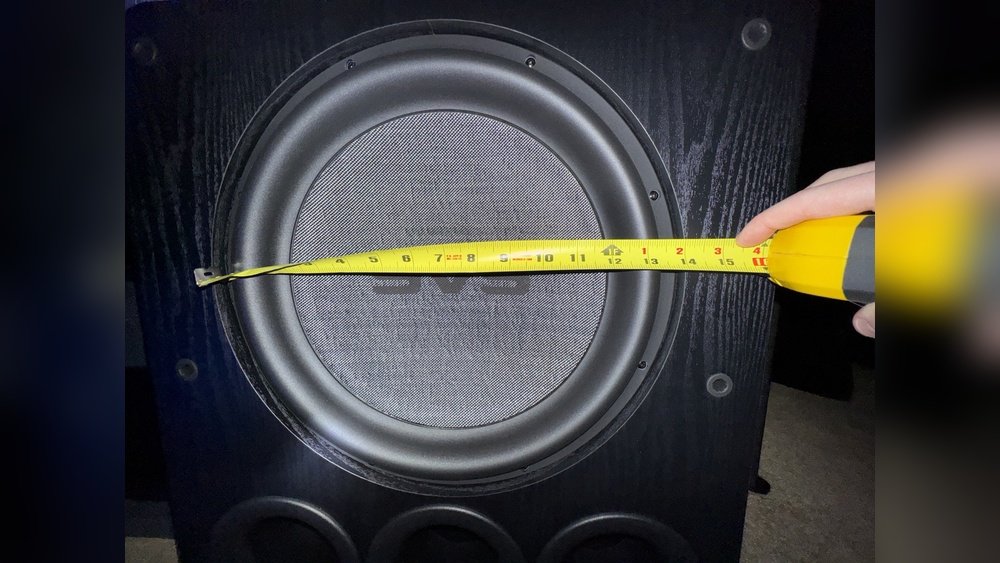
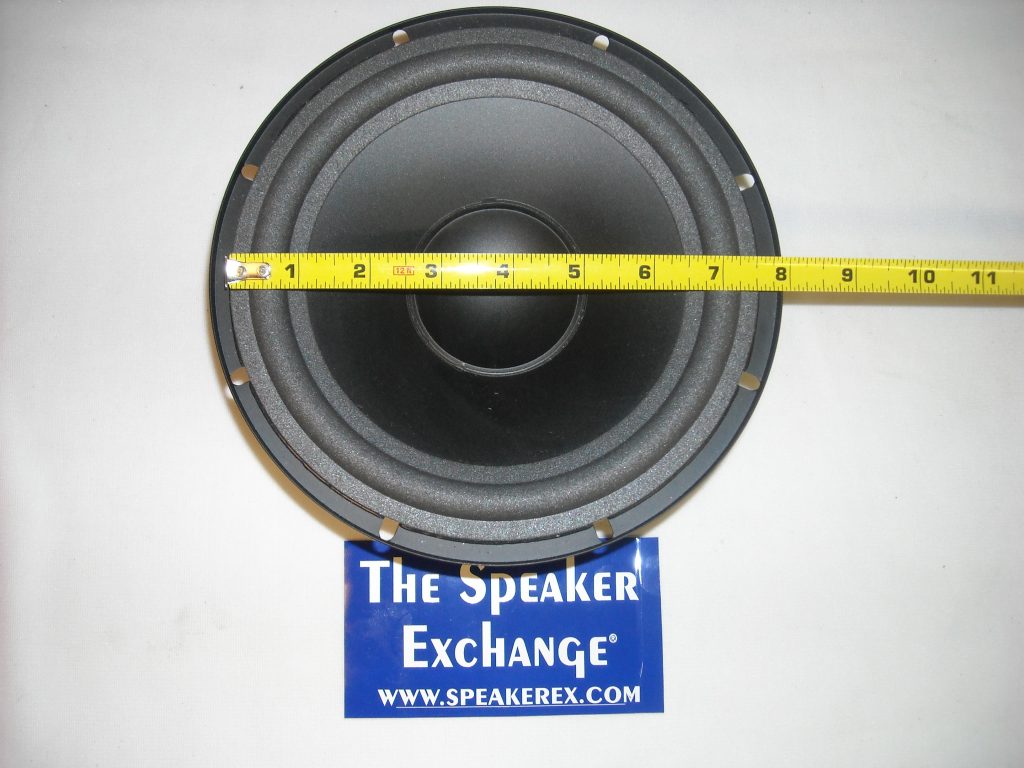
How To Measure Subwoofer Diameter
The most basic measurement is the diameter. This is usually the number in the product name, like “12-inch subwoofer. ”
- Remove the grill: Take off any covers or grills to see the actual cone.
- Measure the widest point: Use a tape measure or ruler from one edge of the surround (outside rubber edge) straight across to the other.
- Do not include the frame: Only measure the cone and surround, not the mounting frame.
Example: A “10-inch” subwoofer usually measures about 10 inches across the cone and surround.
Common mistake: Some people measure only the dust cap (center dome) or include the frame. This gives the wrong size.
Table: Common Subwoofer Diameters
| Subwoofer Size | Actual Diameter (inches) | Typical Uses |
|---|---|---|
| 8 inch | ~8.0 | Compact cars, small rooms |
| 10 inch | ~10.0 | Standard cars, medium rooms |
| 12 inch | ~12.0 | Large cars, home theater |
| 15 inch | ~15.0 | Professional audio, big spaces |
Measuring Mounting Depth And Cutout Diameter
The mounting depth is how deep the subwoofer sits inside an enclosure. The cutout diameter is the hole size you need to fit the subwoofer.
Steps To Measure Mounting Depth
- Place the subwoofer on a flat surface.
- Measure from the bottom of the mounting frame to the deepest part of the magnet.
- Write down the distance in inches or millimeters.
Steps To Measure Cutout Diameter
- Turn the subwoofer upside down.
- Measure across the basket (not the rubber surround) where it will sit in the enclosure.
- This is the size of the hole you need to cut.
Tip: Always add 1/8 inch (about 3 mm) extra to the cutout for easy installation.
Table: Example Subwoofer Mounting Depths
| Subwoofer Size | Mounting Depth (inches) |
|---|---|
| 8 inch | 3.5 – 4.5 |
| 10 inch | 4.5 – 6.0 |
| 12 inch | 5.0 – 7.0 |
| 15 inch | 6.0 – 9.0 |
Measuring Power Handling And Sensitivity
Physical size is just one part of a subwoofer. You must also measure power handling and sensitivity for best results.
Power Handling
- RMS (Root Mean Square): The continuous power the subwoofer can handle.
- Peak Power: The maximum power for short bursts.
Manufacturers list these on the box or in the manual.
How to measure if data is missing:
- Use a digital multimeter to check the resistance (ohms).
- Multiply the resistance by the amplifier’s rated output (in watts) for a rough estimate.
- For accurate results, always check the official specs.
Sensitivity
- Measured in decibels (dB), usually at 1 watt/1 meter.
- Higher sensitivity means the subwoofer plays louder with less power.
Example: A subwoofer rated at 90 dB is more efficient than one rated at 85 dB.
Table: Power Handling And Sensitivity Comparison
| Model | RMS Power (watts) | Sensitivity (dB @ 1W/1m) |
|---|---|---|
| Entry 10″ | 250 | 86 |
| Mid 12″ | 500 | 89 |
| Pro 15″ | 1000 | 92 |
Non-obvious insight: Don’t just buy a subwoofer with the highest power rating. Match the RMS power with your amplifier for best results.
Measuring Frequency Response
Frequency response tells you the range of bass a subwoofer can produce. It’s measured in Hertz (Hz).
- Example: “20 Hz – 200 Hz” means the subwoofer can play very deep bass.
- Most home subwoofers start at around 20 Hz.
How to check:
- Look at the product specs.
- For DIY testing, use a tone generator app and a decibel meter.
- Play tones from 20 Hz up to 200 Hz.
- Watch where the volume drops—this shows the real bass limits.
Tip: Room size and subwoofer placement can change frequency response. Place the sub in different spots and test.

Credit: www.tonmeister.ca
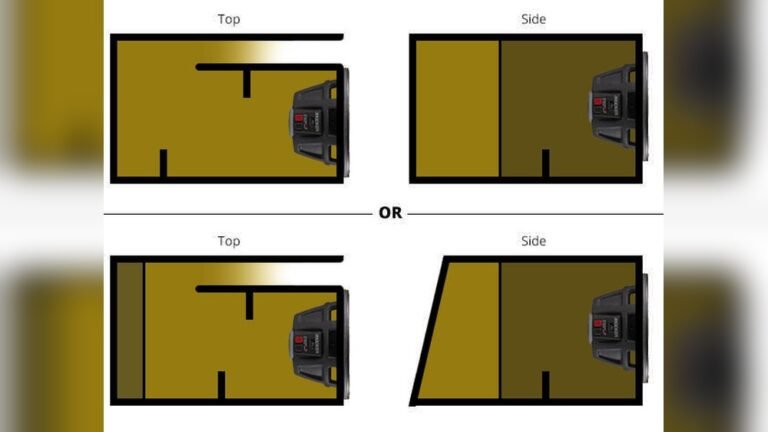
Measuring Enclosure Volume
Enclosure volume is critical for subwoofer performance. Too small or too large, and the sound suffers.
Steps To Measure For A Sealed Enclosure
- Measure the inside width, height, and depth of the box (in inches).
- Multiply these numbers: Width × Height × Depth.
- Divide by 1,728 to convert cubic inches to cubic feet.
Example:
- Width: 16 inches
- Height: 14 inches
- Depth: 12 inches
- Volume = (16 × 14 × 12) / 1,728 = 1.56 cubic feet
Ported Enclosures
For ported (vented) boxes, subtract the space taken by the port. Most manufacturers give recommended volumes for both types.
Non-obvious insight: Beginners often forget to include the space taken by the subwoofer itself (the driver and magnet) when calculating the box volume. This can make the box too small.
Measuring Impedance (ohms)
Impedance is the electrical resistance, measured in ohms (Ω).
- Common values: 2 ohms, 4 ohms, 8 ohms
How to measure:
- Disconnect the subwoofer from any power source.
- Set your digital multimeter to the lowest ohms setting.
- Place the probes on the two speaker terminals.
- Read the value on the screen.
Why it matters: The wrong impedance can damage your amp or subwoofer. Match the amplifier and subwoofer impedance for safe operation.
Measuring Voice Coil Size
The voice coil is inside the subwoofer. Its size affects power handling and sound quality.
- Usually measured in inches (e.g., 2″, 2.5″, 3″)
To measure:
- Remove the subwoofer from the box.
- Look at the coil (visible at the back).
- Use a ruler to measure the diameter.
Note: Some subwoofers use dual voice coils (DVC) for more wiring options.
Practical Example: Measuring A 12-inch Subwoofer
Suppose you want to install a 12-inch subwoofer in your car. Here’s a step-by-step example:
- Diameter: Measure across the cone and surround: 12 inches.
- Mounting Depth: From the frame to the magnet: 6 inches.
- Cutout Diameter: Across the basket: 11 inches.
- RMS Power: Check specs: 500 watts.
- Sensitivity: 89 dB.
- Frequency Response: 25 Hz – 200 Hz.
- Impedance: 4 ohms (measured with multimeter).
- Enclosure Volume Needed: 1.25 cubic feet (as per manual).
With these measurements, you can build or buy the right box and match your amplifier.
Common Beginner Mistakes To Avoid
- Measuring only the dust cap or frame: Always include the cone and surround for diameter.
- Ignoring mounting depth: Can cause the subwoofer not to fit.
- Not checking impedance: Leads to poor sound or equipment damage.
- Forgetting enclosure volume: The wrong box size ruins bass.
- Trusting only peak power: Always focus on RMS power for matching.
Tools You Need For Accurate Measurement
- Tape measure or ruler
- Digital multimeter (for ohms)
- Tone generator app (for frequency)
- Decibel meter (for sound level)
- Calculator (for enclosure volume)
These are basic tools and easy to find.
Credit: www.avsforum.com
How To Use Manufacturer Specs
Most subwoofers have a spec sheet. Use it for:
- Exact measurements
- Recommended box sizes
- Power and sensitivity data
But always double-check with your own measurements. Sometimes, specs are rounded or may differ slightly.
If you want more technical details, the Wikipedia Subwoofer page gives in-depth information.
Frequently Asked Questions
How Do I Know What Size Subwoofer I Have?
Measure across the cone and surround, not just the dust cap or the frame. The size in inches tells you the subwoofer size (e. g. , 10-inch, 12-inch).
What Happens If I Use The Wrong Enclosure Size?
A box that is too small or large changes the sound. Too small: tight but weak bass. Too large: boomy and uncontrolled bass. Always match the box size to the subwoofer specs.
Can I Measure Power Handling Myself?
You can check the resistance (ohms) with a multimeter, but for true power handling, always check the manufacturer’s RMS rating. Guessing can damage your subwoofer.
Why Is Sensitivity Important?
A subwoofer with higher sensitivity (dB) plays louder with less power. This is important if your amplifier is not very strong.
How Do I Measure The Frequency Response At Home?
Use a tone generator app and a decibel meter. Play test tones from 20 Hz to 200 Hz and note where the sound level drops. This gives you the real-world frequency response.
Measuring a subwoofer is not just about size. By learning how to check diameter, depth, power, and other key specs, you can get the best sound for your space. These steps help beginners avoid common mistakes and enjoy great bass without confusion.