How to Jump Car Battery With Another Car: Step-by-Step Guide
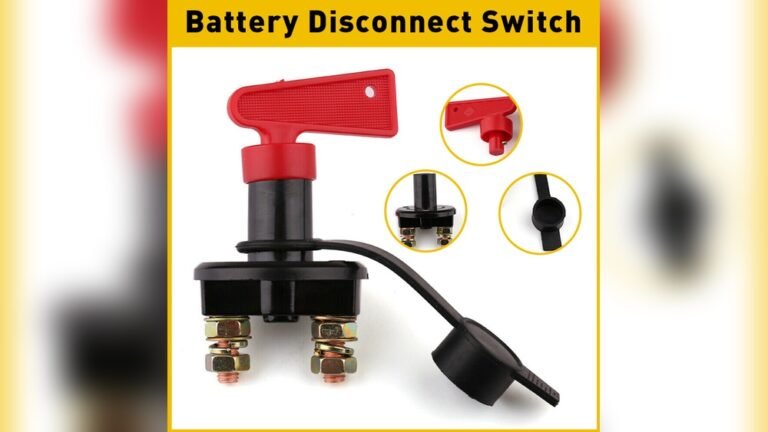
A black cover.
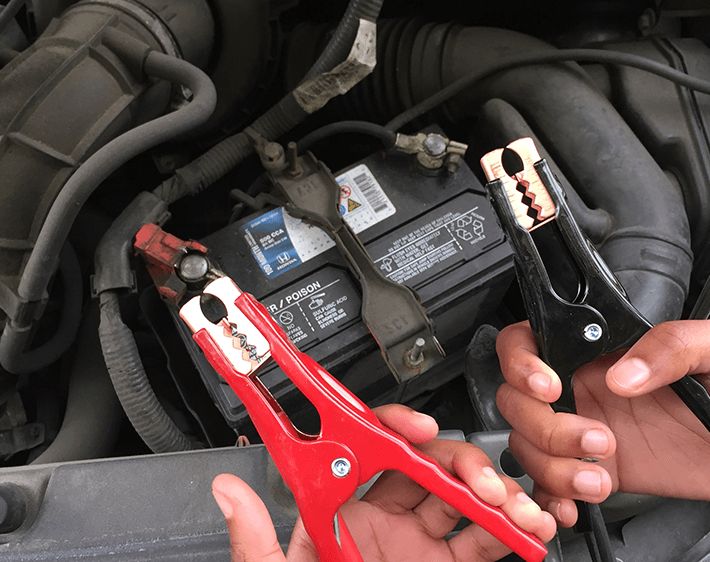
Before moving forward, make sure you can clearly see and access both terminals on each battery. Sometimes, dirt or corrosion can cover the terminals, so wipe them gently if needed. If you notice powdery buildup (white or bluish), avoid touching it with bare hands; it can irritate the skin.
Extra tip: Double-check that you’re not confusing the terminals. Mistaking the positive and negative can cause sparks, damage, or even a battery explosion. If in doubt, refer to your car’s manual for terminal locations.
3. Attach The Jumper Cables
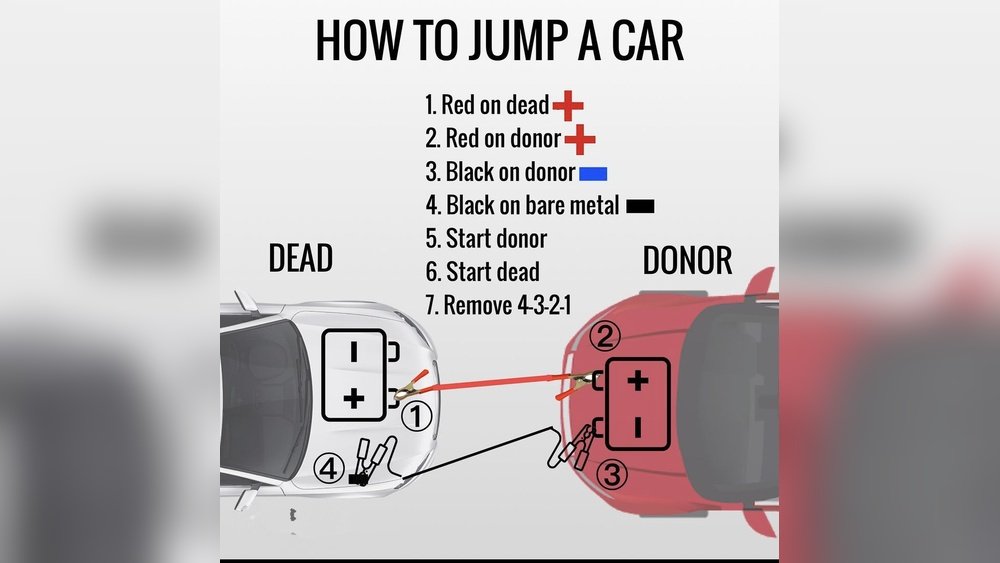
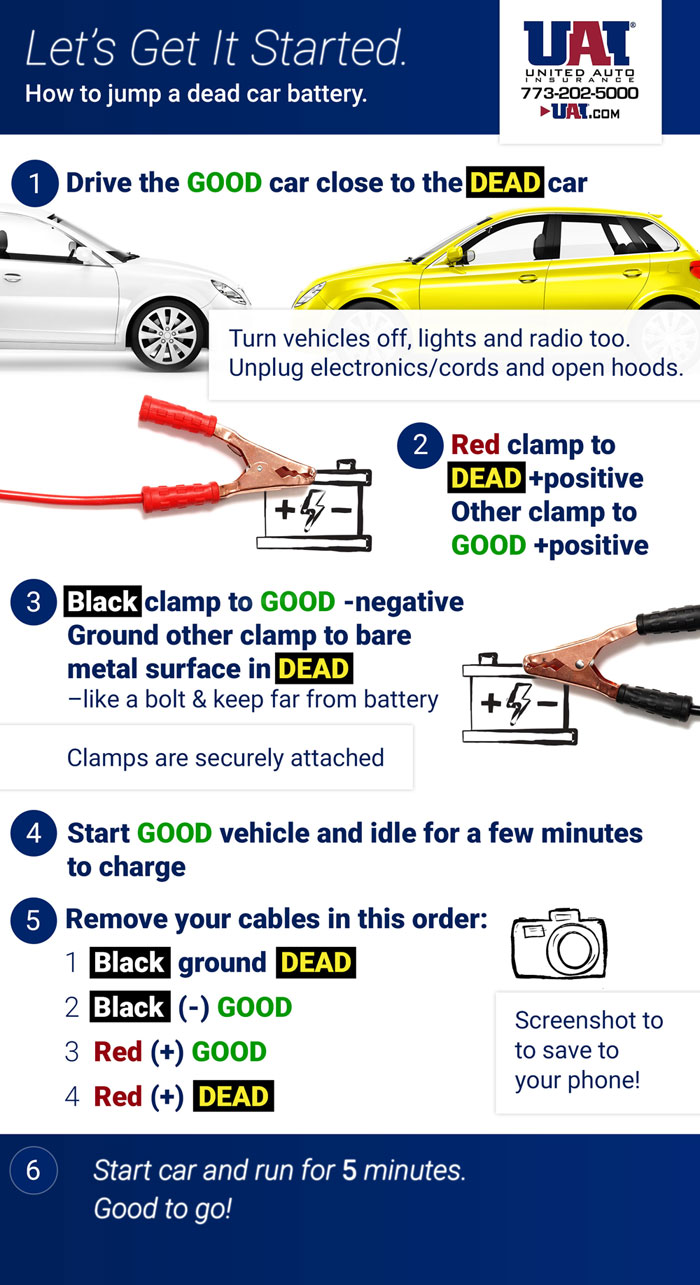
Now, it’s time to connect the jumper cables. Follow this order carefully:
1. Red Cable To Dead Battery’s Positive (+):
Attach one end of the red (positive) cable to the positive terminal on the dead battery. Make sure the clamp is secure and not touching any other metal parts.
2. Red Cable To Good Battery’s Positive (+):
Connect the other end of the red cable to the positive terminal on the working battery.
3. Black Cable To Good Battery’s Negative (−):
Attach one end of the black (negative) cable to the negative terminal on the good battery.
4. Black Cable To Metal Ground On Dead Car:
This is a key safety step. Instead of connecting the black cable to the negative terminal on the dead battery, attach it to an unpainted metal part of the dead car’s engine block or chassis—away from the battery. This helps prevent sparks near the battery, which can be dangerous.
Common mistake: Many people connect the last black clamp to the dead battery’s negative terminal. This increases the risk of explosions if any gas is present. Always connect to a bare metal spot instead.
Extra insight: If the clamps feel loose or slip off easily, adjust their position. A firm connection is needed for electricity to flow.
4. Start The Working Car
Start the engine of the car with the good battery. Let it idle for about 2-3 minutes. This gives the dead battery a small charge before you try starting your car.
Why wait?
Allowing the working car to run helps “push” some charge into the dead battery, especially if it’s completely flat. In cold weather or if the dead battery was left with lights on for a long time, waiting a few extra minutes can make a big difference.
Tip: Keep accessories (like air conditioning, radio, and lights) off in both cars to focus all the energy on charging.
5. Start The Dead Car
Now, try starting the car with the dead battery.
- If the engine turns over and starts, you’re in luck!
- If it doesn’t start right away, wait another minute or two and try again.
Still won’t start?
- Check all cable connections.
- Make sure the metal ground connection is secure.
- If it still fails after a few tries, the battery may be too far gone, or there may be another issue, like a faulty starter or blown fuse.
Beginner tip: Don’t crank the engine for more than 5 seconds at a time. Give it a short rest before trying again to avoid damaging the starter motor.
6. Remove The Cables In Reverse Order
Once your car is running, it’s important to remove the cables in the reverse order:
- Remove the black (negative) clamp from the metal ground on the previously dead car.
- Remove the black clamp from the negative terminal of the good battery.
- Remove the red clamp from the positive terminal of the good battery.
- Remove the red clamp from the positive terminal of the previously dead battery.
Be careful: Make sure the clamps don’t touch each other or any metal surfaces during removal.
Why reverse order?
This reduces the risk of short circuits or sparks, especially if any battery gases are still present.
7. Let Your Car Run
Keep your car running for at least 20-30 minutes before turning it off. This allows the alternator to recharge the battery.
If possible, drive your car instead of letting it idle. Driving charges the battery faster and more effectively.
Don’t turn off the engine until you’re sure the battery is holding a charge. Otherwise, you may need another jump.
Extra tip: If your car stalls soon after the jump, your battery or alternator may need professional attention.
—
Troubleshooting: When Jump Starting Doesn’t Work
Sometimes, jump starting fails. Here are a few common reasons:
1. Corroded Battery Terminals:
Dirty or corroded terminals can block electricity. Clean them gently with a battery brush or dry cloth if you can do so safely.
2. Loose Cable Connections:
Double-check that all clamps are secure and making good contact with metal.
3. Dead Battery Is Too Old Or Damaged:
If your battery is more than 5 years old, or you see swelling, cracks, or leaks, it may not hold a charge.
4. Other Car Problems:
Sometimes, the problem isn’t the battery. It could be the starter, alternator, or a blown fuse. Listen for clicking or no sound at all—these are clues for mechanics.
5. Wrong Jumper Cable Order:
Attaching cables in the wrong order can prevent a successful jump and may even cause damage.
6. Bad Jumper Cables:
Cheap or worn-out cables may not transfer enough electricity. High-quality, thick cables work best.
Pro insight: If your car does not start after 3–4 attempts, don’t keep trying. Too many attempts can damage both cars. At this point, call for roadside assistance.
—
How To Stay Safe While Jump Starting
Working with car batteries involves some risk. Follow these safety tips:
- Remove metal jewelry (rings, bracelets, watches) before you start.
- Wear gloves and eye protection if you have them. Car batteries can release acid or gas.
- Never lean over the battery while jump starting.
- Keep sparks, flames, and cigarettes away.
- Check for battery damage—if you see any, do not attempt to jump start.
- Avoid touching both cable clamps together once they are connected to a battery.
Remember, safety is more important than speed.
Non-obvious tip: Some modern cars have batteries in hard-to-reach places or use “jump start terminals” instead of direct battery access. Always check your owner’s manual for specifics.
—
Credit: www.firestonecompleteautocare.com
After Jump Starting: What To Do Next
Getting your car started is only the first step. Here’s what you should do next:
1. Drive For At Least 20-30 Minutes:
This helps recharge the battery.
2. Schedule A Battery Check:
Visit a mechanic or auto parts store soon to have your battery and charging system tested. Many offer this service for free.
3. Check For Warning Lights:
If you see the battery light or other warnings on your dashboard, don’t ignore them.
4. Look For The Cause:
Did you leave your headlights or an interior light on? Fix the problem so it doesn’t happen again.
5. Consider A Replacement:
If your battery dies again soon, it may be time for a new one.
Extra insight: Frequent jump starts can damage both the battery and the car’s electronics. If you need a jump more than once in a few weeks, get your electrical system checked.
—
Preventing Future Dead Batteries
Prevention is always better than a cure. Here’s how to avoid getting stranded:
- Turn off lights and electronics when you park.
- Keep battery terminals clean and free of corrosion.
- Drive your car regularly—short trips may not fully recharge the battery.
- Check battery age: If it’s over 3 years old, consider testing or replacing it before it fails.
- Secure the battery: Make sure it’s tightly fastened in the tray.
- Avoid using electronics when the engine is off.
- Carry a portable jump starter: These devices are small, easy to use, and don’t require another vehicle. They can be a real lifesaver if you’re often in remote places.
Hidden tip: Extreme heat can damage batteries as much as cold. If you live in a hot climate, have your battery checked every summer.
For more detailed information on battery care and troubleshooting, the [AAA’s car battery guide](https://www.aaa.com/autorepair/articles/how-to-choose-a-car-battery) offers expert advice.
—
Jump starting a car is a valuable skill for any driver. With the right tools, a little confidence, and careful attention to safety, you can get back on the road in minutes. Remember, if you ever feel unsure or unsafe, it’s always smart to call for professional help.
Credit: www.unitedautoinsurance.com