What Should Bass And Treble Be Set at in Car: Expert Guide
When you listen to music in your car, the right sound settings can make a big difference. Two important controls are bass and treble. But many people ask: “What should bass and treble be set at in my car?” If your music sounds too boomy or sharp, you might not enjoy your drive. This article will help you find the best settings for your car audio, explain why they matter, and give you easy steps to tune your system—no technical skills needed.
What Are Bass And Treble?
To get a good sound in your car, it helps to know what these terms mean:
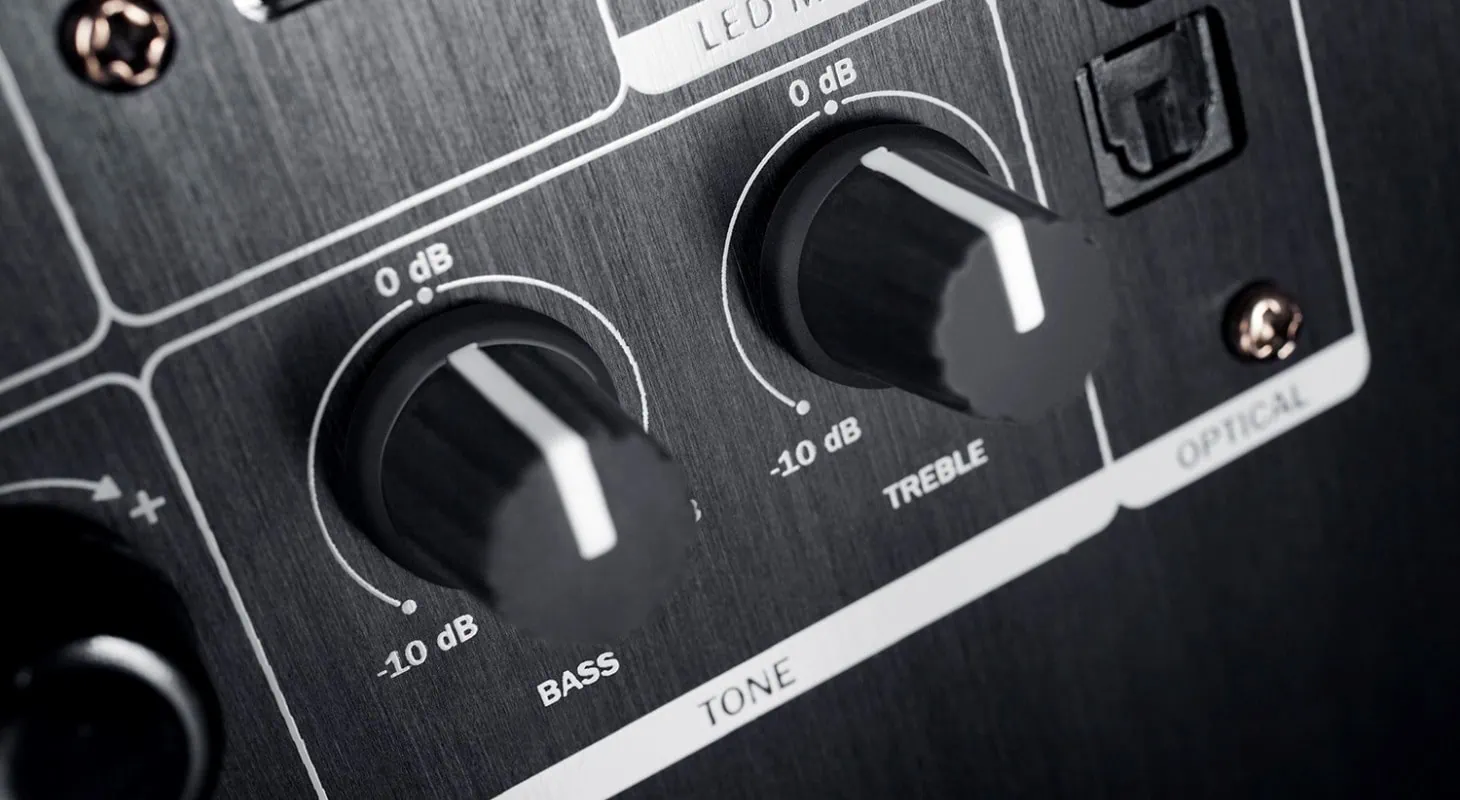
- Bass: Controls the low sounds in your music, like drums and bass guitar.
- Treble: Controls the high sounds, such as vocals, cymbals, and strings.
Think of bass as the “boom” and treble as the “shine” in your music. Adjusting these can make your sound feel balanced or distorted.
Why Car Audio Settings Matter
Car speakers are not like home speakers. The size, shape, and materials in your car change the way music sounds. Some common problems include:
- Too much bass can make your music muddy.
- Too much treble can make it sound harsh or tinny.
- Poor settings can hide details or make music tiring to hear.
A well-tuned system makes every drive more enjoyable, whether you love hip-hop, rock, or podcasts.
Credit: musicstrive.com
The “right” Bass And Treble Settings: Is There A Magic Number?
Many people want a simple answer: “Set bass at X and treble at Y.” But the best settings depend on:
- Your car’s audio system quality
- The type of music you like
- The car’s interior (leather seats reflect sound, fabric absorbs it)
- Your personal taste
Most experts recommend starting with a flat or neutral setting. That means:
- Bass: 0 (center or middle point)
- Treble: 0 (center or middle point)
From there, adjust up or down a little at a time. Small changes often make a big difference.
Example Starting Points
| Music Type | Bass Setting | Treble Setting |
|---|---|---|
| Pop/Rock | +1 to +2 | 0 to +2 |
| Hip-Hop/Rap | +2 to +4 | 0 to +1 |
| Classical | 0 to +1 | +1 to +3 |
| Podcast/Talk | 0 | +1 |
These are starting points. Your ear is the final judge.
How To Set Bass And Treble In Your Car
1. Reset To Flat
Start with all audio settings at zero. This removes previous changes.
2. Play A Familiar Song
Choose a song you know well. This helps you notice differences.
- Adjust Bass
- Turn up the bass a little.
- Listen for “booming” or “muddiness.”
- If the music sounds heavy or unclear, lower the bass.
- Adjust Treble
- Increase treble slowly.
- Listen for “hiss” or “sharpness.”
- If vocals or cymbals sound harsh, reduce the treble.
- Balance and Fader
- Make sure sound is not too strong in front or back.
- Center the balance left to right.
- Test with Different Songs
Try other music styles. Good settings should sound clear for all.
Practical Example
Suppose you drive a Honda Civic with standard speakers. Start at zero for bass and treble. Play a pop song. Increase bass to +2 and treble to +1. If drums sound clear but not boomy, and vocals are crisp, you’re close.
If not, adjust by 1 point until it feels balanced.
Common Mistakes Beginners Make
1. Boosting Bass Too High
Many people think more bass means better sound. This can make music sound “muddy” or distort the speakers.
2. Ignoring Treble
Without enough treble, details like vocals and cymbals disappear. But too much can make music tiring.
3. Not Testing Different Music
Settings that sound good for hip-hop may not work for classical or podcasts.
4. Overusing Presets
Some car stereos have preset EQs (like “Rock” or “Jazz”). These can be too aggressive. Manual adjustments are usually better.
5. Forgetting About Speaker Quality
Cheap or old speakers can’t handle high bass or treble, leading to distortion.
Bass, Treble, And The Car Environment
Your car’s size and shape change how music sounds. For example:
- Small cars: More bass can make the cabin shake.
- Large SUVs: May need extra treble for clarity.
Materials matter too:
| Interior Material | Sound Effect | Recommended Adjustment |
|---|---|---|
| Leather Seats | Reflects sound | Lower treble slightly |
| Fabric Seats | Absorbs sound | Increase treble by 1-2 points |
| Carpeted Floor | Softens bass | Boost bass as needed |
| Plastic Dash | Adds sharpness | Lower treble if harsh |
Credit: musicstrive.com
Using Equalizer (eq) Settings
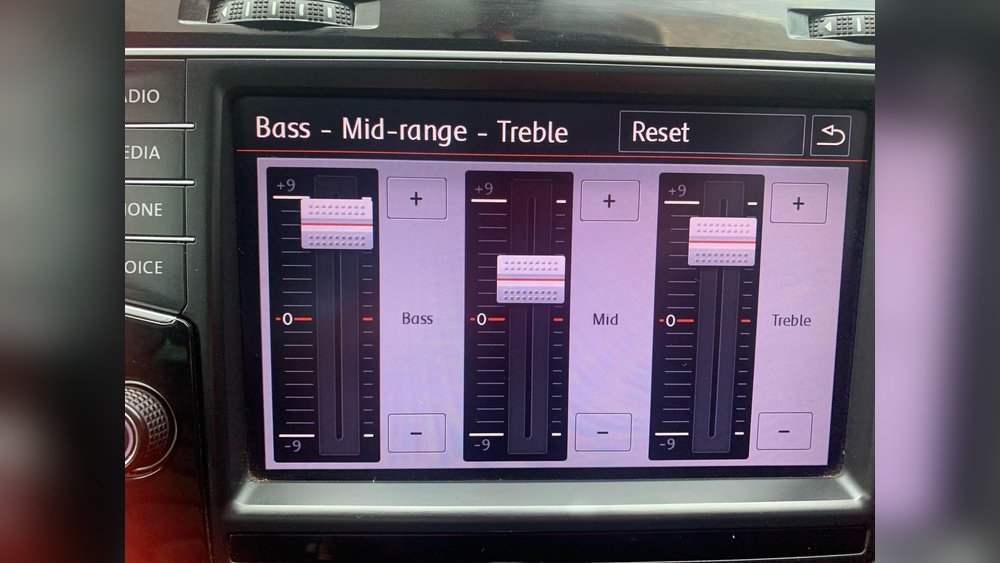
Many modern cars have extra audio controls called equalizers (EQ). These can control more than just bass and treble:
- Mid: Controls middle sounds (guitar, piano).
- Frequency Bands: Some EQs let you adjust specific ranges.
Example Eq Settings For Beginners
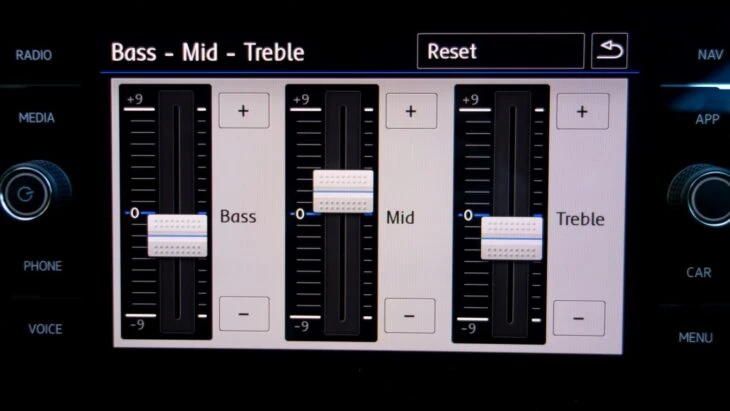
If your car has a 3-band EQ (bass, mid, treble):
- Bass: +2
- Mid: 0
- Treble: +1
If you have a 5-band EQ (more advanced):
- 60 Hz (Deep Bass): +1
- 230 Hz (Bass): +2
- 910 Hz (Mid): 0
- 3.6 kHz (Upper Mid): +1
- 14 kHz (Treble): +1
Remember, small changes are best. If you’re unsure, keep most settings at zero and only adjust a little.
How To Tell If Your Settings Are Right
You’ll know your bass and treble are set well if:
- Vocals are clear, not hidden.
- Drums and bass are strong but don’t shake the car.
- Cymbals and strings sound bright, not sharp or painful.
- Music sounds good at both low and high volumes.
A simple test: listen to your favorite song at normal volume, then turn it up. If the music stays clear and balanced, your settings are close to perfect.
Special Cases: Aftermarket Systems And Subwoofers
If you have upgraded your car stereo or added a subwoofer, your settings may change:
- Subwoofers handle deep bass, so keep car stereo bass at 0 or -1.
- Use the subwoofer’s own controls for extra bass.
- Aftermarket speakers often need less treble boost because they are clearer.
Always set the bass and treble first, then adjust the subwoofer last.
Two Overlooked Tips For Better Sound
1. Speaker Position Matters
Speakers in the doors or rear deck can change how you hear bass and treble. Try adjusting the fader (front/back sound) and balance (left/right) for a more centered sound.
2. Volume Affects Perception
At low volume, music may sound flat. At high volume, bass and treble can become too much. Set your settings at the volume you use most.
Data: What Do Most People Prefer?
A study from the Audio Engineering Society found that most car listeners prefer:
- Bass boosted by 2-3 dB (decibels)
- Treble boosted by 1-2 dB
But remember, these are averages. Always trust your own ears first.
Fine-tuning For Different Situations
You might want to adjust your settings for:
- Road Noise: On highways, boost treble to help vocals cut through.
- Windows Down: Increase bass a little to balance outside noise.
- Rainy Days: Rain can make music sound dull; add 1 point to treble.
Try these changes, but reset when you’re back to normal driving.
Credit: www.reddit.com
One Mistake Even Advanced Users Make
Many people forget to check speaker phase. If one speaker is wired backward, bass can cancel out and sound weak. If your music never has enough bass, even at high settings, have a professional check your wiring.
Real-world Example: Adjusting In A Toyota Camry
Let’s say you drive a Toyota Camry with factory speakers. Here’s how you might adjust:
- Start with bass/treble at zero.
- Play a pop song you know.
- Raise bass to +2. If the doors rattle, lower to +1.
- Raise treble to +1. If vocals are clear and not sharp, you’re done.
- If you hear “hissing” or “s” sounds, lower treble by 1.
Most Camry owners find +1 bass and +1 treble works for many types of music.
When To Consider Professional Help
If you can’t get the sound you want:
- Your speakers may be damaged or old.
- There may be a wiring problem.
- Your stereo system might need an upgrade.
A car audio shop can check your system and suggest changes. They use tools to measure sound, not just ears.
For more on car audio basics and advanced tuning, you can visit Crutchfield’s Car Audio Guide.
Frequently Asked Questions
What Is The Best Bass And Treble Setting For Clear Vocals?
Set bass at 0 to +1 and treble at +1 to +2. This brings out vocals without making music sound harsh or boomy. Always test with a song you know well.
Should I Use Car Stereo Presets?
Presets like “Rock” or “Jazz” can be a good start. But they often boost bass or treble too much. For best results, set controls manually and fine-tune for your taste.
How Can I Avoid Distortion In My Car Audio?
Keep bass and treble boosts small (no higher than +3). If you hear rattling or buzzing, lower the setting. Old or weak speakers distort easily—replace them if needed.
Why Does My Car Audio Sound Different With The Windows Open?
Open windows let out bass and let in outside noise. Increase bass by 1-2 points and raise volume slightly. Reset to normal when windows are closed.
What If My Music Still Sounds Bad After Adjusting Bass And Treble?
Check your speakers for damage or age. Try adjusting the mid control if available. If problems continue, get your system checked by a professional.
Getting bass and treble right in your car doesn’t need to be hard. Start with neutral settings, make small changes, and trust your ears. The best sound is the one you enjoy every time you drive.