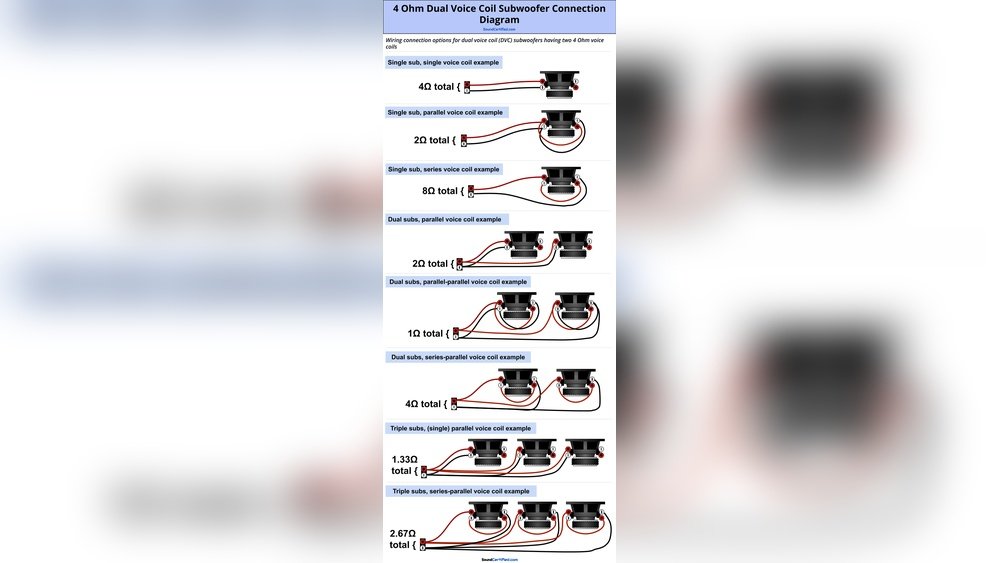
How to Wire a Dual Voice Coil Subwoofer for Maximum Performance
Wiring a dual voice coil (DVC) subwoofer is a smart way to boost your car or home audio system. DVC subwoofers have two separate coils, offering flexibility in wiring. This lets you adjust the impedance and power handling. If you want deeper bass or a more efficient setup, learning to wire a DVC subwoofer is key. Many beginners get confused between series and parallel wiring, but following clear steps makes the process simple and safe.
Understanding Dual Voice Coil Subwoofers
A DVC subwoofer has two sets of terminals, each with its own coil. You can wire these coils in series or parallel to match your amplifier’s requirements. The main benefit is the ability to change the final load (impedance), which affects how much power your amp delivers.
| Wiring Method | Impedance Result | Use Case |
|---|---|---|
| Series | Double coil impedance (e.g., 4Ω + 4Ω = 8Ω) | For amps needing higher impedance |
| Parallel | Half coil impedance (e.g., 4Ω // 4Ω = 2Ω) | For amps supporting lower impedance |
How To Wire A Dual Voice Coil Subwoofer
Follow these steps for a safe and effective setup:
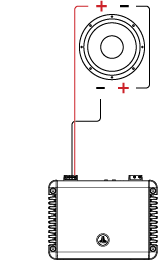
- Identify the coil terminals: Each coil has a positive (+) and negative (−) terminal. Usually, they’re marked on the subwoofer.
- Choose your wiring method: Decide between series or parallel based on your amp’s specs.
Series Wiring
- Connect the positive terminal of coil 1 to your amplifier.
- Connect the negative terminal of coil 2 to your amplifier.
- Join the negative terminal of coil 1 to the positive terminal of coil 2.
This increases the impedance, reducing the amp’s output but often improves stability.
Parallel Wiring
- Connect both positive terminals together and link to the amplifier’s positive output.
- Connect both negative terminals together and link to the amplifier’s negative output.
This lowers the impedance, letting your amp push more power, but make sure your amp can handle the load.
| Coil Configuration | Impedance (Ohms) | Power Output (Watts) |
|---|---|---|
| Series (4Ω + 4Ω) | 8Ω | Lower |
| Parallel (4Ω // 4Ω) | 2Ω | Higher |
Credit: support.garmin.com
Practical Tips For Wiring
- Use thick wire (14-16 gauge) for better power transfer.
- Double-check polarity to prevent phase issues.
- Avoid mixing series and parallel on the same subwoofer.
- Always turn off the amplifier before wiring.
A common mistake is forgetting to match the amp’s minimum impedance rating. Running a subwoofer below this can damage your amplifier.
Frequently Asked Questions
What’s The Main Advantage Of A Dvc Subwoofer?
A DVC subwoofer offers flexible wiring. You can adjust impedance to match your amp, which is impossible with single voice coil models.
Can I Wire Multiple Dvc Subwoofers Together?
Yes, but you must calculate the total impedance. Use a wiring diagram or consult your amp’s manual. Getting this wrong can risk both amp and subwoofers.
Does Wiring Affect Sound Quality?
Wiring affects power handling and impedance, not the basic sound quality. Correct wiring prevents distortion and protects your equipment.
How Do I Know My Amplifier’s Impedance Rating?
Check your amp’s manual or look for labels near the speaker outputs. Most car amps support 2Ω or 4Ω loads.
Where Can I Find Wiring Diagrams?
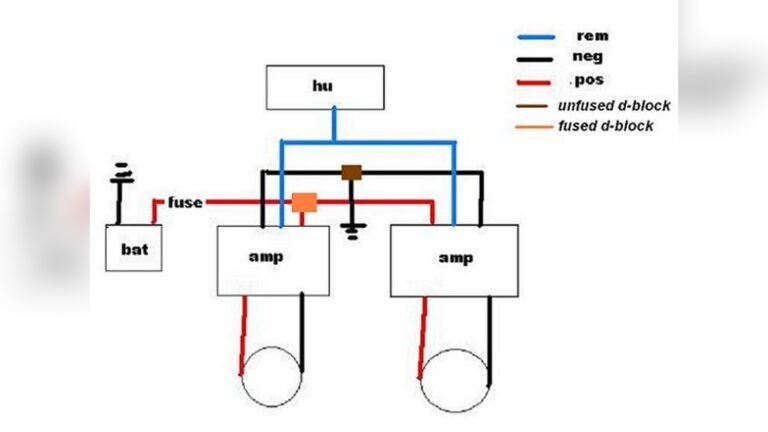
You can find diagrams on manufacturer websites or trusted audio forums. For detailed guidance, see this Crutchfield wiring guide.
With the right wiring, your DVC subwoofer will deliver powerful bass and reliable performance. Always plan your setup and check specs for a safe and enjoyable listening experience.

Credit: www.reddit.com